
-
One of the biggest mindset shifts I encourage — especially in busy corporate crews — is this:
.
👉 Don’t wait for a diagnosis to start paying attention to your health.
👉 Start measuring before things break..
In Australia, we’re actually lucky.
Most basic blood tests are partially Medicare-covered when requested through your GP or medical centre — especially if there’s a rationale (age, fatigue, family history, weight change, metabolic risk, etc.)..
Onsite, I can assess things like BP, resting HR, waist measures, body composition, HbA1c, and lifestyle patterns.
But blood markers?
That’s where we step into next-level insight..
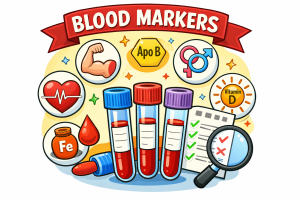
Below are the key blood markers I believe are worth knowing, why they matter, and what “normal” generally looks like.
..........................................................................................................
The Key 6 Blood Markers (and Why I Care About Them)
🧪 Total & Free Testosterone
.
Why it matters
.
🔴 Drives muscle mass, strength, energy, recovery
🔴 Influences mood, motivation, libido, bone density
🔴 Low levels often show up as fatigue, weight gain, poor recovery, low drive
.
What it tells you
.
🔵 Total = how much testosterone is circulating
🔵 Free = how much is actually usable by your tissues (this is the important one)
.
Typical reference ranges (men)
.
🟢 Total testosterone: ~10–35 nmol/L
🟢 Free testosterone: lab-specific, but trends matter more than single numbers
📌 Important: Declining trends matter even if you’re “in range”.
.............................................................
🧪 Estradiol (E2)
.
Why it matters
.
🔴 Females typically have a better understanding, but estrogen is not just a “female hormone”
🔴 Plays a role in fat distribution, cardiovascular health, libido, bone health
🔴 In men, high E2 often tracks with visceral fat and metabolic dysfunction
.
What it tells you
.
🔵 Hormonal balance rather than just hormone quantity
.
Typical reference range
.
🟢Men: ~40–160 pmol/L (lab dependent)
🟢 Women (very cycle-dependent):
~ Follicular phase: ~70–530 pmol/L
~ Ovulation peak: ~235–1,300 pmol/L
~ Luteal phase: ~200–790 pmol/L
~ Post-menopause: ~0–150 pmol/L
.
📌 Important caveat:
In women, a single number means very little unless you know where you are in your cycle, whether you’re peri-menopausal, post-menopausal, or using hormonal contraception or HRT. Trends, symptoms, and timing matter far more than chasing a “perfect” value. Best left to the experts.📌 Balance matters more than chasing low or high numbers.
.............................................................
🧪 ApoB (Apolipoprotein B)
.
Why it matters
.
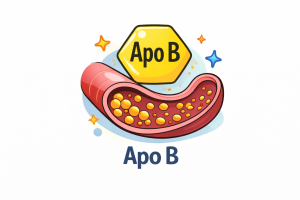
🔴 One of the best predictors of cardiovascular risk
🔴 Better than total cholesterol alone
🔴 Reflects the number of atherogenic particles, not just how much cholesterol they carry
.
What it tells you
.
🔵How much “traffic” is flowing through your arteries
.
Target ranges
.
🟢 Optimal: <0.8 g/L
🟢 Elevated risk: >1.0 g/L
📌 If I had to pick ONE lipid marker — this is it.
.............................................................
🧪 C-Reactive Protein (CRP – high sensitivity)
.
Why it matters
.
🔴 Marker of systemic inflammation
🔴 Chronic low-grade inflammation drives:
~ heart disease
~ insulin resistance
~ poor recovery
~ accelerated ageing
.
What it tells you
.
🔵 Whether your body is quietly inflamed
.
Reference ranges
.
🟢Low risk: <1.0 mg/L
🟢Moderate: 1–3 mg/L
🟢High: >3 mg/L
📌 Persistently elevated CRP deserves attention — not panic, but action.
.............................................................
🧪 Ferritin (Iron Stores)
.
Why it matters
.
🔴 Reflects iron storage, not just iron intake
🔴 Too low = fatigue, poor exercise tolerance
🔴 Too high = oxidative stress, metabolic and cardiovascular risk
.
What it tells you
.
🔵 Whether your iron status is balanced
.
Typical ranges
.
🟢Men: ~30–300 µg/L
🟢Women: ~15–150 µg/L
📌 More is NOT better — balance is the goal.
.............................................................
🧪 Vitamin D
.
Why it matters
.
🔴Immune function
🔴Muscle strength
🔴Bone health
🔴Mood and inflammation regulation
.
What it tells you
.
🔵Your baseline resilience — especially important for indoor workers and shift crews
.
Target range
.
🟢Optimal: 75–150 nmol/L
🟢Insufficient: <50 nmol/L
📌 One of the simplest things to fix — yet commonly low.
.............................................................
Why This Matters (Big Picture)
.
These markers:
✔️ Don’t wait for symptoms
✔️ Don’t require extreme testing
✔️ Give early warnings, not just diagnoses
.
The Take-Home Message
.
This isn’t about medicalising your life.
It’s about owning your health early, not outsourcing it until things go wrong..
I’ll keep doing the onsite basics — BP, HR, HbA1c, waist, body comp, lifestyle audits — because they matter - CLICK HERE
But blood markers?
This is where the deeper story lives.
-
Before we even talk food…
Have a crack at this..
Stare at a moving spiral for 10 seconds.
Then look at Van Gogh’s Starry Night >>>>>>>>>>>>>>>>>>.
Those clouds? They feel like they’re swirling. Alive. Moving.
But the canvas is static..
Your eyes feed your brain.
Your brain fills in the gaps.
And sometimes… it flat-out lies to you..
Now imagine what happens when billion-dollar food companies exploit that wiring. Good luck!
-
.
...........................................................................
Food Marketing Isn’t About Food — It’s About Your Brain
.
Highly processed, mass-produced food isn’t designed to nourish you.
It’s designed to:
.
🧠 Grab attention - Trigger desire - Create urgency - Override fullness
🧠 And it all starts with visuals.
🧠 Bright colours - Perfect shine - Slow-motion pours - Impossible symmetry
.
Your brain reads these cues as:
.
“Energy-rich. Safe. Rewarding. Eat now.”
Even when your body doesn’t need a thing.
And these influencing tricks aren’t limited to mass-produced multinational food companies. You’ll see the same tactics everywhere — supermarkets, petrol stations, chemists, cinemas… even school corridors.
...........................................................................
The Visual Tricks They Use (They’re Very Good at It)
.
.1. Colour Manipulation
.
Red and yellow dominate fast food for a reason.
🔴 Red = urgency, hunger
🟡 Yellow = comfort, familiarity
.
Ever notice how real food looks muted…
While junk food screams in HD?.

Brightness = reward in the brain (dopamine central)
.
2. Portion Distortion
.
Food is photographed:
🍕 Bigger than real life
🍕 Taller, not wider
🍕 Up close, filling your vision
🍕 Your brain compares size, not calories.
.
Big image = normal serve
Normal serve = eat more.
3. Gloss & Shine
.
That burger bun?
🍔 Oiled
🍔 Lit
🍔 Digitally enhanced
.
Shine signals fresh and desirable — even when reality disappoints.
The brain remembers the image, not the meal..
4. Motion = Appetite
.
🍫 Dripping chocolate.
🍫 Stretching cheese.
🍫 Pouring sauces.Movement keeps the brain engaged and drops restraint — just like the spiral illusion.
.
When food moves, appetite switches on.
.
What’s Happening Upstairs?
.
Visual food cues:
🧠 Light up dopamine and anticipation
🧠 Bypass fullness signals
🧠 Quiet decision-making centres
.
Translation: You want food before your stomach has a say.
.
That’s why:
🍘 Ads create cravings
🍘 “Just one more” happens
🍘 Late-night sugar feels logical
This isn’t weakness. It’s wiring.
.
The Quiet Truth
In a world free from brain-corruptive advertising…
Most humans would:
- Eat what they need
- Stop naturally
- Choose foods that support health
- Maintain body composition without obsession
Your body already knows the volume. It already knows the type.
-
Training hard over the years has forced me to become far more cognitive about my recovery response — not just how I feel in-session, but what my body is telling me after the work is done.
Through plenty of trial, error, and honest self-observation, I’ve learnt to read the signs, interpret the message, and adjust accordingly.
Below is a quick list of common post-training responses I’ve experienced, and the simple go-to strategies I use to course-correct before small issues become bigger problems.
#
What I notice
What it often tells me
My go-to response
1
Unusually sore for days
Recovery nutrients are lacking
Magnesium support, plus a protein-first approach paired with a vitamin C–rich food source
2
Struggling to fall asleep
Nervous system still overly amped
L-theanine supplementation to down-regulate neural drive
3
Lingering niggles
Connective tissue under-repaired
Increase collagen intake and combine with vitamin C–rich foods (dark leafy greens, cherries)
4
Cramping - deluxe
Dehydration + electrolyte shortfall
Water, lemon, bicarbonate soda & a banana — keep hydrating until urination becomes annoyingly frequent
5
Extreme fatigue
Mitochondria are cooked
Two full days off (complete rest). Focus on iron-rich foods and a B12 supplement
6
Dizziness (especially on standing)
Low blood pressure / under-recovered
Take a day off aerobic work and focus on resistance training only
7
Nausea post-workout
Elevated cortisol / stress load
Lie down with legs up a wall, eyes closed, nasal breathing — and definitely no AC/DC
8
Poor athletic progress
Micronutrient drag on performance
Short zinc run (≈4 days) — noticeable boost in power, energy, and motivation
-
👩 Mary 🥑
.
Age: 51
Life: Full-time office work, mum of three (15, 17, 20)
Activity: Walking + pelvic floor work ~4 days/week
Challenges:
• Intermittent energy
• Hormonal fluctuation (perimenopause/menopause transition)
• Sluggish metabolic “switching” between fuel sources
.
The goal
∴ Stabilise energy
∴ Improve metabolic flexibility
∴ Reduce hormonal “noise”
∴ Support muscle retention (critical post-40)
👉 Less about calories. More about timing, quality & calm.
.
A week of eating — Mary-style
Morning
• Black coffee or long black ☕
• Water + pinch of electrolytes
Why:
∴ Cortisol already elevated in the morning
∴ No need to spike insulin early
∴ Encourages fat-fuel use
.
Late breakfast / early lunch
• Eggs + avocado + leafy greens
• Or Greek-style coconut yoghurt + nuts + berries
Why:
∴ Protein anchors blood sugar
∴ Fats calm appetite & hormones
∴ Fibre feeds gut → hormone clearance
.
Mid-afternoon
• Protein shake or cottage cheese + seeds
Why:
∴ Prevents the 3–5 pm crash
∴ Protects muscle
∴ Reduces night-time sugar seeking
.
Dinner
• Palm-sized protein (fish, chicken, lamb, tofu if tolerated)
• Big serve of colourful veg
• Small carb portion only if needed (pumpkin, quinoa, potato)
Why:
∴ Protein for overnight repair
∴ Carbs used strategically, not automatically
.
Optional
• Magnesium before bed
Why:
∴ Nervous system down-shift
∴ Sleep quality = metabolic control
.
Mary’s nutrition truth
.
〰️ Less fuel, better timing, calmer hormones.
〰️ Eat to support, not stimulate.
-
🤽🏻♀️ Annie 🥩
.
Age: 20
Life: Full-time elite athlete + part-time uni
Sport: Australian Water Polo
Training load: ~26 hrs/week (often 2 sessions/day)
Challenges:
• Recovery between sessions
• Low iron risk
• Maintaining muscle size & power
.
The goal
∴ Fuel performance
∴ Recover fast
∴ Maintain muscle & power
∴ Protect iron & bone health
👉 Under-fueling is the enemy — not carbs.
.
A week of eating — Annie-style
Early training fuel
• Banana + honey wrap or oats + yoghurt
Why:
∴ Muscle glycogen = performance currency
∴ Fast carbs protect intensity
Post-session (within 30–60 min)
• Protein + carbs
• Smoothie with whey, berries, oats
• Or eggs + GF toast + fruit
Why:
∴ Muscle repair window
∴ Refill glycogen for session #2
.
Main meals
• Large protein serves (fish, beef, chicken, eggs)
• Rice, pasta, potatoes, wraps
• Colourful veg
Why:
∴ Muscle turnover is constant
∴ Carbs spare protein from being burnt
∴ Iron focus
∴ Red meat 4–5×/week
∴ Spinach, legumes + vitamin C pairings
.
Bloods monitored
Why:
∴ Oxygen delivery = endurance
∴ Female athletes are high-risk
.
Evening
• Carb-inclusive dinner
• Cottage Cheese or yoghurt before bed
Why:
∴ Supports overnight recovery
∴ Maintains lean mass
.
Annie’s nutrition truth
.
Food is training equipment.
Eat enough — or adapt downward.
-
🧠 The big takeaway
Same species.
Wildly different needs.• Mary thrives on restraint, rhythm, and regulation
• Annie thrives on fuel, volume, and recovery
Trying to swap their plans?
• Mary eats like Annie → inflammation, fat gain, fatigue
• Annie eats like Mary → injury, low iron, flat performance
Last
Don’t copy diets.
'Copy principles' — then apply them to your life.