
Triathlon Preparation Overview
20 Ironman Finishes
3 x Hawaii Ironman World Championship
What 25 Years of Trial & Error Taught Me
After decades of training, racing, coaching and blowing myself up enough times to learn the hard way… I’ve come to believe most age-group triathletes overcomplicate preparation.
Too Much
Intensity. Gadget obsession. Comparison. Chasing “proof” of fitness.
Not Enough
Aerobic development, structural strength, movement efficiency, recovery, patience and consistency.
The Reality
Your physiology doesn’t care what your Garmin says. It only responds to the stress you can successfully absorb.
The biggest mistake I see? Athletes trying to train like professional athletes while living the life of an exhausted parent, business owner, shift worker or stressed human being.
Over time, I’ve come to believe successful long-course triathlon preparation revolves around a handful of key ingredients.
Not sexy.
Not Instagram flashy.
But incredibly effective.
1. Technique Before Fitness
The fitter you become, the more your weaknesses get exposed.
Poor technique under fatigue becomes expensive:
- Wasted oxygen
- Rising heart rate
- Increased muscular tension
- Greater carbohydrate burn
- Earlier breakdown
Efficient movement conserves energy. And triathlon is fundamentally an energy management event.
SWIM
Learn Relaxed Efficiency
Most age-group swimmers try too hard. The goal is not aggressive swimming. The goal is economical swimming.
- Relaxed two-beat crossover kick initiated from the hip
- Smooth side-to-side body roll
- Clean streamline positioning
- Longer, easier stroke rhythm
Avoid frantic knee-driven kicking, excessive upper-body tension and fighting the water.
The swim should feel rhythmic and controlled — not like a panic attack in neoprene.
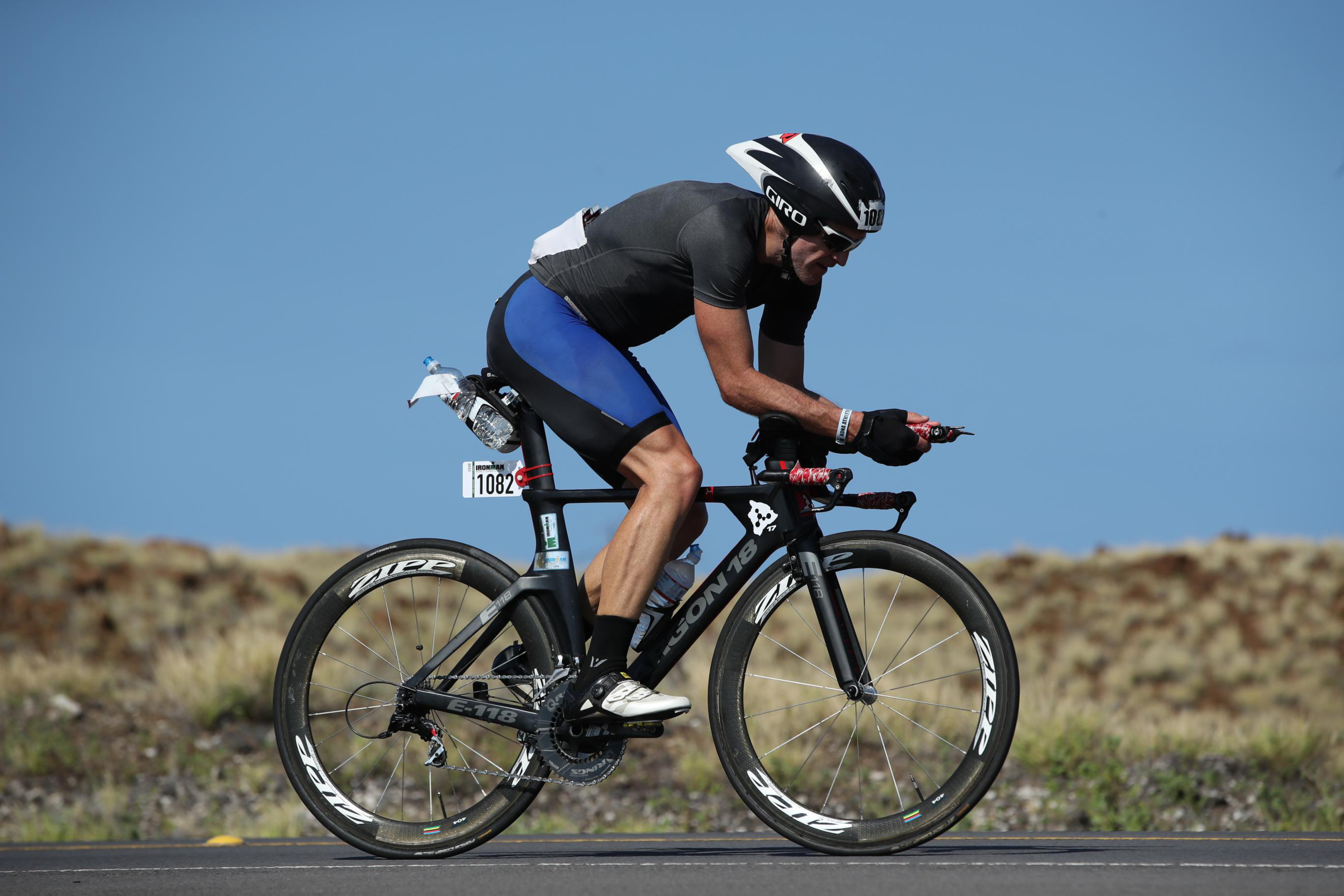
The bike leg is where posture, rhythm and structural durability matter.
BIKE
Build Functional Aero Strength
The bike leg is the structural centrepiece of long-course triathlon.
Weak bike strength destroys runs.
- Muscular endurance in the aero position
- Postural durability
- Core and hip stability
- Efficient force transfer through the pedal stroke
I encourage athletes to create a smoother 360° chainring rhythm using hips, glutes and trunk stability.
The athlete who still looks composed in the final 30% of the bike split usually runs well.
RUN
Economy Wins
You do not run off the bike like you run a fresh standalone 10 km.
The best triathlon runners are rarely bounding gazelles. They’re economical.
- Shorter stride length
- Higher cadence
- Lighter ground contact
- Feet landing under the hips
- Reduced vertical oscillation
Good triathlon running should almost look slightly restrained early.
Controlled athletes finish strong. Aggressive athletes often survive.

Run economy matters more and more as fatigue climbs.
2. Aerobic Development Changes Everything
Most endurance success comes from improving the body’s ability to intake, transport and utilise oxygen efficiently.

Control the engine before chasing the scoreboard.
That means:
- Greater capillarisation
- Increased mitochondrial density
- Improved fat metabolism
- Lower lactate production at submax workloads
- Improved autonomic nervous system control
- Better recovery between sessions
In simple terms: you become more efficient at producing energy without constantly redlining the system.
Most Athletes Train Too Hard Too Often
I believe up to 90% of endurance training should sit around your optimal aerobic development zone — particularly through the first 70% of a preparation block.
- DTI — Default Training Intensity
- Your “all day” rhythm
- Physiologists often call it Zone 2
This is where the magic happens. Not because it feels hard. Because it develops the physiology that allows hard work later.
Why I Rarely Prescribe Pace, Speed or Watts Early
I’m far more interested in breathing control, movement quality, recovery response, emotional state and physiological strain than chasing numbers.
A prescribed pace or wattage ignores poor sleep, work stress, heat, illness, psychological fatigue, hormonal stress and accumulated training load.
The body doesn’t read spreadsheets.
I’d rather see controlled consistency repeated for months than heroic sessions followed by collapse.
3. Tolerance of Boredom
This is one of the least discussed — yet most important — parts of long-course racing.
Triathlon is repetitive.
Same movement. Same rhythm. Same intensity. For hours.
That’s not just physiological stress. That’s neurological stress.
- Slow down
- Stop
- Walk
- Quit
Unlike ball sports, there are very few distractions. Triathlon exposes your internal dialogue.
The untrained brain panics under repetition.
The trained brain settles into rhythm.
4. Structural Bike Strength
The Hidden Key to Long-Course Success
In my opinion, the bike largely determines the run.
Not aerobic fitness alone. Structural durability.
If the bike excessively damages the quads, hip flexors, lower back, diaphragm, feet and trunk stability… the run becomes survival.
- Strength endurance
- Aero durability
- Hip function
- Postural strength
- Trunk control
- Off-bike resistance training integrated with bike sessions
Strong bike structure protects the run.
Weak bike structure exposes it.
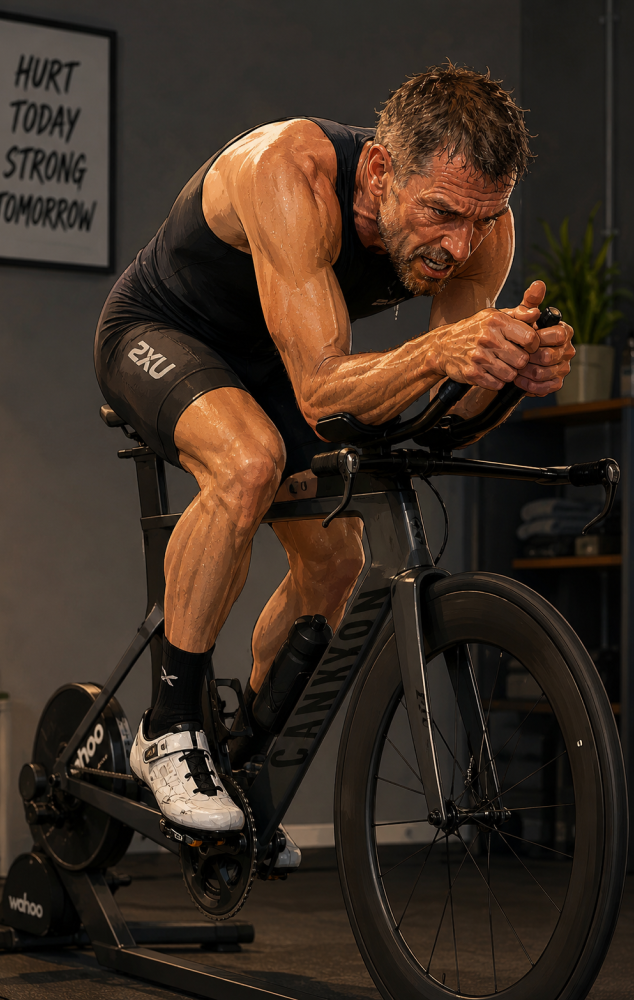
Aero strength is not cosmetic — it is race-day insurance.
5. The Ultimate Triathlon Skill
Running Off the Bike
This is the true art of triathlon.
Running fresh and running off the bike are completely different physiological experiences.
- Muscle recruitment patterns change
- Coordination changes
- Posture changes
- Breathing mechanics change
- Diaphragm fatigue exists
- Gut blood flow changes
- Nutritional tolerance changes
- Balance and rhythm change
The athlete must learn to reorganise movement while fatigued. This is a skill. And skills require practice.
That’s why I strongly believe many bike sessions should finish with short brick runs — even just 2–10 minutes.
Not necessarily hard. Just consistent.
The nervous system learns through repetition.
Final Thoughts
There are obviously many other parts to successful triathlon — equipment, nutrition, hydration, pacing, race strategy, environmental preparation and recovery planning.
But in my experience, these principles form the foundation of successful long-course preparation.
Build
Healthy aerobic capacity and structural durability.
Develop
Technical efficiency and emotional control.
Repeat
Consistent healthy training — not heroic sessions followed by collapse.