
WHAT YOU CAN EXPECT
The Training Model
Phase One – Building your Aerobic Capacity.
Who: Everyone. From the Olympic Champion to First-Timer taking up running to improve their wellness.
Your aerobic capacity is the intensity (effort) your metabolism switches from burning stored fat as it’s preferred energy source to favour available, and limited, sugar. Once this change happens, your running output and performance are short-lived.
Our goal is to have you run harder, longer and faster while favouring stored fat as your primary fuel source.
The better your ability to intake, transport and utilise oxygen, the better your capacity to metabolise stored fat as your preferred fuel source.
Your genetics, athletic history, your food choices, and your training intensity can dictate your aerobic capacity.
The reason we take time in boosting your aerobic capacity is, to;
☑ Avoid running-related injuries,
☑ Lower collective inflammation, and again, limit running-related pain & discomfort.
☑ Boost recovery time from session to session
☑ Promote running enjoyment
☑ Naturally, drive towards your ideal weight & shape for both your running performance and your lifestyle.
And of course,
☑ Elevate your running talent – particularly finishing your longer races holding your best pace.
Most people run far too hard relative to their current aerobic capacity, too early.
Your ‘starting’ ideal fat-burning (aerobic) zone is calculated using the LAM (Lifestyle Analysis Method) system, featured in step three. Your fat-burning aerobic ‘zone’ will be represented through your heart rate in beats per minute. You will need a heart rate monitor to accurately police your ‘best’ zone.
Your ideal aerobic capacity building zone is called your Default Training Intensity (DTI).
The key feature to Brad Pamp’s training model is your time spent in your fat-burning aerobic zone (DTI) – and, over time, running, healthy, further and faster in this zone.
PhaseTwo – Fine-tuning your most efficient running technique.
Who: Everyone, well, mostly everyone.
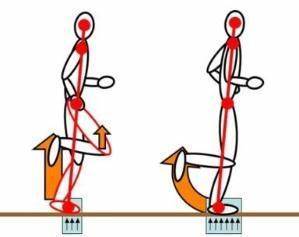
The average person will take about 8,700 strides to complete 10kms.
With such a repeated action, reducing the enduring physiological stress becomes key.
Lowering the cost of impact is paramount towards reaching your best performance.
Failure to address smoothing out your running technique usually ends in injury, frustration, and ultimately a sub-optimal performance.
There are four key phases to the running stride. Each phase can be practised with improved precision and efficiency.
Using training technique strategies is a great way to reduce the cost of impact.
Determining your ideal running cadence and practising this tempo will significantly boost your running skills and enjoyment.
Most people overstride with an inefficient slower cadence driving up the cost of impact! This usually leads to a slower pace, injuries, and running disappointment.
Practising your ideal running cadence in your fat-burning DTI zone will see your running talent skyrocket.
Check out the linked video series in step four.
Phase Three – Building your Functional Running Strength.
Who: Everyone.
Running is a weight-bearing action. Appropriate and fitting bone, joint, muscle & tendon strength is critical for future running enjoyment and optimal performance.
Time spent in your fat-burning zone, running at your ideal cadence, slowly increasing miles, introducing hill  repeats, barefoot running, and time-honoured running-related resistance exercises will boost and hone your functional running strength.
Let time and the structure of your program develop your rock hard running strength.
Running strength training prevents;
✓ Ankle sprains
✓ Achilles tendonitis
✓ Calf strains
✓ Shin splints
✓ Knee pain
✓ Quad tears
✓ Hamstring insertion pain, and,
✓ Lower back pain
Many running-related injuries are a result of poorly trained weak body parts. Increasing intensity and volume before the body has developed sufficient strength usually ends in tears.
Phase Four – Elevating up your aerobic threshold.
Who: About 30% of runners.

Only now after practising the first 3 phases (and testing your improvement along the way) is your body ready for harder, faster, and more intense training.
Once your body is ready and tolerant of harder interval-based training, training will feature intensity over and above your DTI - for a set period of time.
How do we know you’re ready for some >DTI ‘track’ work?
✓ Your weekly timetrial test (TTT) has improved by more than 8%,
✓ You're comfortably holding at your ideal weight,
✓ You are relatively injury-free,
✓ You’re not craving sugar,
✓ You’re sleeping soundly,
✓ You’re looking forward to your next training session, and,
✓ You’re scoring 10/10 in the Running Quiz Score.
What is interval-based phase four training?
You are running over and above your DTI for a set period. You will experience a burning sensation in your lungs and muscles, and maybe experience a metallic taste at the base of your tongue.
>DTI training will improve your ability to;
✓ Avoid producing lactic acid – a result of improving your oxygen utilisation at a harder output.
✓ Buffer lactic acid – improving circulation.
✓ Mentally dissociate from pain and discomfort.