
-
Short answer?
Some things change fast. Others take patience. None of it is wasted..
We’ve been sold the idea that health should improve quickly — 4 weeks, 21 days, before-and-after photos. Real physiology doesn’t quite work like that.
.
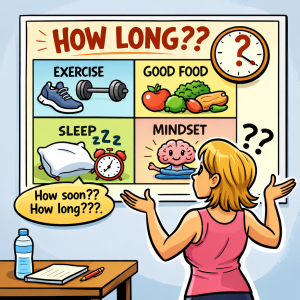
The body adapts in layers.
.
Some systems respond within hours or days.
Others need weeks or months of boring consistency.
So, based on my 35+ years of real-world data — working with everyday people, shift workers, athletes, and corporates — here’s what I know you can reasonably expect once a strategy is practiced properly.
.
Important caveat (always):
👉 Timeframes vary between individuals — but the order of change is remarkably consistent.#
Strategy
~ Time to kick in
1
Fitting hydration – H20+Minerals
~ 7 days to notice better skin, smoother digestion, and stronger backend energy
2
Cut the sugar
~ 2 weeks before cravings ease, energy steadies, and body soreness reduces
3
Low carb ‘Keto-like’ diet
~ 3 days before it feels normal-ish — appetite settles, sleep deepens, energy smooths, and fat loss may begin
4
Strict sleeping routine
~ 4 nights to re-sync circadian rhythm — waking fresher and not feeling ripped off
5
Reducing unnecessary calories (right-sized portions)
~ 1 week before you forget you ever needed double your current food volume
6
Morning sunlight (first thing)
That day — better energy, mood lift, improved focus and productivity
7
Prioritising real veggies
~ 2 weeks for fibre to clear the gut, stabilise energy, and lift immune resilience
8
Mindfulness – e.g breathwork
~ 4 days before you enjoy the practice — and notice a calmer, steadier approach to life (this one’s gold)
And finally, most people quit just before the benefit curve kicks upward.
-
Below provides a practical message for anyone living with intermittent lifestyle stress – so, pretty much, if you’re human, this is for you.
.
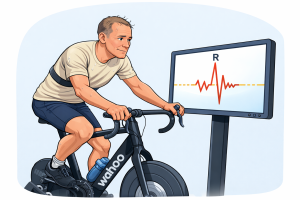
For the past 15 years, I’ve run the same “engine check” session on myself. It’s a controlled 45-minute stationary bike ride at exactly 260 watts, holding 80 cadence, in the same room temperature, measuring only one thing — my average heart rate via a Garmin chest strap. At that load, I’m working at roughly 70% of my maximum. Controlled. Sustainable. Repeatable.
.
It’s not a fitness test. It’s a physiology check.
.
After 10 days at home — sleeping in my own bed, eating properly, training normally, no altitude, no long-haul driving, no excessive cognitive load — my average heart rate sat at 117 and 118 bpm (Test 1 & 2). That’s my rhythm. That’s my system humming along nicely.
.
Test
Time
Watts
Cadence
Temperature
Av HR (bpm)
1
45
260
80
18
117
2
45
260
80
18
118
.
Then came six days away.
.
Long, highly focused driving. Four different beds. Five full days of committed conversation and data collection. Altitude up to 1500 metres (I’m born and raised at sea level). Food on the run. Early 4am wake-ups for BP necessary exercise.
.
😏 Did I feel sick? No.
😏 Did I feel flat? A little.
😏 Nothing dramatic..
The morning after returning home, I ran the exact same 45-minute session (test 3).
.
Test
Time
Watts
Cadence
Temperature
Av HR (bpm)
3
45
260
80
18
136
4
45
260
80
18
125
.
Average heart rate? 136 bpm. Not 118.
.
That’s not a small variation. That’s my physiology telling me it’s still under load.
.
Three days later (test 4), it dropped to 125 bpm — recovering, but still not baseline.
.
What changed? Not fitness. Not wellness. Not equipment.
Stress – lifestyle stress.
.
And here’s the bit busy people often underestimate — stress doesn’t just sit in your head. It shifts hormone rhythms, alters the melatonin–serotonin balance, elevates cortisol, unsettles the gut microbiome, tightens breathing mechanics through postural changes, and nudges the autonomic nervous system toward a more “wired” state. You may feel reasonably fine, but your internal systems can still be playing catch-up.
.
When we ignore that and bang out our normal exercise intensity on top of lifestyle stress, we’re effectively stacking load on load. That’s when illness appears “out of nowhere”, niggles turn into injuries, mood dips, sleep worsens, and motivation fades.
.
It’s accumulated strain.
.
The Practical Take-Home
.
After a stressful week — travel, altitude, disrupted sleep, heavy mental load, rushed nutrition — don’t expect to perform at your usual intensity immediately.
There are many ways to assess the influence of lifestyle stress; however, my years have shown that heart rate is practical, accurate, and responsive.
Give your system 1–3 days to recalibrate. Sometimes the smartest session isn’t the hardest one.
-
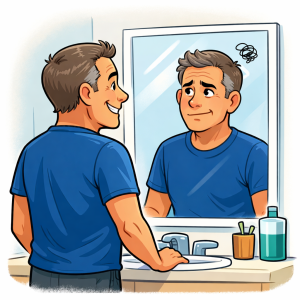
If you’re a bloke in your 40s or 50s, there’s a fair chance you’re doing most things right.
.
✔️ You work.
✔️ You show up.
✔️ You carry responsibility.
✔️ You get on with it..
And yet…
Something feels a bit off..
👊 Not broken.
👊 Not “mental health crisis”.
👊 Just… flat. Wired. Shorter fuse. Foggy. Tired but not sleepy.
👊 Or carrying a low-grade heaviness you don’t really talk about..
Sound familiar?
.
In my experience — and I say this after nearly 35 years working in health — men don’t usually present saying “I’m struggling mentally.”
They say things like:
.
😟 “I’m just tired all the time” 😟 “Sleep’s average” 😟 “I don’t switch off well” 😟 “I’ve lost a bit of spark” 😟 “I’m fine… just a lot going on”
.
And they’re not lying.
.
What’s actually happening is cognitive fitness is under load.
.
🧠 Not intelligence 💪Not toughness.
But the capacity of the brain and nervous system to cope, recover and regulate..
Cognitive fitness is a lot like physical fitness
.
🧑 When it’s working well, you’re clearer, more patient, more resilient — better at handling pressure and making decisions.
🦰 When it’s underdone, everything feels heavier. Small things feel bigger. Sleep slips. Coping habits creep in.
.
And here’s the key bit 👇
It rarely breaks all at once.
It erodes quietly..
A quick note on where I sit
.
I’m not a psychologist or mental health specialist.
What I am, is someone who’s worked in fitness, nutrition and sleep efficiency for close to 35 years — and had literally thousands of real-world conversations with men about how they’re coping, functioning, and holding it together - sometimes over a beer (and not this new-age ale fruit-loaded stuff - plain crisp lager, thanks).
The patterns are remarkably consistent.
.
The first step isn’t “fixing”
.
🤜 It’s not therapy.
🤜 It’s not medication.
🤜 It’s not unloading your life story..
The first step is simply asking:
“Where am I actually at right now?” Privately. Honestly. Without judgement. That’s it.
.
I’ve built a simple Cognitive Fitness Evaluation - do yourself!
.
It’s a short, non-clinical check-in that looks at:
.
👉 Mental and emotional load, Sleep, Activity, Nourishing, Connection & Coping habits!
👉 No pass or fail. No diagnosis. No data going anywhere.
Just a clear snapshot — and a calm “what now?” direction.
[Click BELOW to take the Cognitive Fitness Evaluation]
.
-
When I’m asked what I believe is the most critical — and most under-practised — structural exercise, I never hesitate.
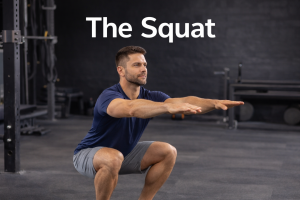
Think about it.
From around 9 to 18 months of age, squatting is how we:
.
🏋️ Develop back, hip and leg strength
🏋️ Learn to stay upright
🏋️ Create the ability to lift off from the floor
🏋️ No squatting = no meaningful recruitment of the big muscle groups that hold us up.
.
Squatting is how we’re wired
.
Between the ages of 3 and 10, we squat constantly:
.
∴ Getting up off the floor
∴ Picking things up
∴ Playing, moving, falling, getting back up again
Then, through the teenage years, most sports still demand some version of squatting, jumping, landing, tackling, and changing direction.
.
Then adult life happens — and particularly office-based work — and something strange occurs - the squatting stops.
.
When that happens:
.
◊ The back, hips and legs stop doing their normal work
◊ Strength quietly fades
◊ Mobility slowly disappears
.
Fast forward a few decades, and suddenly:
.
❌ Getting down feels awkward
❌ Getting up feels risky
❌ Falling becomes a genuine threat
❌ It’s not ageing - It’s underuse.
.
My simple recommendation
.
Slot squatting back into your lifestyle — deliberately.
Nothing fancy. Nothing heroic.
3 days per week @ 3 × 8 reps
Progression:
1. Bodyweight squat
2. Dumbbells / goblet squat
3. Barbell-supported squat (when strength and confidence allow)
.
That’s it.