
-
Onsite Health Assessments are:
.

• Non-invasive
• Zero pain
• Zero sweat
• Totally private
• Educational in nature
.
They are not diagnostic.
They are not designed to label, judge or medicalise you.They’re designed to help you understand your general health status — and if the numbers suggest it — provide a sensible prompt to seek further medical guidance.
That’s it. Simple awareness.
.
Why Awareness Matters
.
When someone receives a clear starting point — real numbers, not guesswork — it often triggers change.
.
• Nutrition choices improve
• Activity becomes more intentional
• Sleep becomes a priority
• Stress gets managed better
• Then — importantly — you can return later and see if those actions actually made a difference.
.
That’s powerful.
Accountability backed by data.
.
The Four Main Areas We Assess - understanding the protocol changes from person to person.
-
1️⃣ Obvious Risk Markers
.
We start with the basics:
.
• Blood Pressure
• Resting Heart Rate
• Waist-to-Height Ratio
• HbA1c (long-term blood sugar balance)
• Uric Acid
.
If several of these sit higher than ideal, the next sensible step may be to look at collective inflammation via a simple C-Reactive Protein test.
◊ CRP gives us an overview of background inflammatory load.
It’s not a diagnosis. It’s a signal.
And if elevated, the appropriate next step is always:
.
“Let’s have your GP take a closer look.”
Early awareness is key.
Sometimes, this is the prompt 'we men' need!
-
2️⃣ Metabolic Efficiency
.
Over 60% of Australian adults are carrying more body weight than is metabolically ideal.
Rather than talk theory, I prefer to show people how metabolism behaves.
Two simple markers help explain this beautifully:
.
• HbA1c (average blood glucose over 3 months)
• Blood Ketones
.
For most people, metabolic efficiency looks like:
.
• Stable, well-regulated glucose
• Low but present ketone activity
• No big energy crashes
.
Nutrition quality, meal timing, muscle mass and activity levels directly influence these markers.
When people see how their body handles fuel — the penny drops.
-
3️⃣ Body Composition
.
Using a simple 45-second scan, we can estimate the key components that make up total body weight:
.
• Muscle mass
• Body fat (subcutaneous & visceral estimate)
• Bone mass
• Total body water
.
Muscle mass is particularly important.
With age and inactivity, muscle can decline faster than most realise — and muscle is metabolically protective.
.
It supports:
.
• Glucose control & Joint stability
• Energy levels & Longevity
Most people focus only on “weight.” The big picture is more important!
-
4️⃣ HRV & Stress Overview
.
HRV (Heart Rate Variability) measures rhythm variability — not just heart rate.
It reflects how adaptable your nervous system is.
.
Lower HRV can reflect:
.
• Physical stress
• Mental load
• Emotional strain
• Poor sleep
.
We pair this with a short stress & sleep questionnaire.
Interestingly, HRV results often align very closely with self-reported stress and sleep quality.
.
The good news?
Improved recovery strategies often lift HRV scores over time.
And the test itself? Simple. Calm. Takes minutes.
-
The Big Picture
.
👍 You don’t need to be fit.
👍 You don’t need to be confident.
👍 You don’t need to have everything sorted..
You don’t even need to be “worried.” You might just find it interesting and entertaining.
But more importantly — you’ll walk away with a clearer understanding of how your body is functioning right now - more info
-
I’ve studied exercise physiology for over 35 years — and yes, in a properly nerdy way.
.
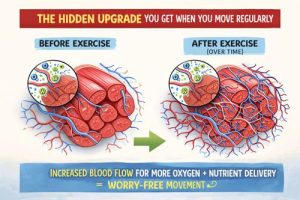
One adaptive response from regular, fitting aerobic movement that I still find fascinating is capillarisation.
.
Capillaries are the final stop in your blood vessel network.
They’re the tiny pathways that deliver oxygen-rich blood to working cells, and just as importantly, carry away metabolic waste..
Think of capillaries like a fine fishing net wrapped around groups of muscle cells.
.
Now here’s the cool bit 👇
When you place your body under controlled oxygen demand — walking, steady running, treadmill work, cycling — those capillaries don’t just work harder…
they multiply.Your body literally builds more pathways.
.
More pathways means:
🩸 Better oxygen delivery
🩸 Faster waste removal
🩸 Less strain for the same effort
.
Which is why this happens 👇
.
You start a new activity routine.
It feels clunky. Heavy. A bit awkward.Then suddenly — without doing anything dramatic — it feels easier. Smoother. More sustainable.
That improvement isn’t just fitness or strength.
It’s your capillary network increasing its density, volume, and diffusion ability..
More tiny blood roads feeding your muscles.
Yeah… sounds boring on paper.
But in real life?It’s one of the reasons regular movement makes life feel easier — not just workouts.
Now you know 😉
-
What does it mean if you can complete one full lap (90-second breath hold)? This would have you in the top 1.5% globally!
.
Reaching the finish line isn’t about having “bigger lungs” — it’s mostly a sign of efficient breathing control and a calm, well-regulated system.
.
What a full lap usually suggests,
.
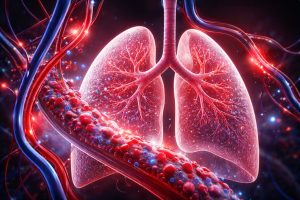
🫁 Strong CO₂ tolerance (the big one) - The urge to breathe is driven mainly by rising carbon dioxide — not falling oxygen. If you reach 90 seconds, your brain stays calm as CO₂ rises rather than triggering panic breathing.
🫁 Efficient breathing mechanics - You’re likely using the diaphragm and ribcage well instead of shallow chest breathing, reducing wasted effort and improving respiratory control.
🫁Efficient oxygen transfer - While not a medical test, comfortable longer holds often reflect effective airflow and blood-flow matching in the lungs, supporting smoother oxygen use during daily activity and exercise.
🫁 Aerobic conditioning and capillarisation - Regular aerobic training improves circulation and capillary density within working tissues.
🫁 Calm nervous system regulation - Longer holds typically indicate better parasympathetic (“calm mode”) control — staying relaxed while discomfort gradually builds.
-
By now, most people understand the basics.
.
✔️ Move your body early.
✔️ Eat cleanly through the day.
✔️ Limit alcohol, sugar, and ultra-processed junk..
Simple habits — massive upside.
.
An early morning “motor rev-up” paired with clean fuelling is still one of the most powerful health combinations we know. The physical benefits have been preached for centuries:
.
• stronger muscles and bones
• healthier heart and blood vessels
• better metabolic efficiency and body composition
• improved gut health and immune resilience
.
But honestly — it’s the mental wins that deserve more credit.
.
That early morning dopamine and serotonin lift creates momentum. You don’t just start the day — you win the morning. And when you win the morning, the day usually follows.
.
So why aren’t we doing it?
.
Because modern Aussie life quietly works against us.
You set the alarm 40 minutes earlier.
Plan a quick 20-minute shuffle, a few push-ups, shower, light gut-friendly brekkie, coffee — done..
Perfect plan.
Then the alarm fires… and the brain instantly negotiates. “Sleep matters… I’ll train after work.”
Sound familiar?
.
Unfortunately, the odds aren’t great after that decision.
.
❌ Work stress builds.
❌ Convenience food sneaks in.
❌ Energy drops.
❌ Weather turns ordinary around 4:30pm..
And suddenly — tomorrow becomes Monday again. You’re not lazy. You’re human.
Enter the Pampy Solution: Remove the Daily Battle
.
Instead of trying to be perfect every day… Diarise ONE non-negotiable habit.
.
👉 The BP 4-Day Hard Reset
.
Commit to completing the program 'only for the first four days of every month'. That’s it.
.
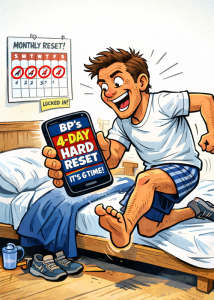
• No long-term overwhelm
• No “I must change my whole life” pressure
• No daily decision fatigue
• Just four focused days.
• Lock it in. Treat it like an appointment you don’t cancel.
• Then — forget about it for the rest of the month.
.
Think of it as a monthly metabolic and mental reset ritual — a short, controlled circuit breaker that reconnects you with how good your body is designed to feel.
.
Why Four Days Works
.
Four days is long enough to:
.
• reset sleep rhythm
• stabilise appetite signals
• reduce sugar and alcohol drift
• restore movement momentum
• remind your brain what “feeling good” actually feels like again
.
👉 12 Resets Per Year — Can You Do It?
👉 If accountability helps, track it.
👉 Tick off your compliance. Save your progress. Flick it back to me when you’re done each month.
.
♂️ ♀️ Finally, because there are clear metabolic, hormonal, protein-synthesis, and behavioural differences between males & females, I've made subtle changes to these two 4-Day Hard Resets.