
-
Pampy’s Post (#347) — Dec25a
🎯Understand your training stress - by feel, not gadgets
🎯Try these strategies before conceding to it being a bad day
🎯Aging - what's normal, what can you do about it
🎯How You Sit Shapes How You Feel - 5 postural tips
🎯Ashes (Walking) Game - minutes = runs (Prize to the winner)
-
🫀 Training Stress — Feeling It, Not Just Tracking It
Charles Darwin nailed it a long time ago:
“It’s not the fittest who survive, nor the most intelligent, but those who can best adapt to their environment.”
That’s training in a nutshell.
We don’t need another smart watch to tell us how cooked we are. We need to listen to our bodies and respond before the wheels come off. And believe me, I am guilty of running myself into the ground over the years. I'd like to think I listen to my body far better these days.
Why Stress Matters
.
Stress isn’t just work deadlines or traffic. It’s training load, poor sleep, skipped meals, arguments, late nights, caffeine bombs — the lot. Your adrenal glands (tiny things sitting on top of your kidneys) are your body’s “stress HQ.” They release hormones like cortisol and adrenaline to help you adapt.
When stress is short and sharp (say, a hard race or a brutal workday), your body copes and resets. But when stress is constant — too much training, not enough recovery — your system starts to slide:
.
🚩 Fatigue creeps in.
🚩 Sleep goes wonky.
🚩 Mood gets flat.
🚩 Workouts feel harder.
🚩 Sugar cravings fire up.
🚩 Niggles start popping up.
.
This isn’t weakness. It’s your system saying: “Ease up, mate.”
The 3 Stages of Stress
.
🟢 Alarm — You stress the body, it rallies. Short-term fatigue, then bounce back.
🟡 Resistance — Stress keeps coming, the body adapts but starts burning matches faster than it can replace them. This is where most athletes hover.
🔴 Exhaustion — The wheels fall off. Deep fatigue, no pop in training, immunity down, motivation gone.
The goal isn’t to avoid stress — training is stress — it’s to manage it so we never drift too long in Stage 2 or 3.
Tech vs. Feel
.

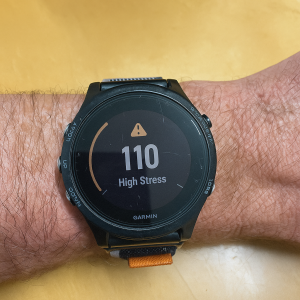
I’ve worn all the smartwatches, synced the apps, and stared at the dashboards. And while those metrics can be useful — and sometimes pure datatainment — I’m not convinced they know my body better than I do. They’re estimates, not insight. Numbers that hint, not tell.
I’ve found it far more valuable to ask myself the real questions — and better still, have someone close to me answer them too. That’s often when you get the most honest feedback about how you’re really tracking — physically and mentally.
My Quick Check-In (Score Yourself Daily)
.
✅ Did I wake up feeling refreshed?
✅ Is my resting mood upbeat or flat?
✅ Is my hunger stable, not craving sugar or caffeine?
✅ Do my legs feel light, not heavy?
✅ Did I sleep soundly last night?
.
🎯 If the majority of these are off, your training stress is up, even if your watch says “All good.” That’s the day to back off, walk, stretch, or simply rest.
🏁 Final Thought
.
Great training isn’t about smashing every session. It’s about tuning in, adapting, and giving your body what it needs on that day.
.
Stress isn’t the enemy — ignoring it is. For those interested, below is my proven training stress questionnare.
-
I’m no psychologist — but after three decades helping people move, eat, and live better, I’ve noticed something clear: the same habits that build physical health build mental strength. I presented these six simple strategies during Mental Health Month in October. Surrounded by experts, I felt a bit of imposter syndrome — until it hit me: these may be common-sense habits, but they work.
🌊 Hydration – “Water Before Worry”
.
I’ve learned that the simple act of sipping water can reset the whole system. Most people walk around 1–2 % dehydrated — enough to cloud mood, concentration, and decision-making. I like warm water with a pinch of bicarb soda or mineral salts — it helps alkalise, supports electrolyte balance, and just feels cleansing. When we’re low on fluid, our blood thickens, our heart works harder, and cortisol nudges upward. It’s no wonder moods dip. My rule: sip all day, don’t gulp occasionally. A reusable bottle nearby isn’t just a hydration tool — it’s a mindfulness anchor.
🚶♂️ Activity – “Move First, Think Later”
.
When stress builds, movement beats meditation nine times out of ten. A 10-minute walk can literally change brain chemistry — pumping oxygen through the prefrontal cortex and triggering dopamine, serotonin, and endorphins.
I’ve found rhythmic, continuous movement (walking, cycling, swimming) to be the best “reset switch.” It’s gentle, repetitive, and doesn’t require much thought.
Then there’s resistance training — the quiet confidence-builder. There’s something empowering about controlled muscle tension — the safe kind that pushes against gravity and says, “I’ve got this.” It triggers a healthy rise in adrenaline, oxytocin, and that satisfying post-workout calm.Don’t chase intensity — chase consistency.
🎸 Music – “Mood in a Major Key”
.
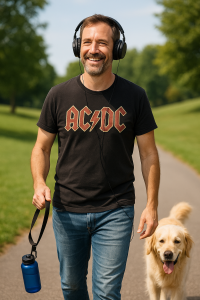
Music bypasses logic and heads straight for the limbic system — our emotional HQ. I keep a few go-to “feel good” tracks on standby. Anything in a major key (especially G) seems to lift the mood — think Tom Petty’s Learning to Fly or Bruce Springsteen’s Dancing in the Dark. Yeah, yeah, I'm a product of the 80's. Mind you, you gotta check out JS Bach (he rocks).
The trick? Same song, multiple times. Repetition anchors rhythm to emotion, and before long, your heart rate follows the tempo. Even better - play an instrument. It's almost impossible to focus on playing notes and focus in a negative thought.
When I sense a meltdown coming on, I reach for the headphones before I reach for the fridge or phone. Works every time.😴 Sleep – “Tomorrow Starts Tonight”
.
When sleep quality dips, mindset follows. I’ve learned to treat bedtime like pre-race prep.
♠ No screens an hour before bed. Blue light keeps the brain wired.
♣ Cool the room, and even better, cool your bedding — body temperature needs to drop for melatonin to rise.
♥ Paper beats pixels. A real book, even for five minutes, helps shift focus from doing to dreaming.
♦ The payoff? Better resilience, steadier emotions, and fewer “bad days” before breakfast.
🥗 Nourishing – “Eat Real, Feel Real”
.
When I drift toward processed foods, I feel it mentally before I see it physically. Industrialised food is often low in nutrients, high in inflammation — the perfect storm for mood swings.
Whole foods — colourful plants, quality protein, healthy fats — stabilise blood sugar and feed the gut bacteria that make serotonin (yes, most of it’s made in the gut).
A glass of wine or a beer can be part of the plan, but when the “couple” becomes “a few,” it’s rarely a mental health win. I like to think of alcohol as a borrowed mood lift — you have to pay it back tomorrow.
🙏 Gratitude – “Flip the Lens”
.
Gratitude isn’t just a nice idea; it’s a neural rewiring exercise. It shifts focus.
I’ve found the quickest way to feel grateful is to express it out loud — compliment someone, thank someone, even text someone you haven’t in a while. The feel-good feedback loop is instant — both giver and receiver get a dopamine kick.
🧭 In Closing
.
Before you label it “a bad day,” try hydration, movement, music, sleep, food, and gratitude — in that order.
They’re not just strategies — they’re mood levers. And when practised daily, they keep you well away from the mental cliff edge that too many of us visit unnecessarily.
-
(From someone now officially in the “back nine”)
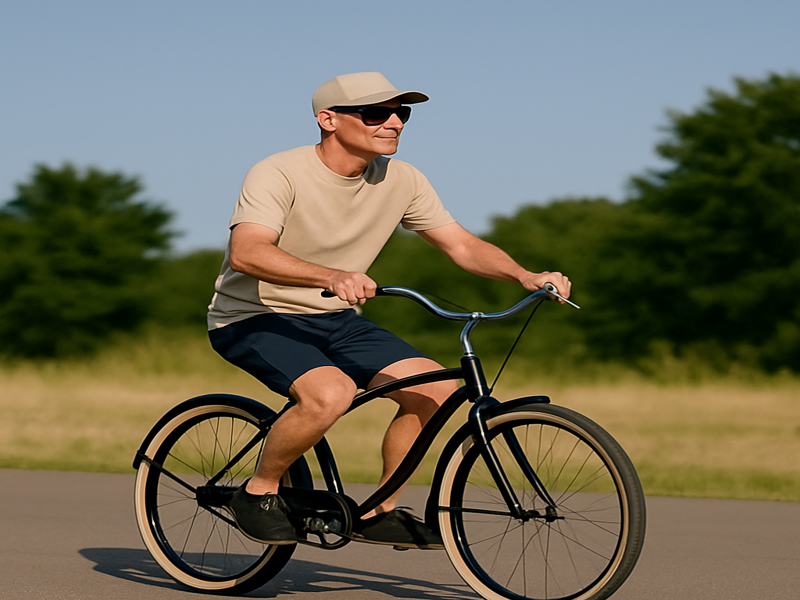
So — what’s actually normal when you slide into your 50s? And how do we ride the wave rather than get dumped by it?
I’m mid-50s now, and for the first time in my life I’m dealing with clunky bits, random aches, and a level of physical function that is definitely not the first 50 years. And I’ll be honest — I’ve caught myself questioning the belief I held for decades:
“I’ll sail through life with the body of my 20-year-old forever.”
Yeah… nope.And here’s the kicker: once my body started quietly down-regulating itself, my brain went searching for dopamine elsewhere. Enter ultra-processed food — something I never cared for — suddenly whispering sweet nothings. I still enjoy a beer or wine, but my metabolism now politely informs me there will be a bill to pay. And it’s not small.
Cue: more dysfunction, more aches, clunky sleep, and a hit to confidence.So what does someone who has always lived an active life — and loves the contest — do next?
.
❌ Do I just concede?
❌Take a knee?
❌ Run out the clock?
Or… is there a legitimate way to walk myself into the next phase with a bit more grace and a bit less groaning getting out of the car?Luckily, I know enough physiology and brain science to recognise that what I’m feeling is normal. Every system — blood flow, cell turnover, metabolism, protein synthesis — shifts down a gear. Not broken. Not dying. Just adjusting. Accepting that has helped me plan the next chapter more intelligently.
So here’s what actually helps me — not Instagram advice, not clickbait nonsense — just the real stuff I now rely on:
1. Cardio: Police Your Intensity (DTI — Default Training Intensity)
.
💓 My heart no longer needs — nor thanks me for — “chasing the rabbit.”
💓 I now sit in the 60–70% zone almost always. This is my DTI - CLICK HERE
💓 When I go above it, I pay: sore, broken, ravenous, and tired for life the next day.
💓 Stay in the zone → feel great.
Simple.2. Resistance Training: Tighten the Rusty Screws
.
🏋️♂️ Ten to fifteen minutes.
🏋️♂️ That’s it.
🏋️♂️ A load around 60% of my old “max” and movements my body knows from decades ago.🏋️♂️ Range is self-regulated now — I’m not proving anything — but it keeps the chassis aligned.
3. Sleep: Soothe the Brain, Don’t Fight It
.
💤 Three nights a week, I fall asleep to rain sounds, white noise, meditation… whatever works.
💤 There’s something about these cues that “switches off” the choppy grey matter and helps reset my circadian rhythm.
💤 Honestly, this one’s been a game-changer. Here's my Sleep Questionnaire - CLICK HERE4. Alcohol: Know When It’s a Terrible Idea
.
🍻 If I’m sore, tired, irritable or my confidence is low — that is exactly when not to have a drink.
🍻 The cost is higher now:
gut health → joints → sleep temperature → mood → all go downhill.
🍻 In your 50s, nothing is free anymore.5. Reboots: Non-Negotiable Twice a Year
.
🥗 I dial in 100% to my 14-Day Reboot — no exceptions.
🥗 Zero sugar, zero alcohol, gut-friendly foods, and a day-by-day plan.
🥗 Just follow it - CLICK HERE🥗 I always finish feeling clearer, lighter, more capable.
6. Creatine: Yes, I’m a Believer
.
🧠 Two to three cycles a year, ten weeks each.
The benefits are undeniable for me:
🧠 better energy, steadier metabolism, and sharper cognitive function.
🧠 And while I can still recall entire 1980 cricket scorecards, I do occasionally forget people’s names now — grrrrr — so I’ll take all the help I can get.7. Mates, Marriage & Meaning
.
🤝 This might be the most underrated bit.
🤝 Our kids are off living their lives now, which is brilliant — but it means I have to diarise catch-ups with mates and time with my wife.
It matters.
🤝 Connection is medicine.8. Get Help When You Need It
.
🆘 I lean on one of my closest mates — a brilliant chiro — who keeps the wheels aligned.
🆘 If you’re clunky, stuck, or unsure, find your person: exercise specialist, dietitian, chiro, coach, me.
Work to a simple, flexible plan.
🆘 And if you fall off? That’s normal.
🆘 Reset, reboot, repeat.Final Word
.
Ageing — and all the annoying little bits that come with it — is normal.
But there are absolutely things you can do to make the transition smoother, easier and a whole lot more enjoyable.
Not perfect. Not 20 again.
Just better..
-
I walk into offices all the time and can’t help myself — I’m forever eyeing off sub-optimal sitting posture, especially as the afternoon slump kicks in. As much as I’d love to step in and gently reposition someone (occupational hazard!), of course I wouldn’t dare.
So instead, here are my five quick cues to straighten up, feel better, and protect the only spine you’ve got.
1. Head in Balance
.
✔️ Imagine your head sitting lightly on your spine — like a golf ball resting on a tee.
✔️ Ease your chin back just a touch (no double chin required!).
✔️ Feel the small sub-occipital muscles at the base of your skull release tension.
2. Shoulders Settled
.
✔️ Roll your shoulders up, back, and down — then leave them there.
✔️ Let the upper traps soften and the chest open slightly.
✔️ Your arms should hang easy beside you, not braced against the desk.
3. Spine Supported
.
✔️ Sit tall from your tailbone through to the top of your head.
✔️ Keep the natural inward curve (lumbar lordosis) — not slumped or arched.
✔️ Your lumbar paraspinal muscles should feel active, not strained.
4. Hips & Legs Aligned
.
✔️ Hips slightly above knees — use a cushion if you’re sitting low.
✔️ Feet flat, not tucked under your chair.
✔️ Hamstrings should feel relaxed, not compressed against the seat edge.
5. Ankles & Calves Free
.
✔️ Ankles at roughly 90°, toes pointing forward.
✔️ Avoid wrapping your feet around chair legs — it tightens your calves.
✔️ Give them a gentle flex every few minutes to keep blood flowing.
Mini-reset tip:
.
Every 30–40 minutes, stand up, stretch tall, rotate your shoulders, and walk a few steps.
Your spine and brain will both thank you.
Ashes Walking Tracker
11 Consecutive Days
Stay at the crease for 11 straight days – no rest days. Minutes on feet = runs.
If you don’t walk on a day, please type “0”.
| Batter | Date | Minutes (Runs) | Crowd |
|---|---|---|---|
| 1 | |||
| 2 | |||
| 3 | |||
| 4 | |||
| 5 | |||
| 6 | |||
| 7 | |||
| 8 | |||
| 9 | |||
| 10 | |||
| 11 | |||
| Total Runs (minutes) | 0 | ||
Innings total: 0 runs – highest score wins!
🦆 = duck (no walk)
👏 = any walk (1–49 runs)
🏟️🎉 = 50+ minute cheer
🏏🔥 = 100+ minute ton
Autosaves on this device. Use Save & PDF, then send your innings to Brad Pamp.
Highest innings number wins! 🏏