
Cardio Exercise
The value and application of general cardiovascular exercise — for health, energy, wellbeing and longevity.
Why cardio matters
For many people, cardiovascular exercise is one of the most powerful tools available to improve health, energy, wellbeing and longevity.
Cardio is more than “burning calories”
Whether it is walking, jogging, cycling, swimming, rowing, hiking, paddling or simply moving more often, rhythmic and consistent cardiovascular activity provides a positive stimulus to almost every major system within the body.
At BP ONE, we view cardiovascular exercise as much more than simply “burning calories.”
It is one of the most effective ways to improve the health of the heart, lungs, blood vessels, muscles, metabolism and brain — all at the same time.
Regular cardio exercise can help
- Improve heart and lung function
- Lower blood pressure
- Improve insulin sensitivity and blood glucose control
- Assist with healthy body weight management
- Reduce stress and anxiety
- Improve mood and mental clarity
It can also help improve
- Energy levels throughout the day
- Sleep quality
- Recovery and resilience
- General confidence
- Exercise consistency
- Risk profile for many lifestyle-related diseases
The biggest mistake most people make
One of the most common mistakes I see is people exercising too hard, too often.
Many believe that every session should leave them exhausted, breathless or completely spent.
In reality, excessive intensity often leads to poor recovery, increased injury risk, reduced consistency, elevated fatigue, poor sleep, reduced enjoyment and an increased likelihood of giving up.
Consistency almost always beats intensity.
The goal is not to see how hard you can exercise today. The goal is to create an exercise intensity that your body can recover from tomorrow, next week and next year.
The BP ONE philosophy — DTI
At BP ONE, much of our cardiovascular training is built around what I call DTI — Default Training Intensity.
DTI is the exercise intensity where your body is working hard enough to stimulate positive adaptation, yet easy enough to recover from and repeat consistently.
Think of DTI as your “all day pace.”
It is not easy. It is not hard. It is sustainable.
For most people, DTI allows them to build fitness, improve metabolic health, increase exercise volume and develop long-term consistency without excessive fatigue.
Calculate your BP DTIFinding your personal DTI
Every person is different.
Age, training history, body composition, current fitness, recovery capacity, medications, lifestyle stress and health history all influence the intensity that is most appropriate.
To determine your DTI, we typically use a combination of:
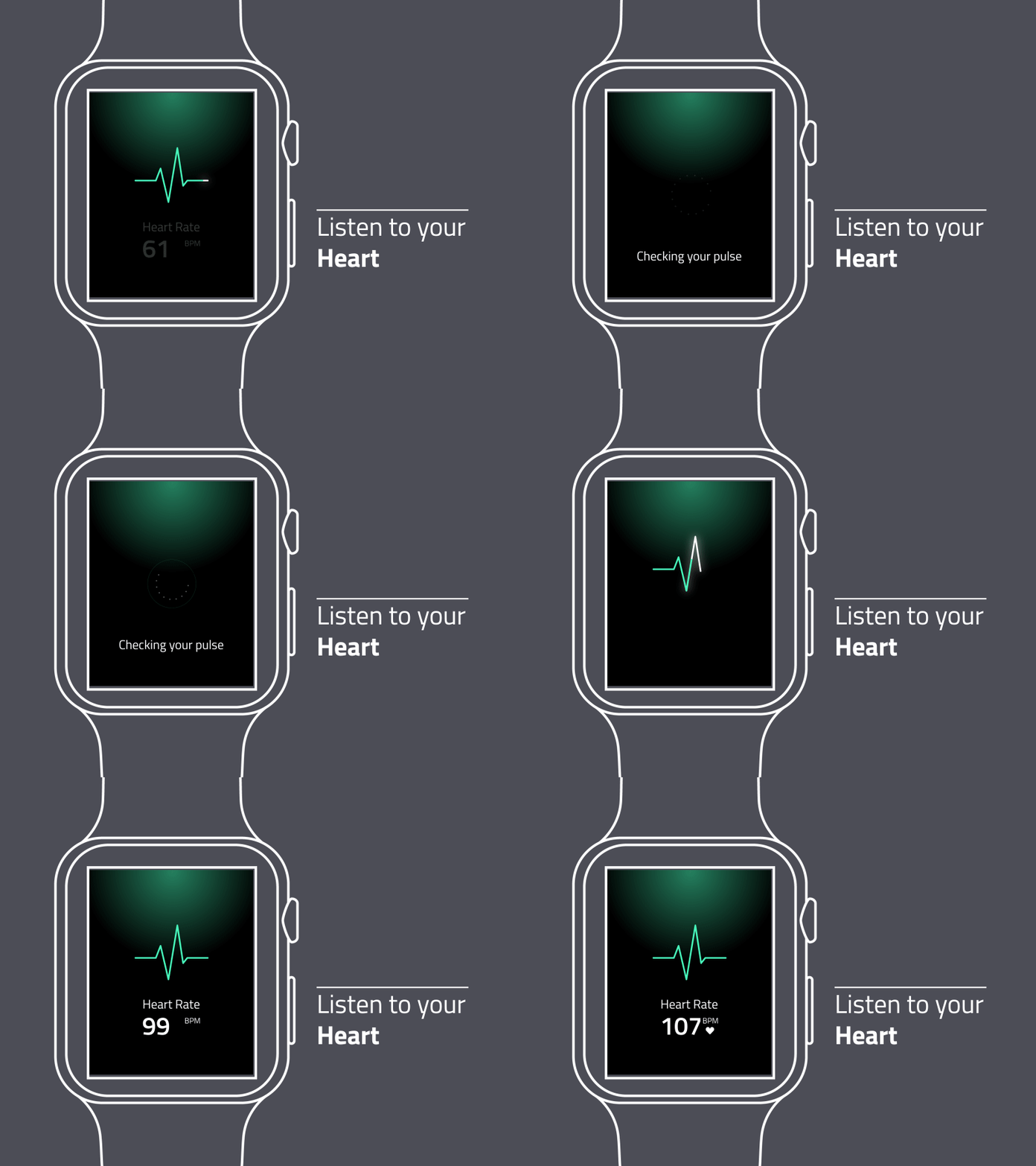
- Heart rate monitoring
- Perceived Rate of Exertion — PRE
- Exercise history
- Current health status
- Practical field testing
Using this information, an estimated DTI range is established. You then trial this intensity during your training and provide feedback to Brad. From there, your personal training intensity can be refined and adjusted to suit your individual response.
Train smarter, not harder
One of the greatest lessons endurance athletes learn is that fitness is not built during training.
Fitness is built during recovery from training.
The purpose of cardio exercise is not to constantly push harder. The purpose is to create the right stimulus, recover from it, and repeat it consistently over time.
At BP ONE, our focus is helping people find the exercise intensity that delivers results while protecting recovery, reducing injury risk and supporting long-term health.
The best program is the one you can repeat.
For most people, the best exercise program is not the hardest one.
It is the one they can successfully perform week after week, month after month and year after year.