
Muscle : Weight Ratio
The one number that tells us far more than body weight alone.
If you remember only one number from your health assessment, remember your Muscle : Weight Ratio.
What Is Muscle : Weight Ratio?
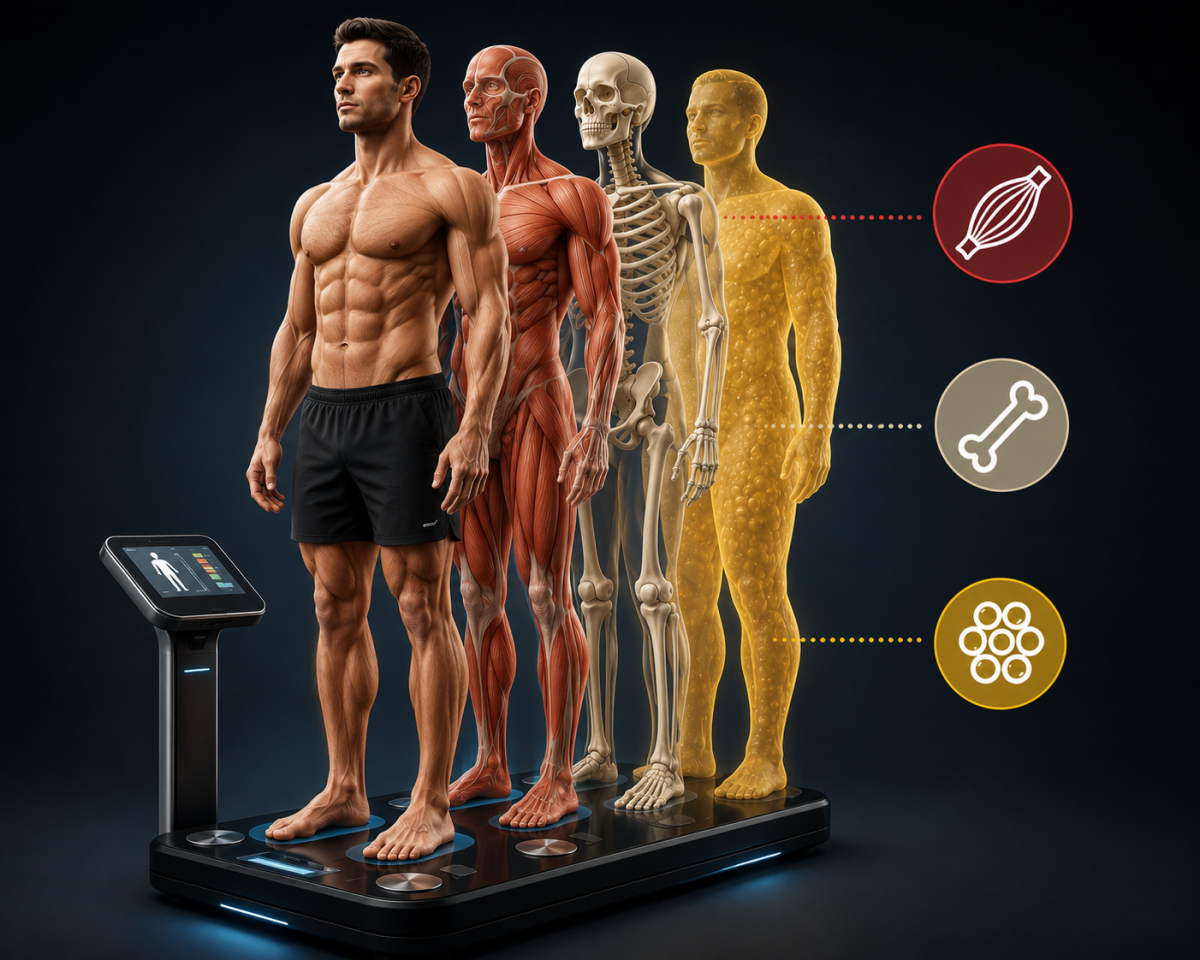
Muscle : Weight Ratio is a simple percentage that compares your measured muscle mass in kilograms against your total body weight.
Example: 40 kg muscle ÷ 100 kg body weight = 40%
This number helps us understand how much of your body weight is functional, active muscle tissue.
And for many men aged 40-60, this is often a far more useful conversation than simply asking, “How much do you weigh?”
The One Number I Want You To Chase
Most men focus on body weight.
I want you to focus on body quality.
The goal is not simply to become lighter. The goal is to carry more muscle relative to your total body weight.
| Body Weight | Muscle Mass | Muscle : Weight Ratio |
|---|---|---|
| 100 kg | 40 kg | 40% |
| 95 kg | 40 kg | 42.1% |
| 90 kg | 40 kg | 44.4% |
| 85 kg | 40 kg | 47.1% |
This is powerful because it shows that you do not always need to gain muscle to improve your score. If you protect your muscle while reducing unnecessary body fat, the ratio improves quickly.
Why We Focus On This Number
A higher Muscle : Weight Ratio generally tells us that a man is carrying more useful muscle and less unnecessary body fat.
That usually means better function, better strength, better metabolic health, and a better long-term health position.
1. It Measures Body Quality
Two men can weigh exactly the same but have completely different bodies.
| Male | Weight | Muscle | Ratio |
|---|---|---|---|
| Man A | 90 kg | 32 kg | 35.5% |
| Man B | 90 kg | 42 kg | 46.7% |
Same body weight. Completely different body.
2. Muscle Is Your Metabolic Currency
Muscle is active tissue. The more quality muscle you carry, the better your body generally handles fuel.
- Better glucose disposal
- Better insulin sensitivity
- Better blood sugar control
- Better fat utilisation
- Better long-term weight maintenance
3. Muscle Protects Men As They Age
Most men worry about gaining fat. They should be equally concerned about losing muscle.
- Strength declines
- Power declines
- Balance declines
- Mobility declines
- Muscle mass declines
The problem is not merely looking older. The problem is becoming physically less capable.
4. It Rewards Healthy Weight Loss
Many diets produce weight loss. Not all produce health improvements.
Crash dieting can reduce muscle, strength, energy and exercise capacity.
The scales may move down, but the body may actually become weaker.
Why This Matters So Much For Men 40-60
This is the age where many men slowly lose ground without noticing.
- Reduced activity
- Longer work hours
- More sitting
- Less sport
- Poorer recovery
- Gradual weight gain
| Age | Weight | Muscle | Ratio |
|---|---|---|---|
| 30 | 85 kg | 40 kg | 47% |
| 50 | 100 kg | 38 kg | 38% |
Notice what happened.
The issue was not simply weight gain. The issue was more fat, less muscle, and a lower Muscle : Weight Ratio.
This is where health risks often start to accumulate.
What Does A Good Ratio Look Like?
For most middle-aged men, I use these practical coaching ranges.
| Ratio | Interpretation |
|---|---|
| <35% | Significant improvement needed |
| 35-40% | Fair |
| 40-45% | Good |
| 45-50% | Very good |
| >50% | Exceptional |
These are practical coaching ranges, not medical cut-offs.
There Are Only Two Ways To Improve This Number
You either reduce unnecessary body fat, maintain or increase muscle, or ideally do both at the same time.
1. Lose Body Fat
Reducing unnecessary body fat lowers the denominator.
If muscle is maintained while body weight drops, the ratio improves immediately.
This is why nutrition is so powerful.
2. Maintain Or Increase Muscle
Increasing muscle raises the numerator.
The ratio improves even faster.
This is why resistance exercise is non-negotiable.
The Big Mistake Men Make
Most men try to lose weight.
What they should be trying to do is:
Protect muscle while reducing body fat.
Those are two very different goals.
The ideal outcome:
- Weight goes down
- Waist goes down
- Body fat goes down
- Muscle stays the same or improves
- Muscle : Weight Ratio goes up
That is a successful transformation.
How To Protect Muscle As You Age
Eat Enough Protein
Aim for protein at every meal.
- Eggs
- Fish
- Chicken
- Lean red meat
- Greek yoghurt
- Cottage cheese
- Whey protein
- Legumes
Protein provides the building blocks required to maintain muscle tissue.
Resistance Train Regularly
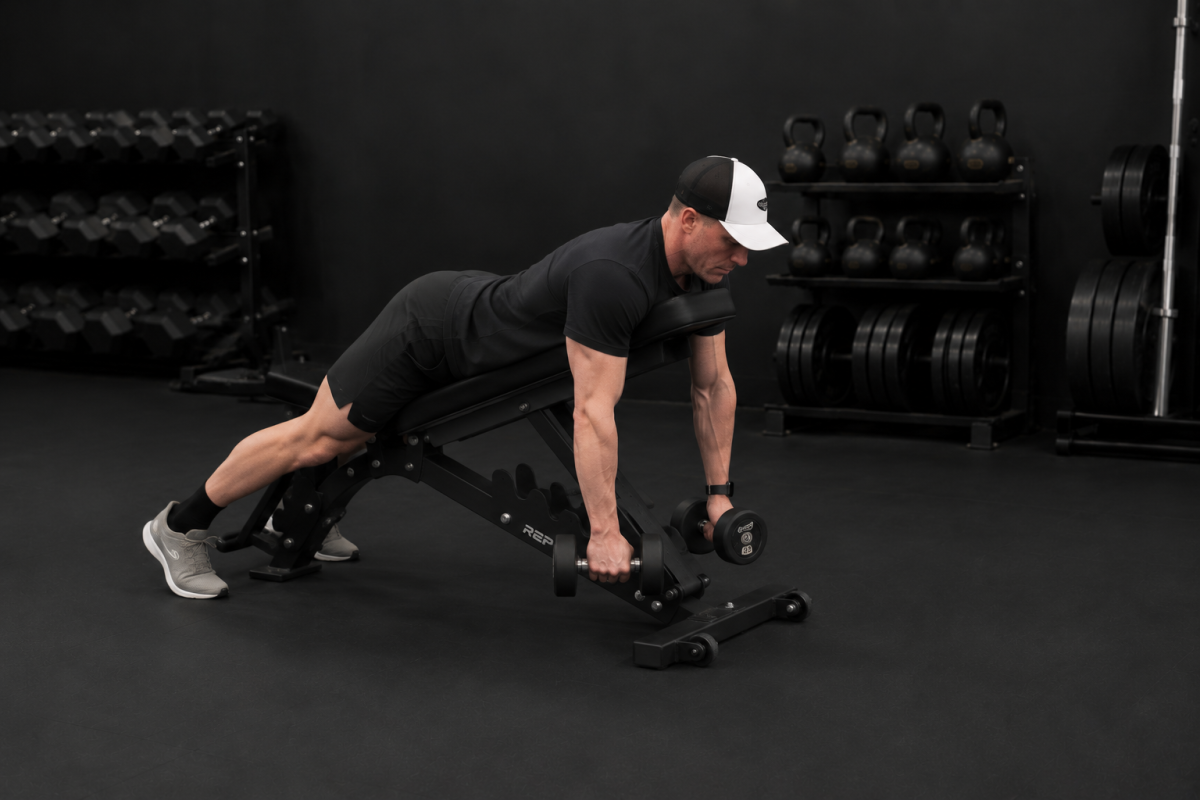
The body keeps muscle it is required to use.
Resistance training provides that signal.
- Body weight training
- Resistance bands
- Machines
- Free weights
- Functional strength work
Two to four sessions per week is sufficient for most men.
Stay Active Daily
Walking remains one of the most powerful tools available.
- Supports fat loss
- Improves insulin sensitivity
- Assists recovery
- Helps preserve muscle
Avoid Extreme Dieting
Aggressive calorie restriction often causes muscle loss.
Slow, sustainable fat loss almost always wins.
Prioritise Sleep
Muscle recovery occurs largely during sleep.
Poor sleep commonly leads to reduced recovery, increased hunger, lower training quality and poorer muscle retention.
The Real Goal
When assessing middle-aged men, I am less interested in what they weigh and far more interested in what that weight is made of.
The goal is not simply to become lighter.
The goal is to become a better version of your current body.
A higher Muscle : Weight Ratio generally means:
- Less unnecessary body fat
- Better metabolic health
- Greater strength
- Better physical function
- Improved long-term health outcomes
- Greater resilience as you age
Rather than chasing a number on the scales, chase a body that is carrying more muscle relative to its total weight.
That is a far better measure of progress, health and longevity.