
The 28-Day Inflammation Reset
A practical one-on-one reset for men over 50 who want to improve metabolic health, lower inflammatory load and feel better again.
Is this you?
Most men over 50 don't wake up one morning feeling old.
It happens gradually.
A little more weight around the waist.
A little less energy.
A few more aches and pains.
Sleep isn't quite as refreshing.
Recovery takes longer.
The joints feel stiffer.
Motivation isn't quite what it once was.
The frustrating part is that many men assume these changes are simply part of getting older.
While aging certainly plays a role, there is another factor often quietly operating beneath the surface.
Chronic inflammation.
Unlike the inflammation you experience after rolling an ankle or straining a muscle, chronic inflammation is different.
It is low-grade. Persistent. Often invisible.
The body behaves as though it is under a constant state of stress, even when no obvious illness is present.
Researchers now commonly refer to this process as "inflammaging" — the gradual rise in inflammatory activity that tends to accompany aging.
The challenge is that chronic inflammation rarely announces itself dramatically.
Instead, it slowly influences many of the symptoms men over 50 commonly experience.
You may notice:

Many men simply conclude that this is what getting older feels like.
In reality, the body may be sending signals that it is struggling to cope with the combined effects of poor recovery, chronic stress, disrupted sleep, excessive alcohol intake, highly processed foods, and declining metabolic health.
The Gut
At the centre of this process sits one of the most important systems in the human body.
For many years we viewed the gut simply as a digestive tube.
We now understand it is much more than that.
The gut acts as a major immune organ. It influences inflammation, blood sugar control, appetite regulation, mood and even how efficiently we age.
Inside the digestive tract live trillions of bacteria collectively known as the gut microbiome.
When these organisms are healthy and diverse, they help produce compounds that support metabolism, immune function and recovery.
When diversity falls, inflammatory activity often rises.
This is where modern life creates a problem.
Regular alcohol consumption. Frequent travel. Airport food. Ultra-processed snacks. Poor sleep. Long work hours. Constant stress.
These are all common features of modern professional life, and they can place significant strain on the gut microbiome.
As inflammation increases, the body's ability to produce energy efficiently can begin to decline.

Mitochondria Matter
This is particularly relevant to structures inside our cells known as mitochondria.
Mitochondria are often referred to as the engines of the cell.
They convert oxygen and nutrients into usable energy.
Healthy mitochondria help us remain energetic, metabolically flexible and physically capable.
Unhealthy mitochondria often contribute to fatigue, poor recovery and increased inflammatory signalling.
Unfortunately, inflammation and mitochondrial dysfunction often feed one another, creating a cycle that becomes increasingly difficult to break.
The good news is that this cycle can be interrupted.
Not through extreme dieting. Not through excessive exercise. Not through expensive supplements, peptides or miracle cures.
But through the consistent application of several powerful fundamentals.
This is a reset.
This 28-Day Inflammation Reset has been designed around those principles.
The goal is not simply weight loss.
The goal is to create an internal environment where the body can function more efficiently.
An environment that supports healthier blood sugar control, healthier energy production, healthier recovery, healthier sleep and ultimately, healthier aging.
Over the next 28 days, we will focus on nourishing the body rather than restricting it.
We will prioritise colourful whole foods. We will improve gut diversity. We will support mitochondrial health through appropriate aerobic activity. We will place a premium on recovery and sleep quality.
And we will measure meaningful health markers before and after the program to objectively assess progress.
This is not a crash diet. It is not a detox. It is not a weight-loss challenge.
It is a reset.
A chance to reduce inflammation, improve metabolic health, and remind the body how good it can feel when given the opportunity to recover, adapt and thrive.
Baseline Testing
Knowing our baseline data.
You can't improve what you don't measure.
One of the biggest mistakes people make when beginning a health program is relying solely on body weight.
While weight can be useful, it often tells only a small part of the story.
This program aims to improve metabolic health, reduce inflammation, support gut health, improve recovery and create a healthier internal environment.
To understand whether those improvements occur, we first need to establish a baseline.
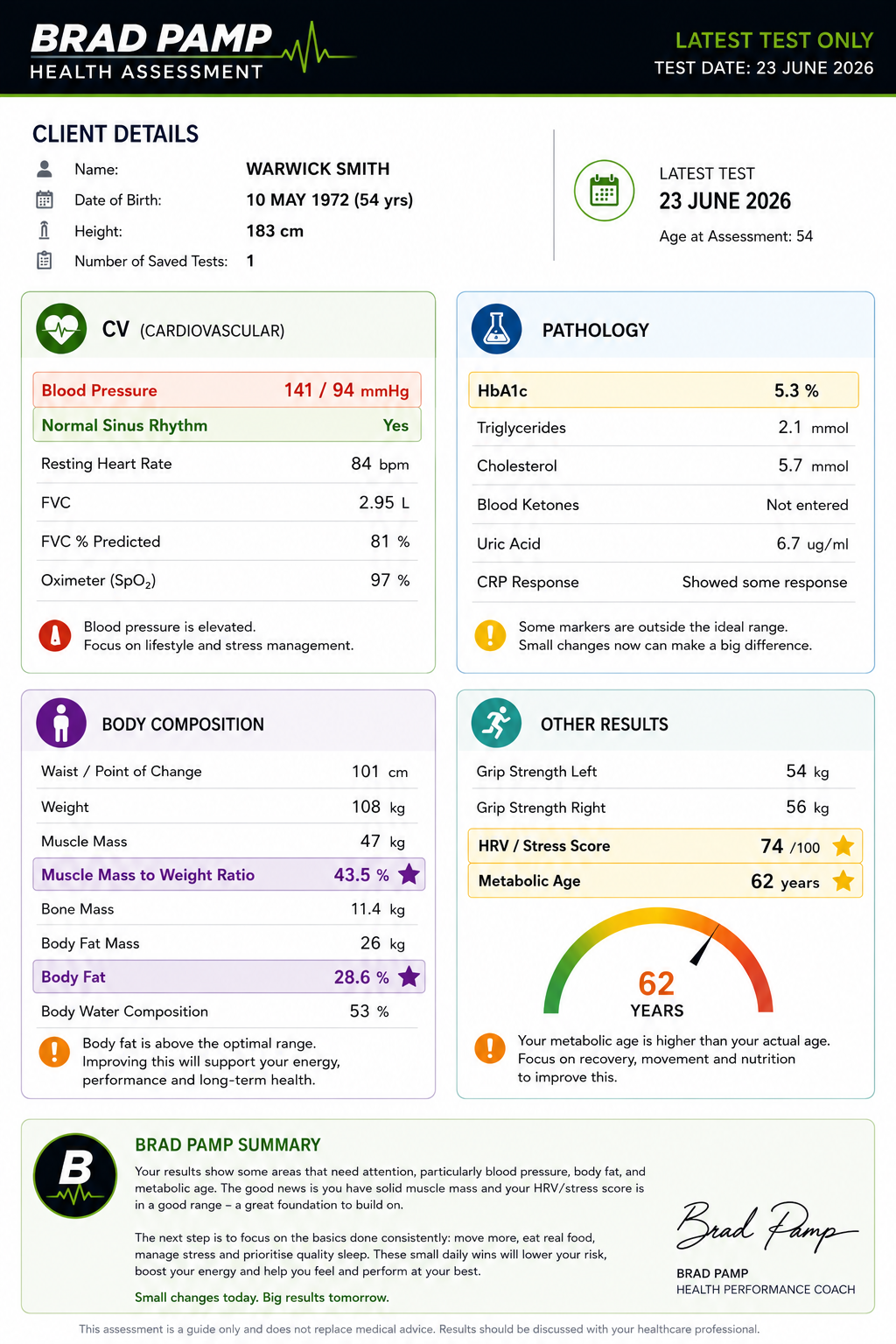
The following measurements provide valuable insight into how the body is functioning today and allow us to compare results following the 28-Day Inflammation Reset.
HbA1c
What is it?
A blood marker that reflects average blood glucose levels over approximately the previous three months.
Why it matters
Elevated HbA1c may indicate poor blood sugar regulation and is often associated with insulin resistance, excess body fat and chronic inflammation.
Triglycerides
What are they?
A form of fat circulating within the bloodstream.
Why they matter
Elevated triglycerides are commonly associated with excess sugar intake, alcohol consumption, insulin resistance and increased cardiovascular risk.
Uric Acid
What is it?
A waste product produced during the breakdown of purines found naturally in food and within the body.
Why it matters
Elevated uric acid is associated with gout, metabolic dysfunction, excess alcohol consumption and increased inflammatory activity.
Blood Pressure
What is it?
The force of blood against the artery walls.
Why it matters
Elevated blood pressure increases cardiovascular risk and often accompanies chronic inflammation, poor sleep, excess body fat and metabolic dysfunction.
Resting HR
What is it?
The number of heart beats per minute while fully rested.
Why it matters
A lower resting heart rate is often associated with improved cardiovascular fitness, recovery and autonomic nervous system function.
HRV
What is it?
Heart Rate Variability measures the variation in time between individual heart beats.
Why it matters
HRV provides insight into recovery, stress levels and nervous system balance. Higher HRV values generally indicate improved recovery capacity and resilience.
FVC
What is it?
Forced Vital Capacity measures the total volume of air that can be forcefully exhaled following a maximal inhalation.
Why it matters
FVC provides an indication of respiratory capacity and overall cardiorespiratory health.
Haematocrit
What is it?
The percentage of blood made up of red blood cells.
Why it matters
It provides insight into hydration status, oxygen carrying capacity and overall cardiovascular health.
Waist
What is it?
A measurement taken around the abdomen.
Why it matters
Waist circumference is one of the strongest indicators of visceral fat accumulation and metabolic health risk.
Body Fat %
What is it?
An estimate of how much of total body weight is stored as body fat.
Why it matters
Excess body fat, particularly around the abdomen, is strongly associated with chronic inflammation and metabolic dysfunction.
Muscle-to-Weight %
What is it?
The proportion of total body weight represented by skeletal muscle.
Why it matters
Maintaining muscle mass becomes increasingly important with aging and supports metabolic health, mobility and healthy body composition.
Re-Test
Why it matters
The real value of baseline testing is comparison. We measure where you are now, complete the reset, and then assess what has changed.
High Sensitivity C-Reactive Protein
hs-CRP is the blood marker that best reflects the purpose of this program.
If there is one blood marker that best reflects the purpose of this program, it is High Sensitivity C-Reactive Protein.
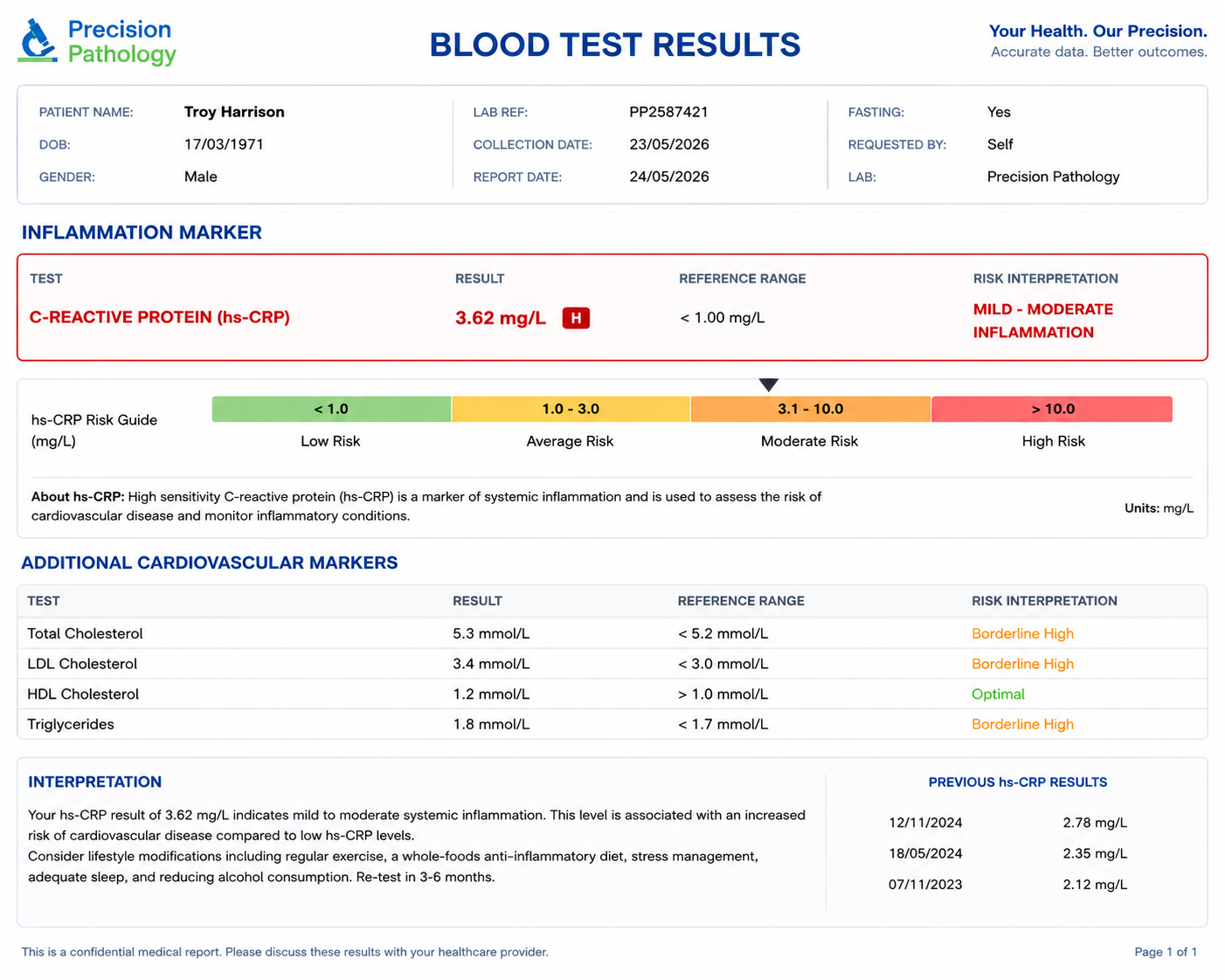
What is hs-CRP?
hs-CRP is a highly sensitive marker of inflammation produced by the liver.
Unlike standard CRP testing, which is designed to identify major infections or significant inflammatory events, hs-CRP is capable of detecting low-grade chronic inflammation.
The type of inflammation often associated with aging, excess body fat, poor sleep, excessive alcohol consumption, metabolic dysfunction and poor recovery.
Why is it important?
Chronic inflammation rarely causes obvious symptoms in its early stages. However, it may contribute to:
- Increased abdominal fat
- Elevated blood pressure
- Insulin resistance
- Reduced recovery
- Poor sleep quality
- Increased cardiovascular risk
- Accelerated biological aging
One of the primary objectives of this 28-Day Inflammation Reset is to reduce inflammatory load. hs-CRP provides an objective measure of whether that is occurring.
How is it measured?
A simple blood test ordered through your doctor or pathology provider.
In Australia, hs-CRP testing is commonly available through major pathology providers including Laverty Pathology, Douglass Hanly Moir, Australian Clinical Labs and Sonic Healthcare laboratories.
For consistency, testing should ideally occur fasted, well hydrated, free from illness, and without strenuous exercise for 24-48 hours beforehand.
Many participants become disappointed if the scales don't move quickly enough.
The reality is that meaningful health improvements often occur before dramatic weight loss.
Blood sugar control may improve. Inflammation may reduce. Recovery may improve. Blood pressure may improve. Sleep may improve.
These are often the earliest signs that the body is moving in the right direction.
The 28-Day Anti-Inflammatory Nutrition Strategy
We are chasing nourishment.
For many years, nutrition was viewed largely through the lens of calories.
While energy balance certainly matters, modern research continues to reveal that food does far more than simply provide calories.
Every meal sends information to the body.
Food influences inflammation. Food influences blood sugar control. Food influences recovery. Food influences sleep.
Food also influences the trillions of organisms that live within the digestive tract.
At the centre of this nutrition strategy sits the gut microbiome.
The gut microbiome is made up of trillions of bacteria, fungi and microorganisms that live within the digestive tract.
These organisms help regulate immune activity, metabolism, appetite, blood sugar control and inflammatory signalling throughout the body.
When the microbiome is diverse and healthy, it generally works in our favour.
When diversity declines, inflammation often rises.
Over time, these factors may contribute to a less diverse microbiome and a greater inflammatory burden.
This is one reason why so many men find themselves carrying excess abdominal fat, recovering poorly, sleeping poorly and feeling less energetic than they once did.
The objective of this program is to help reverse that trend.
One meal at a time.
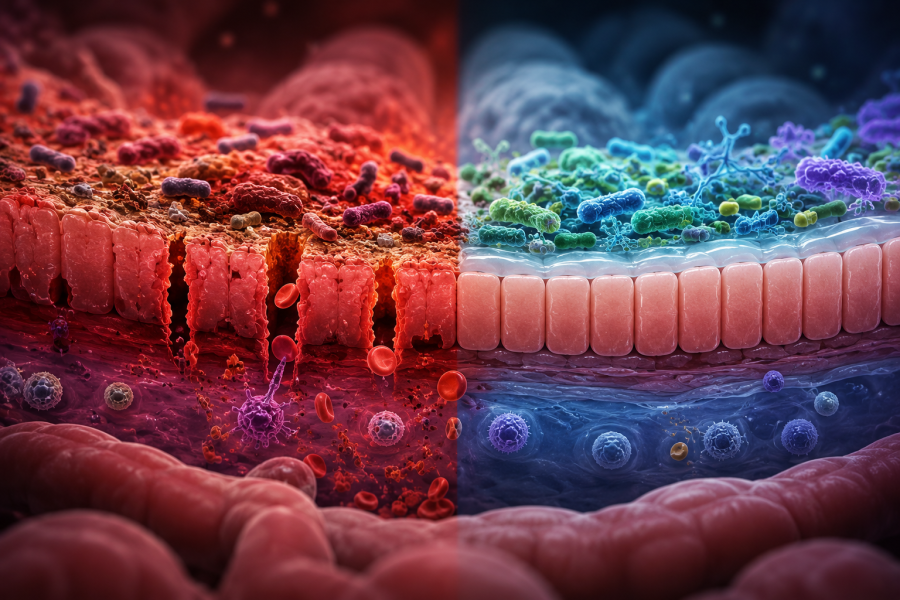
The Gut Is Not Just A Digestive Tube
Around 70% of immune activity is closely linked to the gastrointestinal system.
The gut is an immune organ. A hormonal organ. A neurological organ. A metabolic organ.
The healthier the gut environment becomes, the greater our opportunity to improve overall health.
When these foods are consumed regularly, beneficial bacteria produce compounds known as short-chain fatty acids.
In simple terms:
The foods you eat help determine the environment in which your microbiome lives.
And your microbiome helps determine the environment in which you live.
You are not simply feeding yourself. You are feeding your microbiome.
NAD+, CD38 & Aging
One of the most exciting areas of modern aging research involves a molecule called NAD+.
NAD+ plays a critical role in cellular energy production, DNA repair, mitochondrial function and metabolic health.

As we age, NAD+ levels naturally tend to decline.
At the same time, levels of an enzyme called CD38 often rise.
CD38 consumes NAD+. Higher levels of chronic inflammation are associated with greater CD38 activity.
While there is no single food capable of reversing this process, reducing inflammatory load through nutrition may help create an environment that better supports mitochondrial function and healthy aging.
While nutrition, activity and sleep remain the foundation of this program, NAD+ supplementation may be considered on an individual basis where appropriate.
Not Restriction. Nourishment.
This is not a starvation diet.
This is not a detox.
This is not a calorie-counting exercise.
We will be chasing nourishment.
Protein will be prioritised to help preserve muscle mass and support healthy aging.
Colourful vegetables will be prioritised to improve plant diversity and microbiome health.
Healthy fats will be included to support satiety and metabolic health.
Herbs and spices will be used liberally to increase plant diversity and polyphenol intake.
Alcohol and ultra-processed foods will be removed to reduce inflammatory load.
Over the next 28 days, every meal has a purpose.
Every meal is an opportunity to move the body toward better health.
Through nourishment.
The Right Activity For The Job
More exercise is not always better.
The objective is adaptation.

When most men decide to improve their health, their first instinct is often to train harder.
The logic seems reasonable. If some exercise is good, surely more exercise must be better.
Unfortunately, the body doesn't always work that way. Particularly when chronic inflammation is already present.
Many men entering this program are already carrying a significant physiological workload.
In these circumstances, simply adding more physiological stress may not be the most effective strategy.
The objective of this program is not to see how hard you can train.
The objective is to create an environment where the body can recover, adapt and heal.
For that reason, the activity component of this program focuses heavily on aerobic development through DTI training.
The Engines Of The Cell
At the centre of this approach sits one of the most important structures in the human body.
The mitochondria.
Mitochondria are often referred to as the engines of the cell. They convert oxygen and nutrients into usable energy.
The healthier and more numerous these mitochondria become, the better the body becomes at producing energy efficiently.
As we age, mitochondrial density and efficiency often decline. At the same time, inflammatory signalling tends to increase.
Poor mitochondrial function may contribute to inflammation. Inflammation may further impair mitochondrial function.
A vicious cycle can develop. One of the primary goals of this program is to interrupt that cycle.
Default Training Intensity
DTI stands for Default Training Intensity.
It is a simple system designed to ensure that exercise remains supportive rather than destructive.
Rather than constantly pushing the body into high levels of physiological stress, DTI focuses on accumulating sustainable aerobic work.
The objective is adaptation.
By remaining within an appropriate aerobic training zone, participants can:
For many men over 50, this approach can be more effective than repeatedly chasing high-intensity efforts.
The body becomes fitter. Not flatter.
Healthier. Not simply more tired.
High-intensity training certainly has its place. However, many individuals spend far too much time training in moderate-to-high intensity zones.
Every session becomes:
The problem is that these sessions require greater recovery resources, increase sympathetic nervous system activity and may be difficult to balance alongside existing work, travel and lifestyle stress.
For this 28-Day Inflammation Reset, we are taking a different approach.
The goal is adaptation. Not exhaustion.
The goal is consistency. Not hero sessions.
The goal is creating an environment where the body can improve its health while simultaneously reducing inflammatory load.
Controlled Breathing. Controlled Intensity.
Where practical, many of the aerobic sessions will be performed using nasal breathing. Particularly during stationary cycling.
Nasal breathing offers several potential advantages.
Nitric oxide is produced within the nasal passages and plays an important role in blood vessel dilation, oxygen delivery, circulatory health and vascular function.
Many people find that nasal breathing naturally encourages them to remain within an appropriate aerobic training zone.
Support The Body
The purpose of exercise throughout this 28-Day Inflammation Reset is not to punish the body.
It is to support it.
To improve mitochondrial health. To improve aerobic efficiency. To improve recovery. To improve metabolic function.
And to complement the nutritional and sleep strategies that form the foundation of this program.
We are trying to create an environment where the body can perform the task it has been designed to perform for millions of years.
Recover. Adapt.

Does This Resonate?
If you have read through this and thought, “Yep, this sounds like me,” then this program may be exactly the reset your body has been asking for.
The 28-Day Inflammation Reset is designed as a personalised one-on-one experience, not a generic challenge.
We establish where you are today, apply a structured 28-day plan, then re-test meaningful markers so you can clearly see what has changed.
Interested in your own 28-Day Inflammation Reset?
Contact Brad Pamp to discuss whether this program is the right fit for you.
Email Brad