
Protecting the Lower Leg
The calf, soleus, Achilles, plantar fascia and lower leg tissues do a mountain of work every stride. Build them patiently, strengthen them deliberately, and listen when they start talking.
If you spend enough years running, chances are you’ll experience some form of lower leg issue.
It might be an irritated Achilles tendon.
It might be a tight calf.
It might be a sore soleus.
It might be a grumpy plantar fascia.
Or perhaps a neural irritation somewhere through the lower leg itself.
Whatever form it takes, complications in this area are incredibly common among runners.
And that makes perfect sense.
Every single running stride asks the lower leg to accept, control and then propel body weight back into the next step. Depending on pace, terrain and fatigue, multiple times your body weight is transferred through the foot, ankle, calf and Achilles complex every time your foot contacts the ground.
In simple terms, these muscles are some of the hardest-working structures in the entire body.
Which is why protecting them matters.
Building Robust Lower Legs
At BP RUN, we don’t build runners by simply running harder.
We build runners by progressively improving their ability to tolerate running.
The lower leg is no different.
Firstly, we increase time on feet conservatively.
Easy running allows the muscles, tendons and connective tissues to gradually strengthen and adapt to the demands of running.
Secondly, we perform specific strengthening exercises.
- Calf raises
- Step-ups
- Single-leg work
- Heel drops
Most importantly, we often focus on the eccentric phase of these movements.
The eccentric phase is the lowering phase.
The lengthening phase.
The phase where the calf and Achilles complex are asked to absorb force and control movement.
This is often where durability is built.
Thirdly, we integrate hills.
Hills are one of the most effective strength sessions a runner can perform.
They recruit the calf, soleus, Achilles and gluteal muscles more heavily than flat running and help develop the strength required to tolerate greater running volumes and faster running speeds.
Why Speed Changes Everything
The faster we run, the more stress is placed through the lower leg.
As the landing foot accepts body weight underneath the hips and centre of mass, the calf-Achilles complex lengthens and stores elastic energy.
Think of it like stretching a rubber band.
The tissues lengthen.
Energy is stored.
Then the calf contracts, the Achilles recoils and the leg is propelled forward into the next stride.
This stretch-shortening cycle is one of the great efficiencies of running.
In fact, it is one reason running can be so economical.
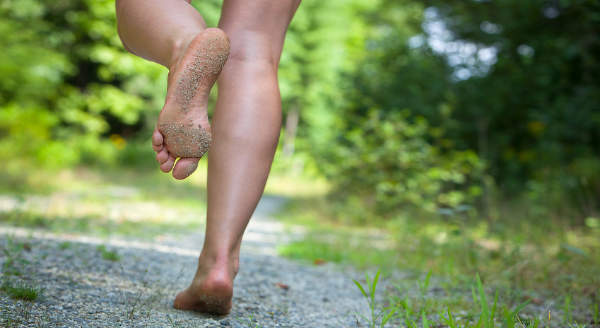
The Spring System
The calf and Achilles complex stores and releases energy. Great for performance — but it must be respected when tired or irritated.
The Stiff Ankle Advantage
Many runners naturally maintain a relatively stiff ankle when they land.
This is generally a good thing.
That stiffness allows the calf and Achilles complex to behave like a spring.
- Store energy
- Release energy
- Bounce into the next stride
Modern carbon-plated shoes use exactly the same principle.
The shoe loads.
The plate bends slightly.
The energy is returned.
The foot leaves the ground more efficiently.
The Pampy Rule
Stiffness is brilliant when the tissue is fresh.
Stiffness can be risky when the tissue is tired.
The smart runner knows when to use the spring — and when to soften the landing.

The Whole Chain Matters
The lower leg is not just the calf. The Achilles, ankle, plantar fascia, foot arch and neural tissues all contribute to the running chassis.
When Fatigue Arrives
The challenge comes when the lower leg is tired.
Or irritated.
Or carrying a minor strain.
This is where experience has taught me something useful.
When I feel the calf-Achilles complex becoming overloaded, I consciously reduce the stiffness through the ankle joint before the foot contacts the ground.
Not unstable.
Not sloppy.
Simply less rigid.
I shorten my stride.
I soften the knee.
I remove any tendency to overreach.
The Shock Absorber Strategy
The knee and ankle begin acting more like shock absorbers.
The result?
- Less strain through the Achilles tendon
- Less tension through the calf
- Less elastic loading through already-fatigued tissues
The pace may slow slightly.
But often that’s a very worthwhile trade-off if it prevents a minor irritation becoming a six-week injury.
The Running Cue
The cue I use is simple.
Run tall.
Head lightly balanced on top of the shoulders.
Imagine a golf ball sitting on a tee.
Chest proud.
Hips gently pressing forward.
Then, as the foot approaches the ground, think:
“Relax the ankle.”
Not completely.
Just enough to remove unnecessary tension.
The foot typically lands a little flatter.
The heel settles slightly sooner.
The ankle, calf and Achilles absorb force more gently.
What It Looks Like
From the side, it may almost appear that you’re running slightly flatter-footed.
But what you’ve actually done is reduce the strain travelling through the calf-Achilles complex.
This technique isn’t something I’d recommend when sprinting or trying to run personal best times.
However, during longer runs, recovery runs or periods where the lower leg is feeling vulnerable, it can be a valuable strategy to keep you moving forward while reducing injury risk.
Protect the Tissue Before You Test It
Most runners spend a lot of time thinking about cardiovascular fitness.
Not enough spend time thinking about tissue durability.
The heart and lungs often improve faster than the muscles, tendons and connective tissues that support them.
The lower leg is a perfect example.

Mechanics Matter
A small change in landing mechanics can sometimes be the difference between continuing to run and nursing a grumpy lower leg for weeks.
Simple Lower Leg Checklist
Build it patiently.
Strengthen it deliberately.
Respect fatigue.
Relax the ankle when the tissue starts talking.
Final Thought
Most runners spend a lot of time thinking about cardiovascular fitness.
Not enough spend time thinking about tissue durability.
The heart and lungs often improve faster than the muscles, tendons and connective tissues that support them.
The lower leg is a perfect example.
Build it patiently.
Strengthen it deliberately.
Respect fatigue.
And when the calf-Achilles complex starts talking to you, listen.
Because a slight adjustment in running mechanics today can often prevent a much bigger interruption tomorrow.