
WHY I RUN AT 176 STRIDES PER MINUTE (SPM)!
For me, cadence is not some cute running metric to obsess over. It is one of the cleanest ways I know to improve running form, support forward momentum, reduce impact cost, and protect an aging body from being bashed by poor mechanics repeated thousands of times.
This one is for runners only. Not because cadence is fashionable — but because I believe rhythm is one of the great protectors of running structure.
When my cadence is right, my body behaves better. My foot lands better. My hips support me better. My vertical movement stays tidy. My calves, quads, knees and back cop less nonsense.
For me, 176 SPM is the number that keeps the whole lot organised.
Take it or leave it — this is the way I see it.
What Goes Wrong When I Overstride
If my leading and loading leg extends out ahead of my hips, the price gets paid quickly — and then it keeps getting paid for the rest of the run.
- extra reverberation through ankle, shin, knee, hip and lower back
- my calves and achilles have to push off harder at the same speed
- my quads and knees fatigue earlier into a longer session
- I rely more heavily on shoe support instead of my own structure
- my forward momentum gets checked by a subtle braking force
- I run less economically and eventually become more likely to break down
That is the hidden tax of overstriding. You are not just landing — you are interrupting your own momentum.
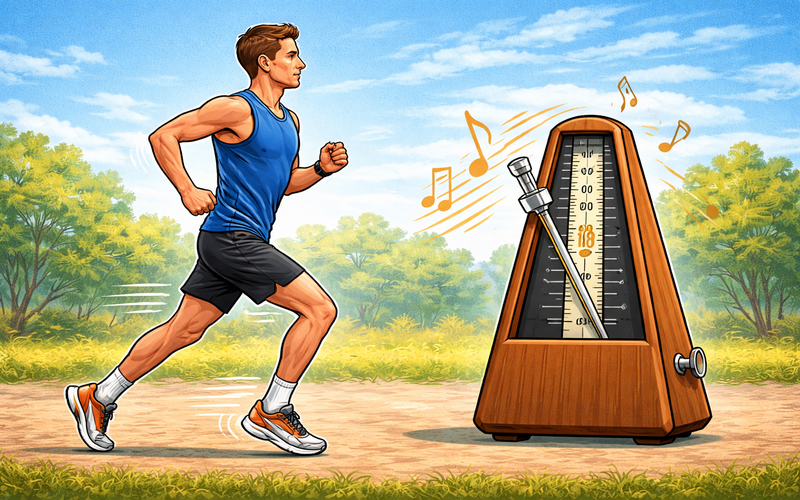
Rhythm First. Then Form Follows.
I don’t chase a prettier style. I chase a better rhythm. The metronome simply helps me hold repeatable mechanics.
The Number That Works for Me
I run to a click track at 88 beats per minute, hitting on my left foot. That gives me 176 strides per minute.
For me, that cadence ensures I will land and load directly under my hips — like a wheel rolling underneath me — rather than reaching out in front and braking my own forward motion.
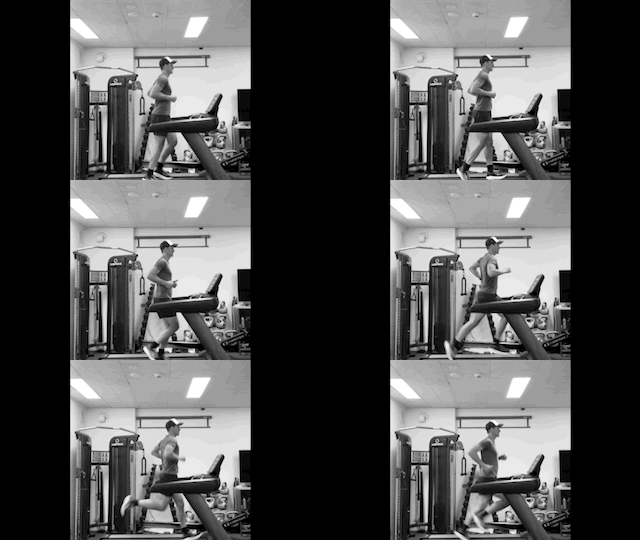
5 kph vs 20 kph — Same Landing Position
The speed changes. The structure does not. In both cases the landing foot still falls under the hip, which is exactly the point.
What Changes With Speed?
As the speed rises, my angle of fall increases and my stride length increases — but the cadence stays the same at 176.
- speed goes up because the body falls and covers more ground
- stride length increases naturally as output rises
- cadence does not need to slow to create more speed
- the load still stays under the centre of mass
The fifth GIF is the best proof of what I’m talking about. At both 5 kph and 20 kph, the support foot still lands under the hip. That is mechanical order.
The Numbers I Care About
Below is the simple cadence picture as I see it. This is not about worshipping one perfect number for every runner on earth — but it does show why a well-chosen cadence can massively improve economy and durability.
What I Believe 176 SPM Gives Me
This is the practical running payoff — not lab fluff, but what I believe happens mechanically and physiologically when cadence is better matched to the job.
| Running Outcome | At Better Cadence 176–182 SPM |
At Slower Cadence For Me ~165 SPM |
|---|---|---|
| Foot Position | lands under the hips / centre of mass | reaches further ahead of the hips |
| Momentum | supports smoother forward roll | creates more braking of forward motion |
| Calves & Achilles | work in a tidier elastic pattern | push off harder and absorb more nonsense |
| Quads & Knees | less braking load per step | greater fatigue from controlling longer landings |
| Vertical Oscillation | tighter and more economical | tends to rise, land harder and waste more force |
| Shoe Dependence | less reliance on shoe correction | more need for external support |
| Durability | better chance of holding form longer | greater risk of breakdown over time |
The big idea is simple: position dictates load. And load repeated thousands of times dictates durability.
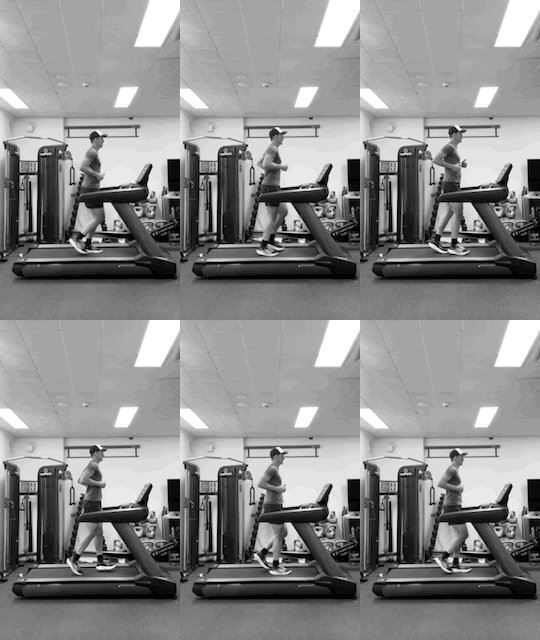
GIF 1 — 5 kph
Even at very low speed, the job is the same: land under the body and keep the movement tidy.
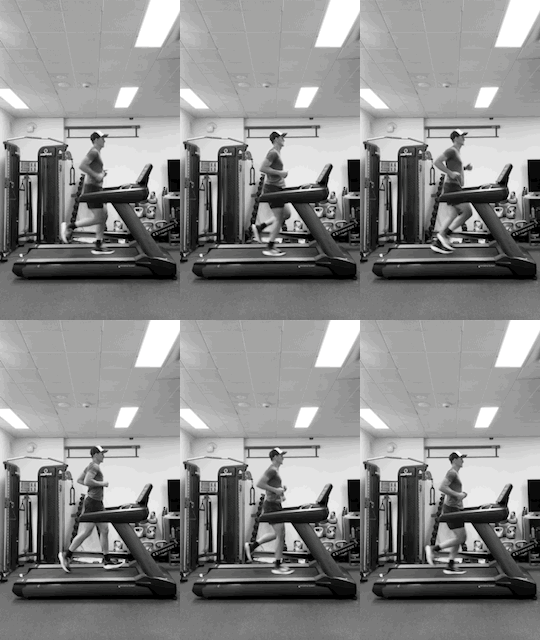
GIF 2 — 10 kph
Now the stride opens a touch, but the cadence anchor still protects the landing position.
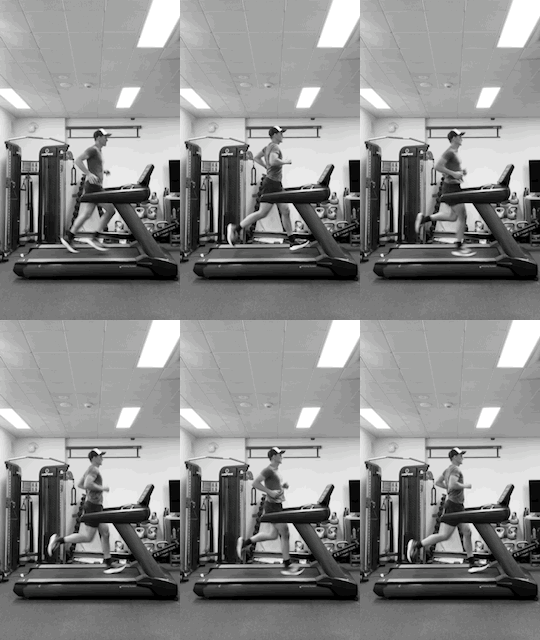
GIF 3 — 15 kph
More speed, more fall, more length — but still the same clean support pattern underneath the hips.
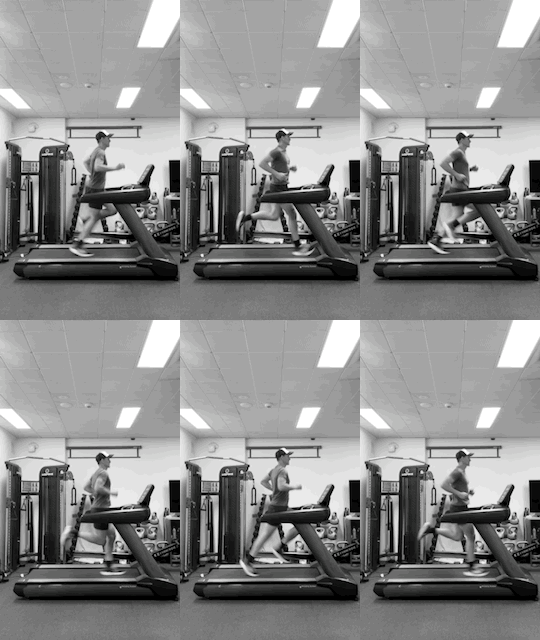
GIF 4 — 20 kph
The system is now moving fast, but the landing does not start reaching out in front looking for trouble.
I Don’t Worry About Foot Strike
I genuinely don’t focus on which part of my foot touches first. I think that argument can distract runners from the more important issue — where the foot lands relative to the hips.
When I hold 176 SPM, I naturally land under my hips, which causes the ball of my foot to meet the surface first.
- the plantar fascia lengthens
- the achilles tendon lengthens
- that stored tension creates a spring-like pop off the ground
- the body uses elastic return instead of muscling every step
So for me, cadence solves the foot strike conversation before it even starts.
The Engineer Version
- cadence = timing regulator
- landing under hips = support under centre of mass
- less braking = less wasted force
- less vertical bounce = lower impact and better economy
- better elastic loading = more spring, less slog
- repeatable rhythm = more durable mechanics late in a run
I’m not saying cadence is everything. But I do think it is one of the best mechanical organising tools we have.
What Happens If My Cadence Slows?
If I slow that cadence down to around 165 SPM, I overstride.
From there, two big problems usually show up:
- a greater impact cost at landing
- a greater vertical oscillation — meaning I go up more, land harder, and waste more force
That is not free. The body has to pay for that with calves, quads, knees, back and eventually fatigue.
How to Measure Cadence
- sport smartwatches — most Garmin running watches show it
- music clip-on metronomes
- free apps — “Metrotimer” is my favourite
- YouTube drum beat tracks, e.g. 87–88 bpm
- free music programs like Audacity to change tempo of any song
- vibrating music watches
What You Might Notice Early
- a slightly higher heart rate at the same pace
- the hip flexors feeling more loaded after the run
- frustration trying to police DTI and cadence together
- hill running feeling awkward for a little while
What Usually Improves
- the cardiovascular system tends to adapt quickly
- hip flexors strengthen and settle in
- coordination becomes more natural
- the rhythm starts to sync in after 3–5 weeks
The Pampy Take
I do not use cadence to look fancy.
I use cadence to keep my structure honest.
For me, rhythm is one of the great protectors of form.
And better form is one of the great protectors of durability.
The Simple Wrap-Up
For me, 176 SPM is not some magic global number. It is simply the cadence that best matches my leg length, my muscle mass, my feel and my mechanics.
What matters most is not chasing my exact number. It is understanding the principle:
- support the body under the centre of mass
- avoid reaching and braking out in front
- reduce needless vertical bounce
- improve economy and protect durability
That is why I practice cadence.
Bottom Line
I believe cadence practice can improve running form, performance and durability because it helps regulate where the body lands, how force is absorbed, and how smoothly momentum is carried forward.
For me, 176 SPM keeps the loading leg under the hips, limits braking, reduces impact cost, controls bounce, and allows the plantar fascia and achilles to contribute the spring they are built for.
In plain English? I run to rhythm because rhythm helps me stay strong, stay smooth, and stay running.