
The World Cup First XI of Hormones
With the football World Cup in full swing, I got to thinking. If the human body had its own World Cup squad, who makes the starting eleven?
Who are the superstars? Who are the workhorses? Who quietly do the hard yards while others grab the headlines?
Before we start, this is simply my take on the World Cup of Hormones. What would I know? I still call football soccer.
Welcome to my Hormone World Cup First XI.
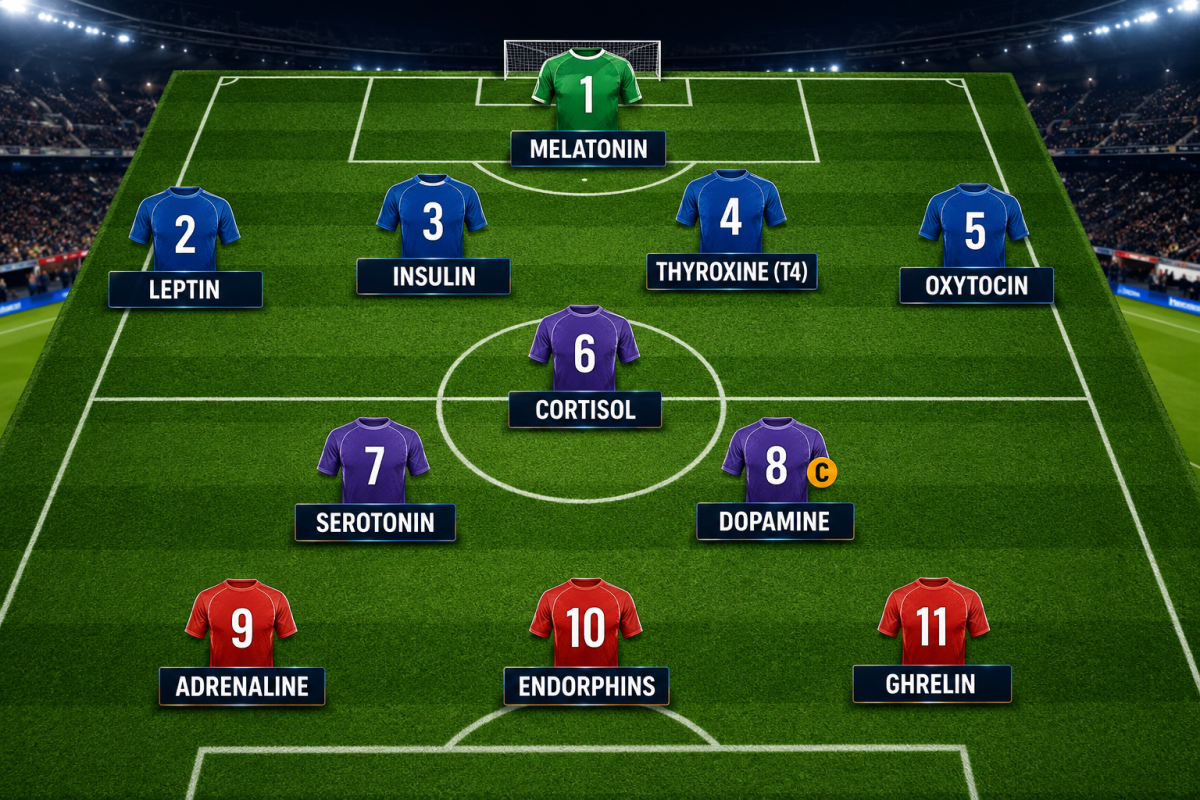
Hormone World Cup Formation — 4-3-3
Melatonin
Every great team starts with a reliable keeper. Melatonin does not score goals, but when it performs well, everyone else performs better.
Sleep. Recovery. Repair. Memory consolidation. Immune support.
Leptin
Leptin’s job is simple. Tell the brain: “Mate, we’ve eaten enough. Pull up.”
When Leptin loses form, hunger signals become confusing and the scoreboard can creep the wrong way.
Insulin
Strong, powerful and reliable. Insulin moves glucose from the bloodstream into muscle, liver and other tissues.
When Insulin becomes resistant, it is like watching a defender constantly out of position.
Thyroxine T4
The organiser. The communicator. The player pointing everyone into position.
T4 helps regulate metabolic rate, energy production, temperature and heart rate.
Oxytocin
Every successful team needs culture. Oxytocin is culture.
Trust. Connection. Bonding. Mateship. Family. Belonging.
Cortisol
Cortisol cops a bad rap, but every team needs a tough midfielder.
It helps us wake up, mobilise energy and respond to challenge. The problem is asking it to play 90 minutes, seven days per week.
Serotonin
The calm head. The veteran. The player who slows the game down when everyone else is losing theirs.
Mood, emotional stability and wellbeing all need Serotonin on the ball.
Dopamine
If I had to pick a captain, Dopamine gets the armband.
Motivation. Achievement. Reward. Progress. Ambition. The player constantly asking: “Can we go again?”
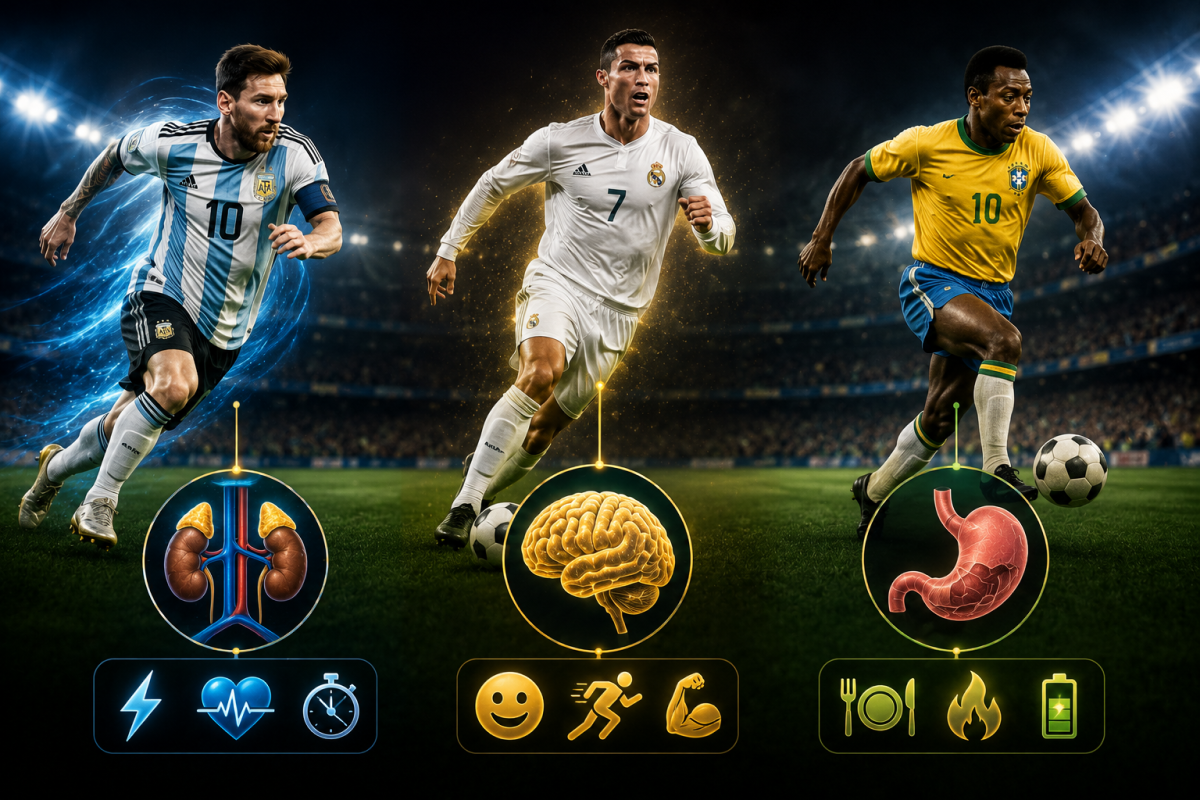
Adrenaline
Pure speed. Pure excitement. Adrenaline does not jog. Adrenaline sprints.
It elevates heart rate, sharpens focus, improves reaction speed and delivers instant energy. Brilliant in bursts. Not designed to play the whole tournament.
Endorphins
The crowd favourite. Scores goals. Makes people smile.
Endorphins help reduce discomfort and improve mood, which is one reason runners keep running and gym junkies keep returning.
Ghrelin
This selection may divide opinions. Ghrelin is the hunger hormone.
Every great team needs urgency. Too little and fuel becomes difficult. Too much and it gives the opposition endless attacking opportunities.
Coach’s Notes
The fascinating thing about hormones is that none operate in isolation. They are teammates. A squad. A system.
Melatonin influences Cortisol. Cortisol influences Insulin. Leptin and Ghrelin constantly battle for possession. Dopamine and Serotonin influence mood and motivation. Oxytocin strengthens connection. Endorphins improve resilience. T4 influences almost everybody.
The human body is less like a collection of individual players and more like a championship-winning team.
When one player struggles, others compensate. When multiple players are injured, form quickly deteriorates.
Healthy ageing is not about chasing one hormone.
It is about building a stronger squad.
Exercise. Nutrition. Sleep. Connection. Purpose. Recovery.
They are the coaching strategies that keep the whole team available for selection.
Availability beats talent every day of the week.
Whether this team actually wins the Hormone World Cup, I cannot be sure. But I would certainly back them to make the quarter-finals. At the very least. Especially against the French. Hopefully this World Cup will be over soon and I can get back to watching Manly win.
Where Do We Actually Burn Calories?
One of the biggest misconceptions in health and fitness is that exercise burns most of our daily calories.
Exercise is incredibly important for health, fitness, strength and longevity. But in terms of total daily calorie burn, it usually represents only a small slice of the pie.
The real story is much more interesting.
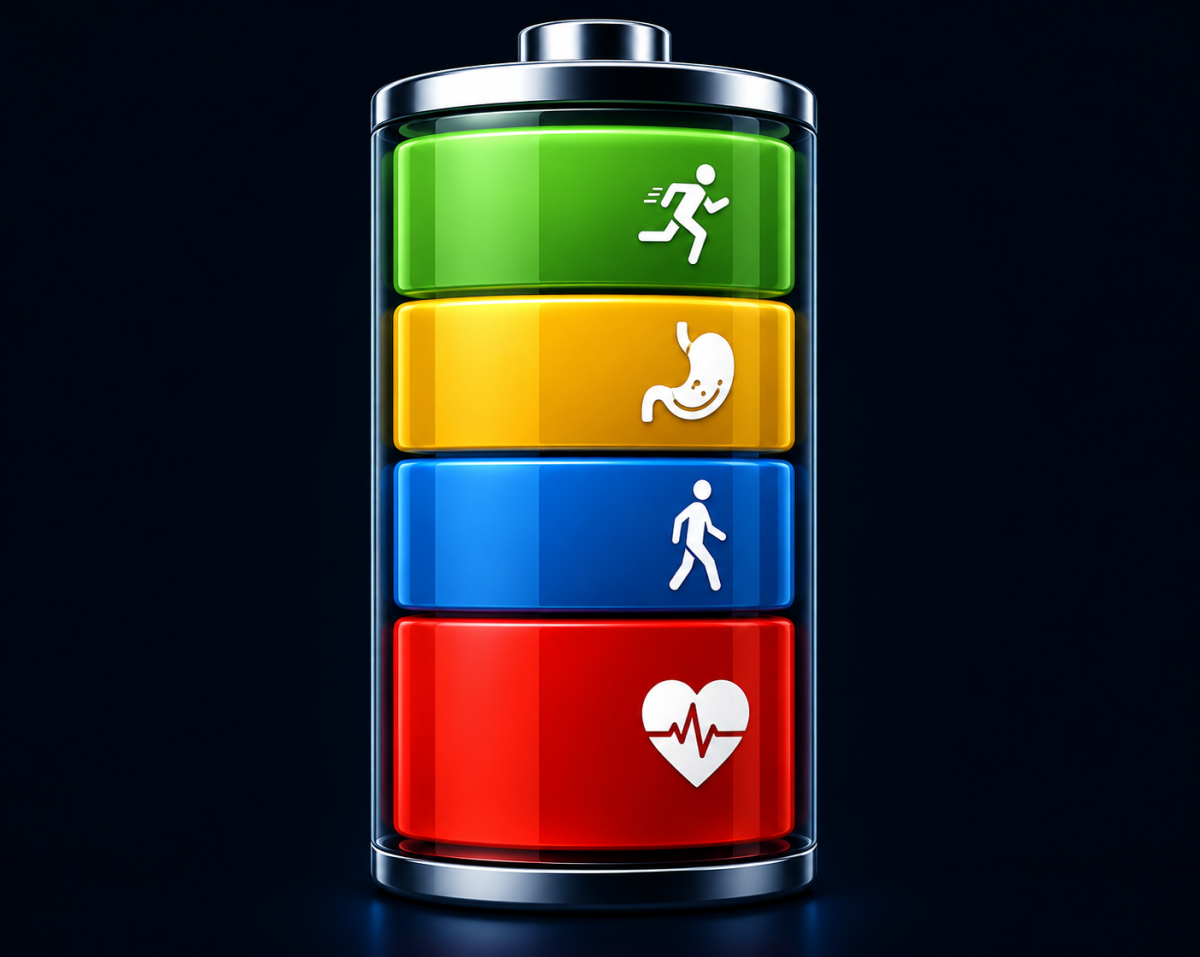
Where Your Daily Calories Generally Go
These percentages vary between people, but the broad pattern is usually the same: exercise matters enormously for health, but your body burns most of its energy simply keeping you alive and moving through the day.
Not the biggest burner
Walking, jogging, cycling, skiing, mowing the lawn, gym sessions, swimming or chasing the dog around the backyard all count.
Exercise is vital. It improves fitness, strength, blood sugar control, brain health and longevity. But surprisingly, it usually represents only a modest percentage of daily calorie burn.
The cost of processing food
Every time you eat, your body has work to do. Food must be broken down, absorbed, transported and processed.
This is called the Thermic Effect of Food. Protein requires considerably more energy to process than fats or carbohydrates.
The sneaky one
This is the energy required simply to live your day. It adds up far more than most people realise.
- Walking to meetings
- Climbing stairs
- Standing
- Shopping
- Bathroom stops
- Fidgeting
- Carrying groceries
- Playing with the kids
Move more often
This is one reason increasing your daily step count can have such a profound effect on long-term health and body composition.
Not because it is flashy. Because it is repeatable. Every day. For years.
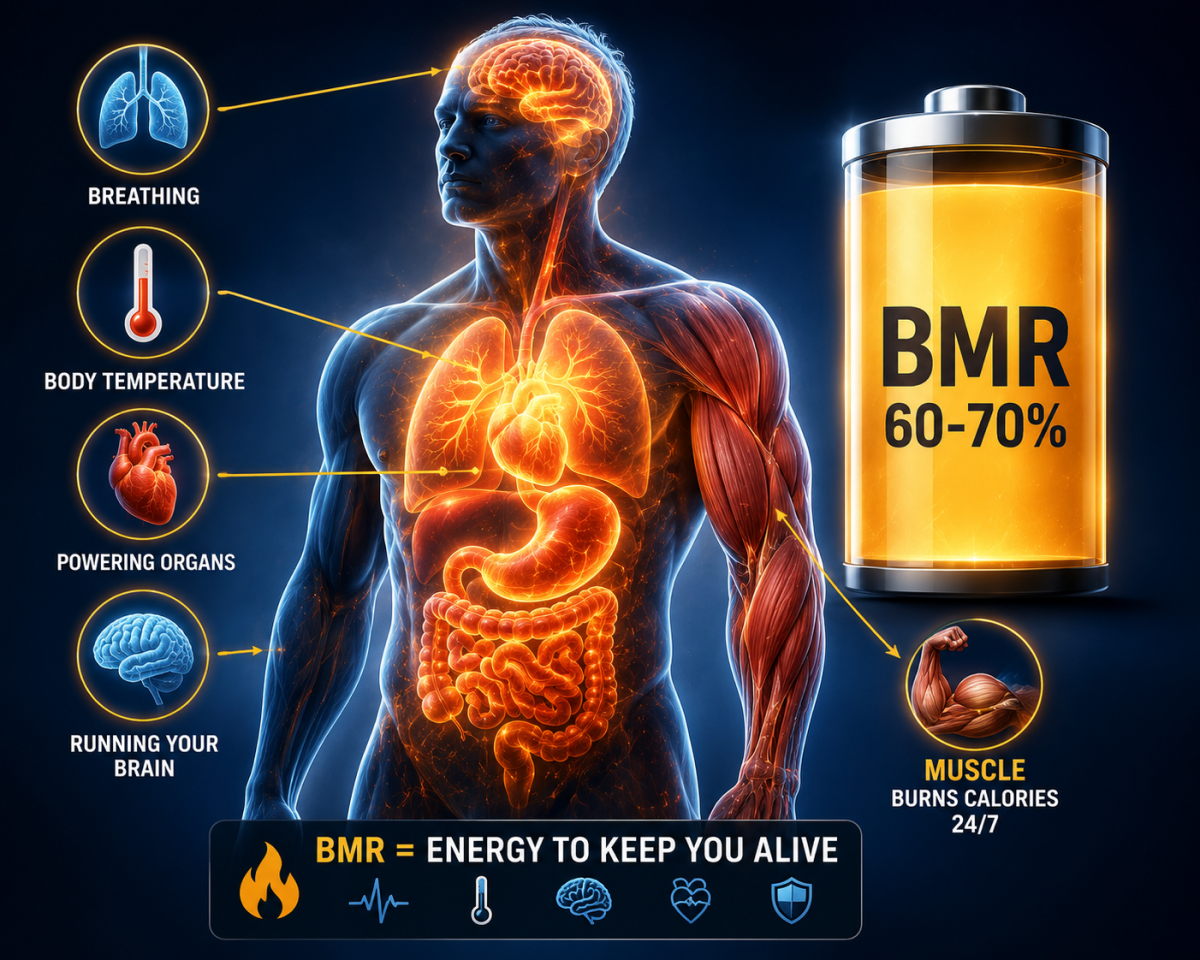
Basal Metabolism
The big one — roughly 60–70%
Basal Metabolism is the energy required simply to keep you alive.
Breathing. Maintaining body temperature. Powering organs. Running your brain. Keeping muscle tissue alive.
And here is the important part: muscle is metabolically active tissue.
The more healthy muscle you carry, the more energy your body requires around the clock.
Which means if you want to burn more calories without doing additional exercise, one of the smartest things you can do is preserve and build muscle.
The Pampy Take
You do not need complicated hacks.
Build and protect muscle. Move often. Eat thoughtfully. Exercise consistently. Repeat for a few decades. It is pretty hard to go too far wrong.
What Do Your Sleep Metrics Actually Mean?
Most modern watches and wearables now provide detailed sleep reports. Garmin. WHOOP. Apple Watch. Samsung Galaxy. Oura Ring.
Every morning we are presented with graphs, scores, percentages and coloured charts that appear highly scientific.
Sleep Score. REM Sleep. Deep Sleep. Recovery. Body Battery. Training Readiness. HRV.
The question is: do these numbers actually matter? And should you be changing your behaviour because of them?
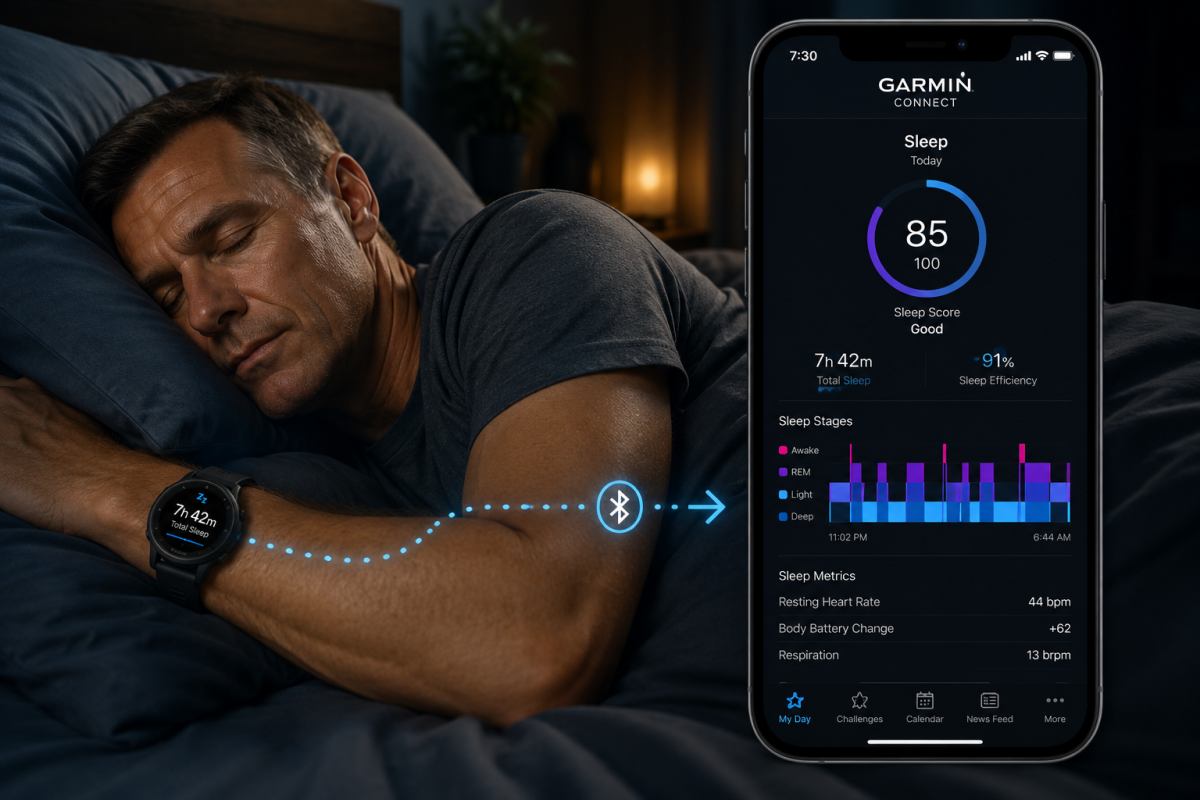
The Wearable Revolution
Twenty years ago, if someone wanted to assess sleep quality, they typically relied on a very simple question: “How did you sleep?”
Today we have access to a remarkable amount of information. The challenge is understanding what deserves attention and what may simply be interesting information.
After using Garmin devices for many years — including my current Garmin Forerunner 935, which despite being several years old still performs exceptionally well — I have become increasingly interested in what these metrics are actually telling us. More importantly, I have become interested in what they are not telling us.
What Wearables Commonly Estimate
My Garmin Sleep Data
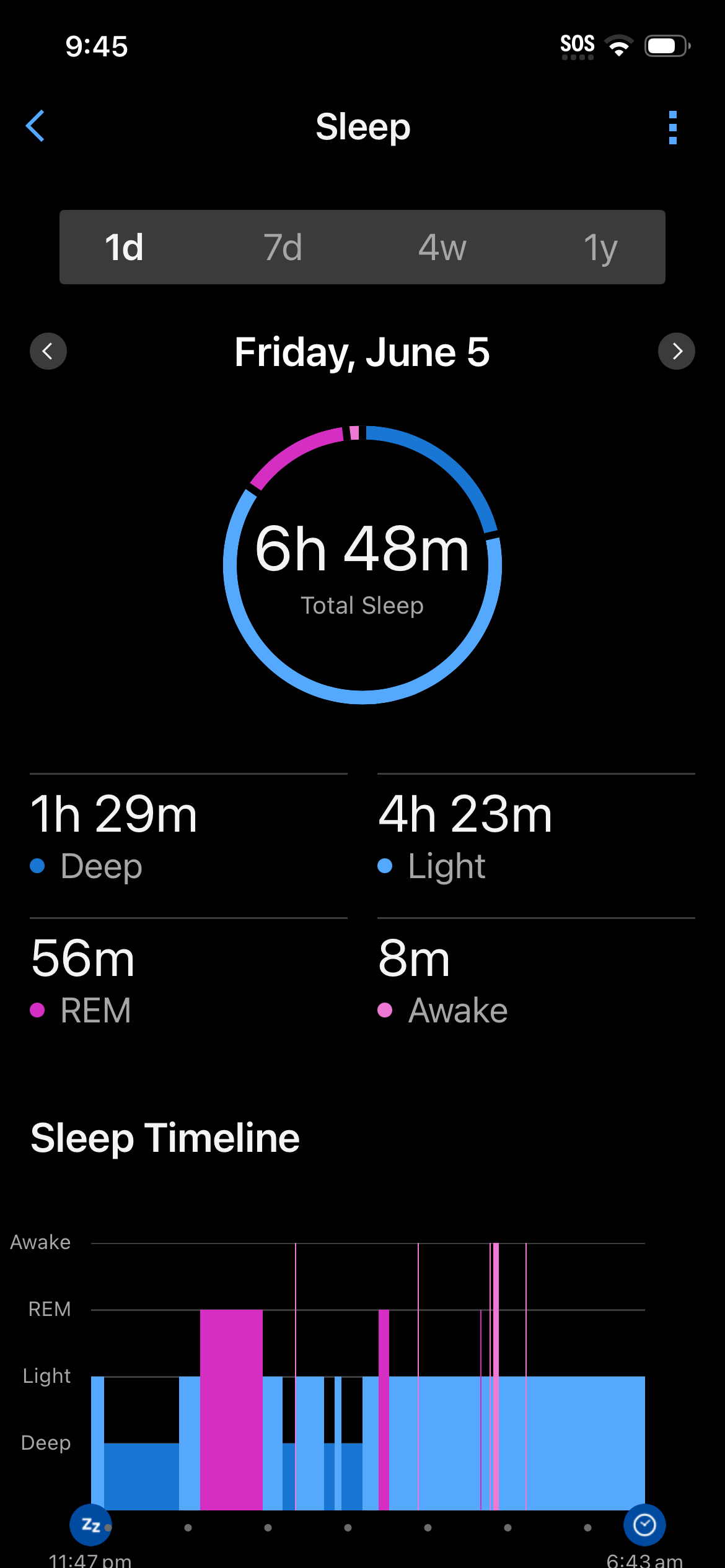
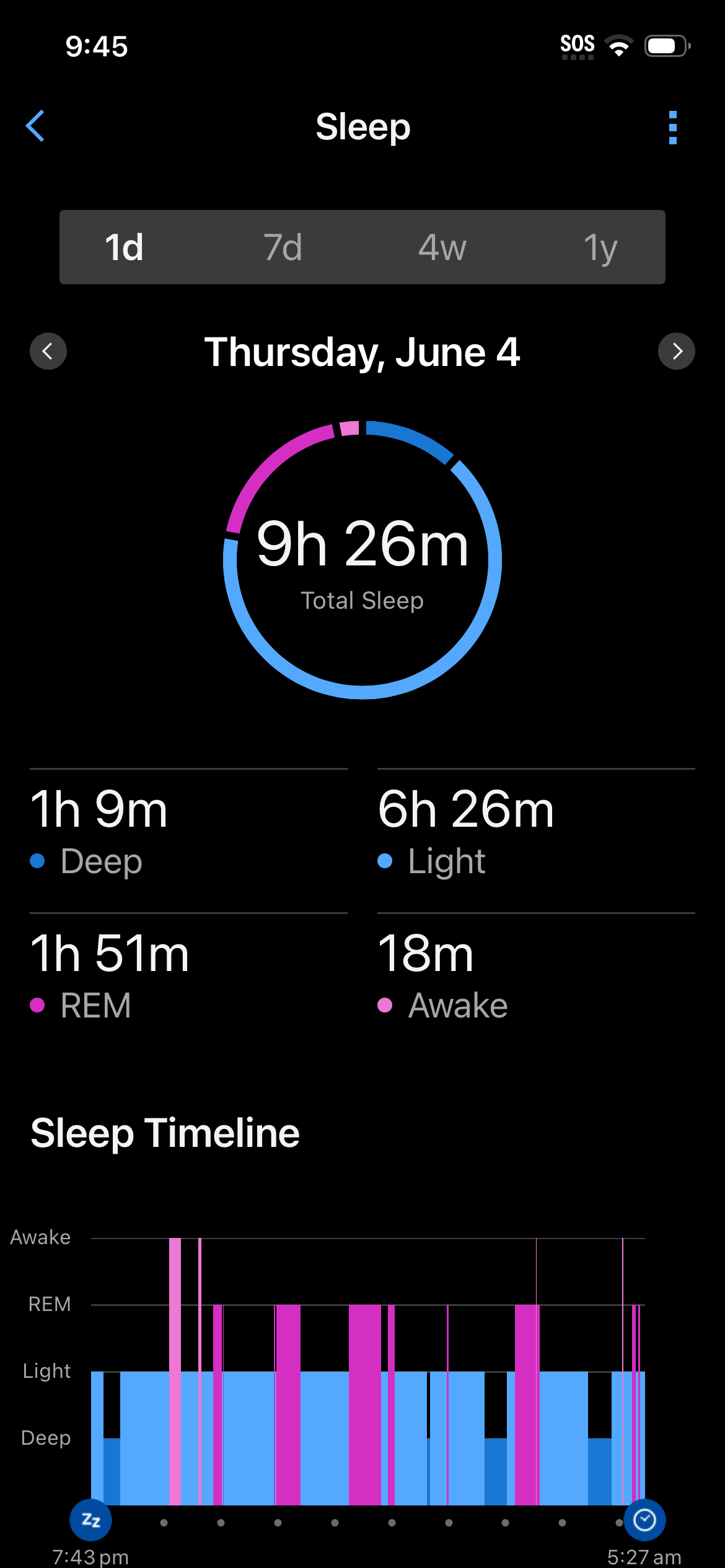
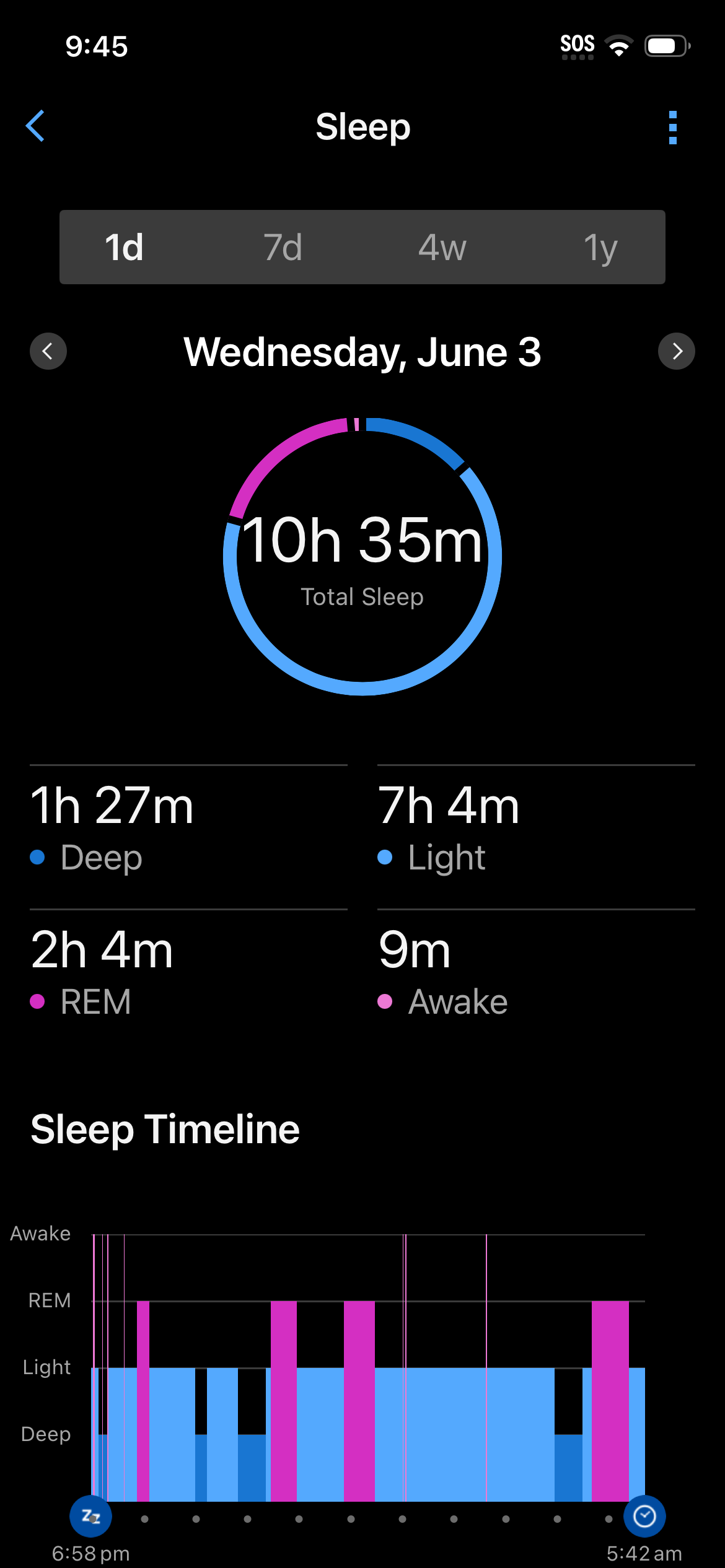
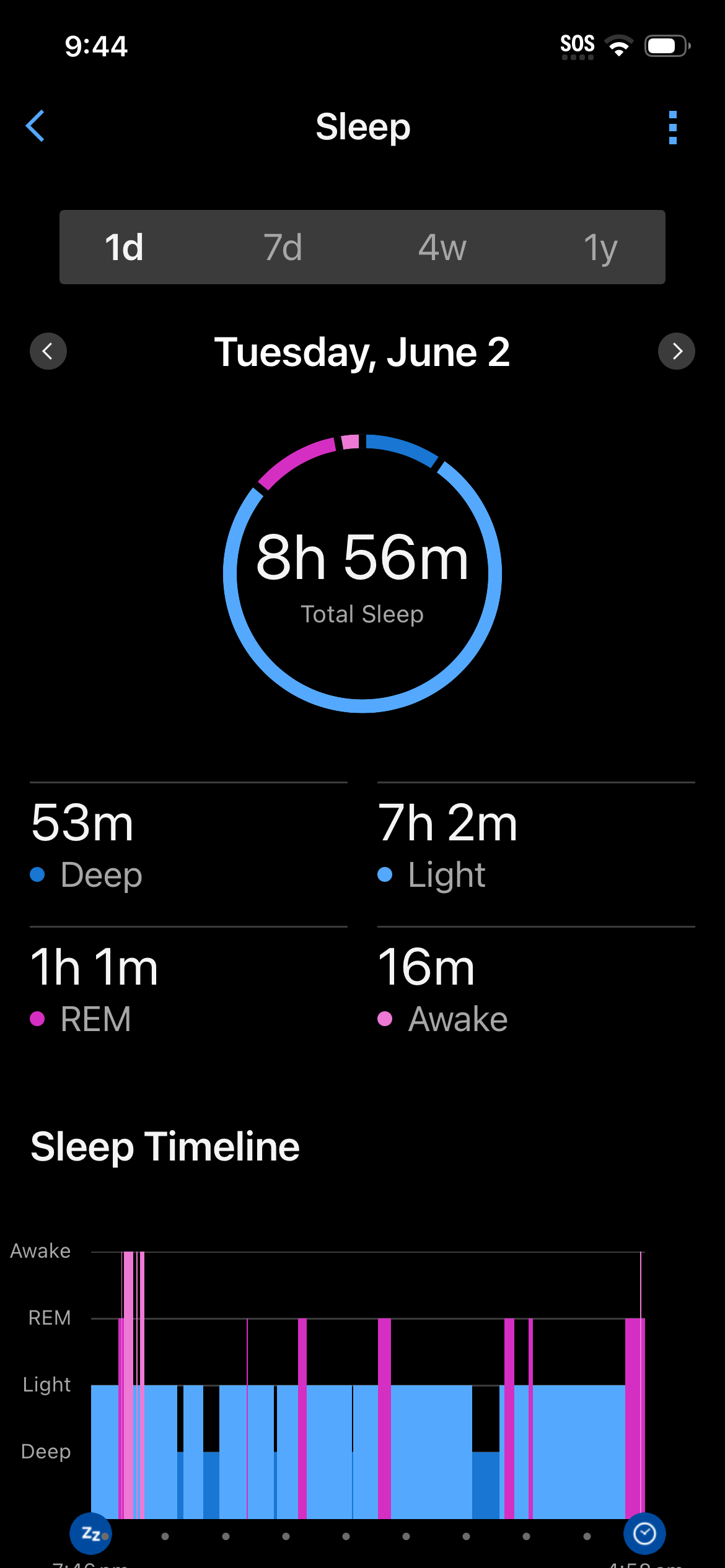
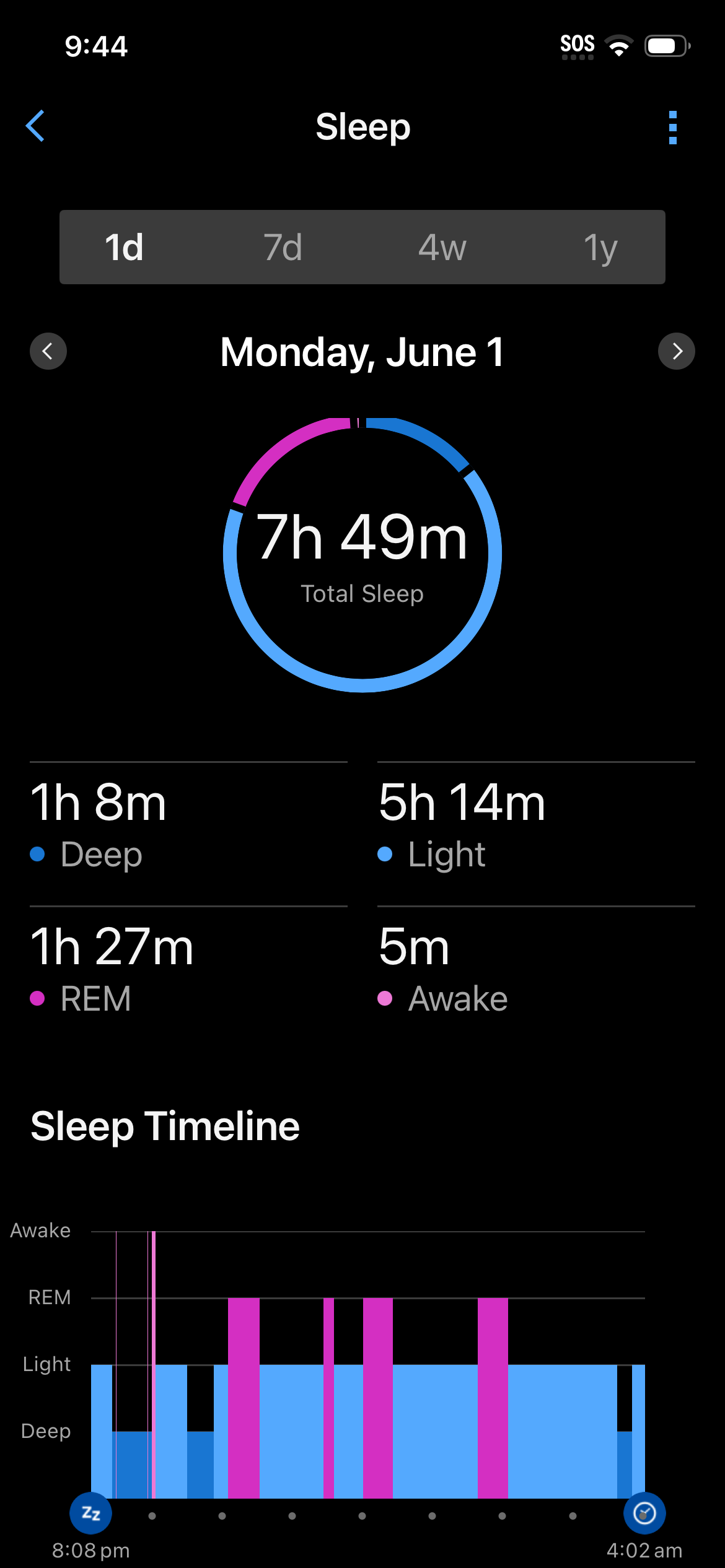
My Garmin watch is now considered an older model, yet it still provides a useful sleep report. Below is a real seven-day snapshot from my own data. Not perfect. Not robotic. Just normal life, travel, stress, altitude and recovery showing up in the numbers.
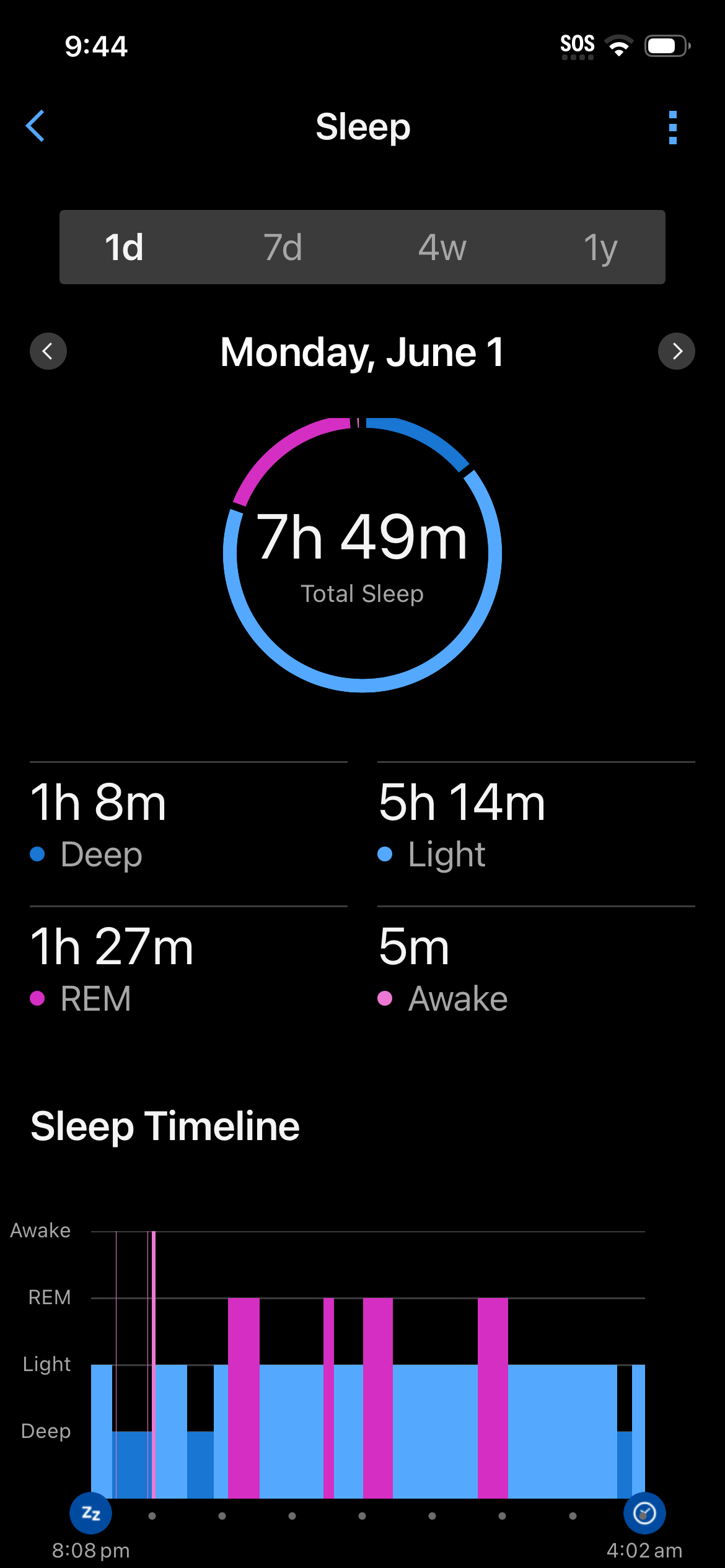
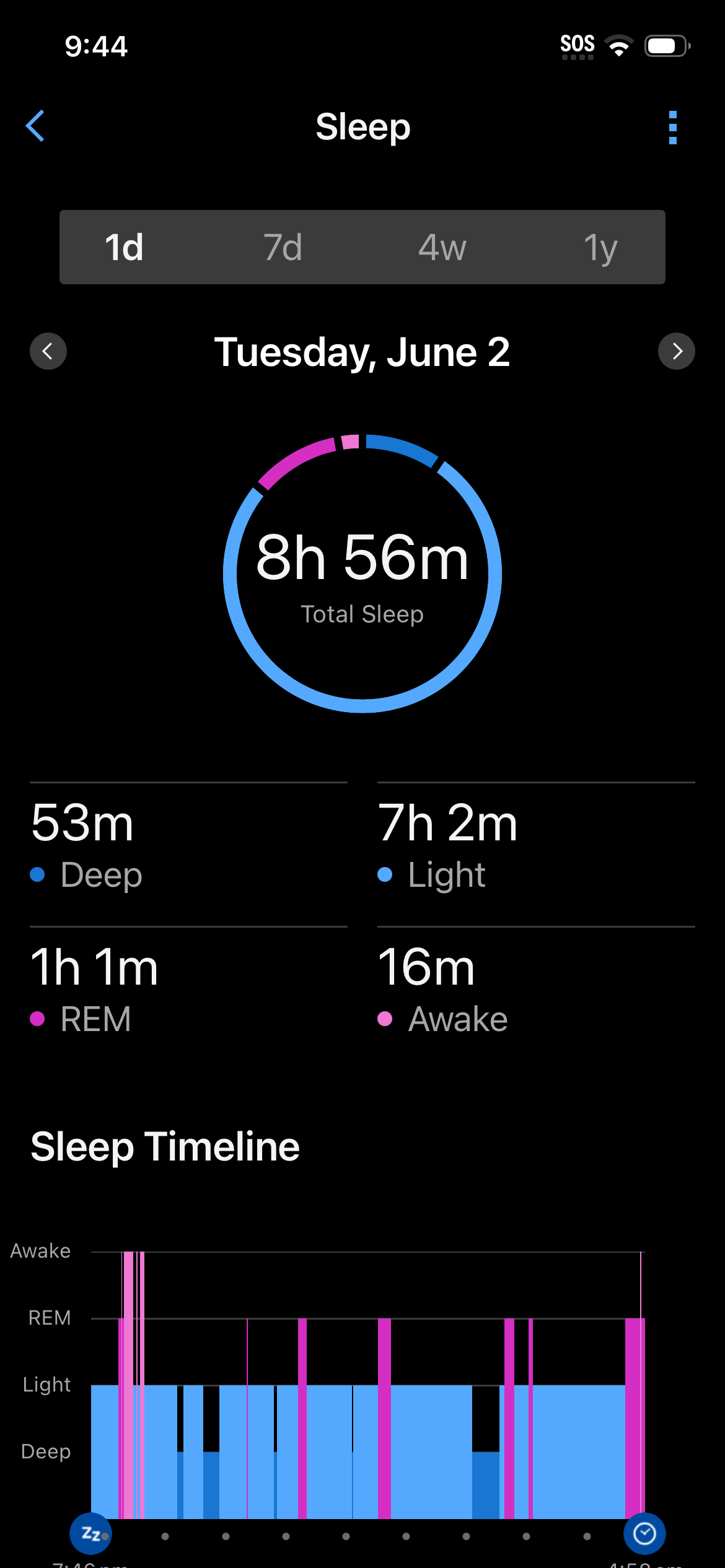
The Four Metrics I Actually Look At
1. Total Sleep Time
This is still the biggest metric. A person averaging 5–6 hours will generally perform differently to someone consistently obtaining 7–8 hours.
For me personally, 7.5–8.5 hours is ideal.
- ✅ I train well
- ✅ I think clearly
- ✅ I maintain stable energy
- ✅ I have minimal cravings
2. Sleeping Resting Heart Rate
This is one of my favourite Garmin metrics. Not because of the actual number, but because of the trend.
If sleeping HR goes 42, 43, 42, 44 — then suddenly jumps to 51, something is usually happening.
- ✅ Poor sleep
- ✅ Illness
- ✅ Travel fatigue
- ✅ Stress
- ✅ Heavy training load
- ✅ Alcohol
3. Sleep Stage Estimates
This is where many people get distracted. Garmin estimates these stages. It does not measure brain waves.
So I use them directionally.
Deep Sleep
REM Sleep
If I get around 70 minutes REM and 80 minutes Deep Sleep, I’m happy. I am not chasing perfection.
4. Sleep Movement
This is the sleeper metric. Pun intended. Many people never look at it. I do.
Poor sleep movement often correlates with:
- ✅ Stress
- ✅ Discomfort
- ✅ Snoring
- ✅ Sleep apnoea
- ✅ Alcohol
Context Matters
As I write this article, I am spending several nights in Cabramurra. Cabramurra sits approximately 1500 metres above sea level. I live on Sydney’s Northern Beaches.
Every time I return to Cabramurra, I notice a similar pattern. Night one is often slightly disrupted. Night two improves. By night three, sleep typically returns to normal.
Interestingly, despite the slightly poorer sleep score, I rarely experience reduced concentration, reduced exercise performance, increased sugar cravings or significant fatigue.
Sometimes the sleep score changes because life changes. Travel. Altitude. Early starts. Work stress. Presentations. Environmental changes.
The watch records a change.
The body adapts.
Not every poor sleep score represents a sleep problem. Sometimes it simply represents life.
This is why I use wearable data as a guide — not a judge.
The Pampy Take
Technology is useful. But the human being still matters.
Sleep scores, HRV, readiness metrics and recovery algorithms all have value. Yet none of them should completely override how you actually feel.
Use the watch. Learn from the trends. But do not become a slave to the numbers.
Of the four pillars towards optimum health, I still feel sleep has the greatest impact on collective health.
10 Quick-Fire Hacks That Have Genuinely Worked For Me
Now before everyone starts yelling: “No science papers attached, Pampy!”
Relax. These are just little tricks, routines and reset buttons I’ve picked up over 35 years working with athletes, exhausted workers, stressed-out parents, tradies, shift workers and blokes quietly falling apart.
Some may help. Some may do absolutely nothing for you. But here’s 10 I keep coming back to.
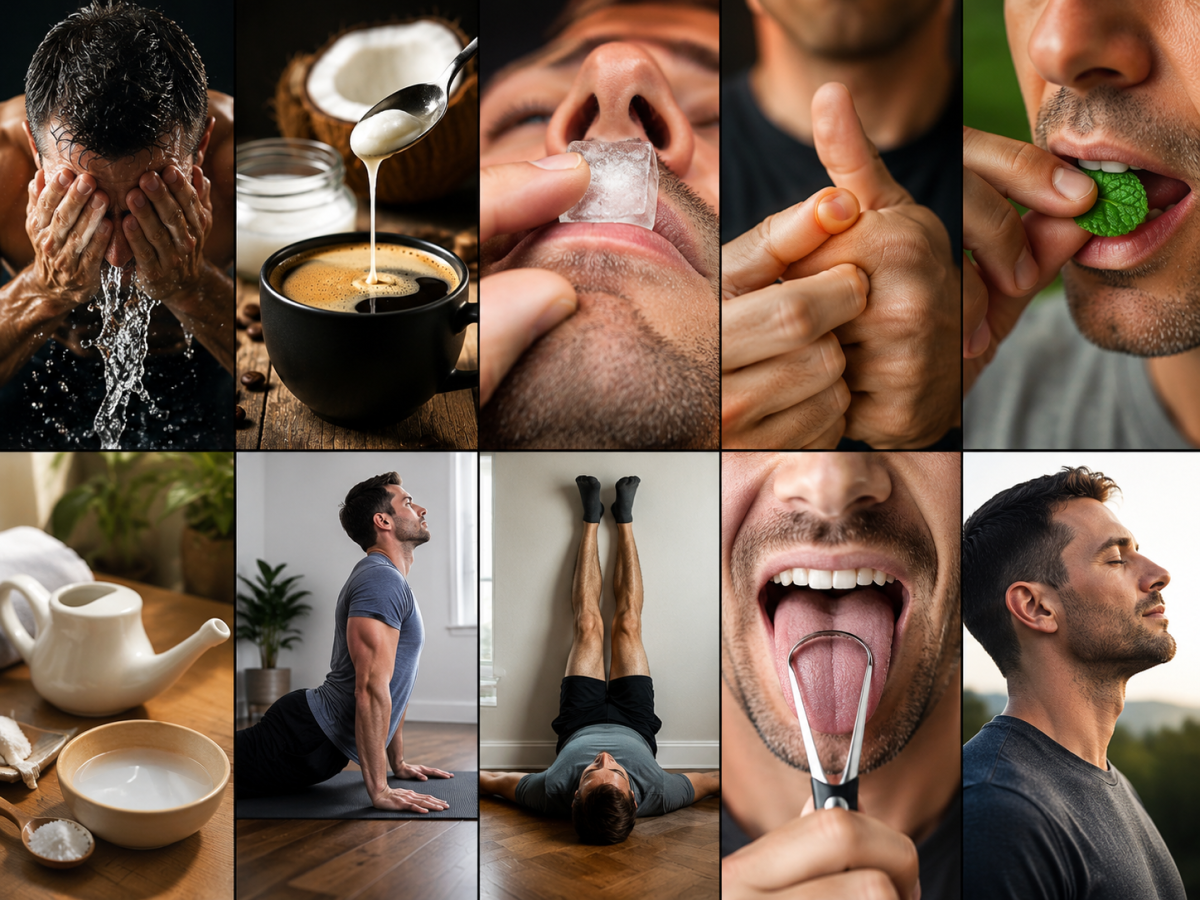
Ice water over the face
Sounds horrible. Works brilliantly. A quick nervous system reset that freshens the mind and wakes the body up fast.
MCT or coconut oil in coffee
Jedi-level focus for some. Not magic, but many report steadier energy, less hunger and better concentration.
Stuffy nose?
Press an ice cube onto the roof of your mouth. Weird little trick, but it can help open the nasal passages.
Need to calm down quickly?
Press hard between thumb and index finger while breathing slowly through the nose. Simple. Quiet. Portable.
Flat at work?
Chew fresh mint. Sounds ridiculous, but the sensory hit can wake the brain better than another terrible office coffee.
Mouth like the Sahara?
Clear the nasal passages. A Neti Pot with warm saline and a tiny amount of bicarb can work wonders.
Daily cobra pose
Modern posture is cooked. Cobra helps reset all that desk, phone and steering-wheel folding.
Legs up the wall
Heavy legs. Busy brain. Long day. Five minutes can feel surprisingly restorative.
Scrape or brush your tongue
Not glamorous, but your breath, taste and mouth health will probably thank you.
Breathe through your nose more often
The sneaky heavyweight. Better calmness, sleep, pacing and less panic. Most people over-breathe and don’t realise it.
Anyway…
That’s enough weird Pampy hacks for one article. Try one or two. Keep what works. Bin what doesn’t.