
Her Current
Health Status
Before discussing plans, supplements, exercise or sleep strategies, we first needed to understand what Elane was actually experiencing.
Not simply what appeared on a health assessment... but what it felt like to live inside her body each day.
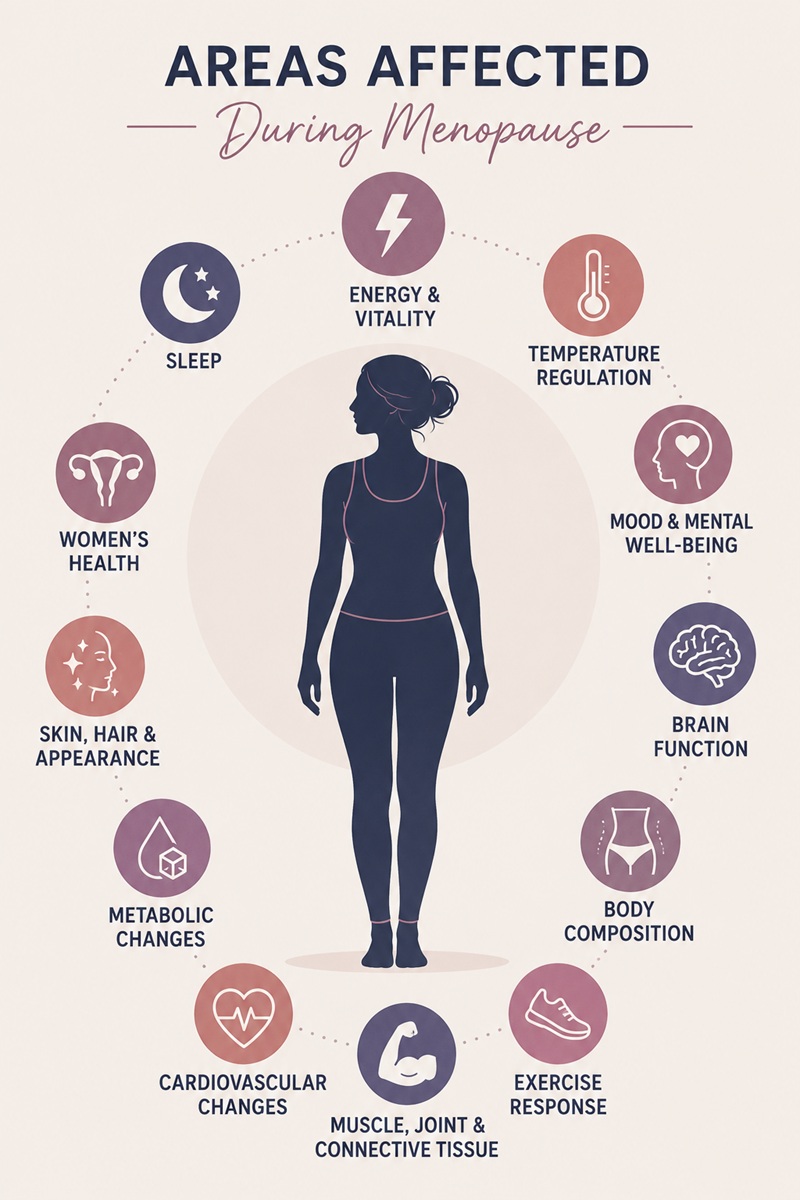
Elane’s Starting Feelings
The responses below were the signs, symptoms and personal feelings Elane reported as she entered this 12-week case study.
Energy & Vitality
- Persistent fatigue
- Afternoon energy crashes
- Feeling “flat” despite adequate sleep
- Reduced motivation to exercise
Sleep
- Waking between 2–4am
- Frequent waking throughout the night
- Night sweats
- “Next-level” calf cramps
Temperature Regulation
- Hot flushes
- Feeling suddenly overheated
- Flushing of the face and neck
Mood & Mental Wellbeing
- Irritability — as relayed by her dear husband
- Feeling emotionally “flat”
Brain Function
- Poor concentration
- Reduced productivity
Body Composition
- Weight gain and increased abdominal fat
- Reduced muscle tone
- Increased sugar cravings
Exercise Response
- Loss of strength
- Reduced enjoyment of exercise
- Higher perceived effort
Muscle, Joint & Connective Tissue
- General stiffness
- Achy joints
- Muscle cramps — particularly hamstrings and calves
- Hip pain — particularly while lying in bed
Cardiovascular Changes
- Intermittently rising blood pressure
- Higher resting heart rate
Metabolic Changes
- Rising blood lipids — cholesterol and triglycerides
- Higher fasting glucose
Skin, Hair & Appearance
- Dry skin
- Brittle nails
Women’s Health
- Reduced libido
- Urinary urgency
- Pelvic floor weakness
This Wasn’t One Isolated Problem
Elane was experiencing a collection of physical, metabolic, neurological and emotional changes — all occurring at roughly the same time.
Any one of these responses could be frustrating on its own. When they begin stacking together — poor sleep, hot flushes, lower energy, weight gain, reduced strength, aching joints and brain fog — it becomes much easier to understand why many women report no longer feeling like themselves.
Elane wasn’t lacking discipline. Her physiology had changed — and her health strategy now needed to change with it.
This Isn’t Something to Fight
Based on my limited but researched understanding of menopause, it isn’t something to “fight.”
It is a new physiological chapter.
While hormones change, many women go on to become stronger, leaner, fitter and healthier than they were in their 40s.
The women who tend to thrive are often those who adapt their lifestyle — particularly their exercise, nutrition, sleep and recovery — to match what their changing physiology now needs.
For some women, Menopausal Hormone Therapy becomes an important part of that strategy. For others, lifestyle changes alone can make a substantial difference.
The key is not finding the one perfect menopause solution. It is finding the combination that works for the individual woman.
Brad Pamp
Non-Invasive Assessment Protocol
Elane’s starting point wasn’t based on guesswork. We selected a small group of quick, repeatable and non-invasive measurements that mattered to her health and this stage of life.
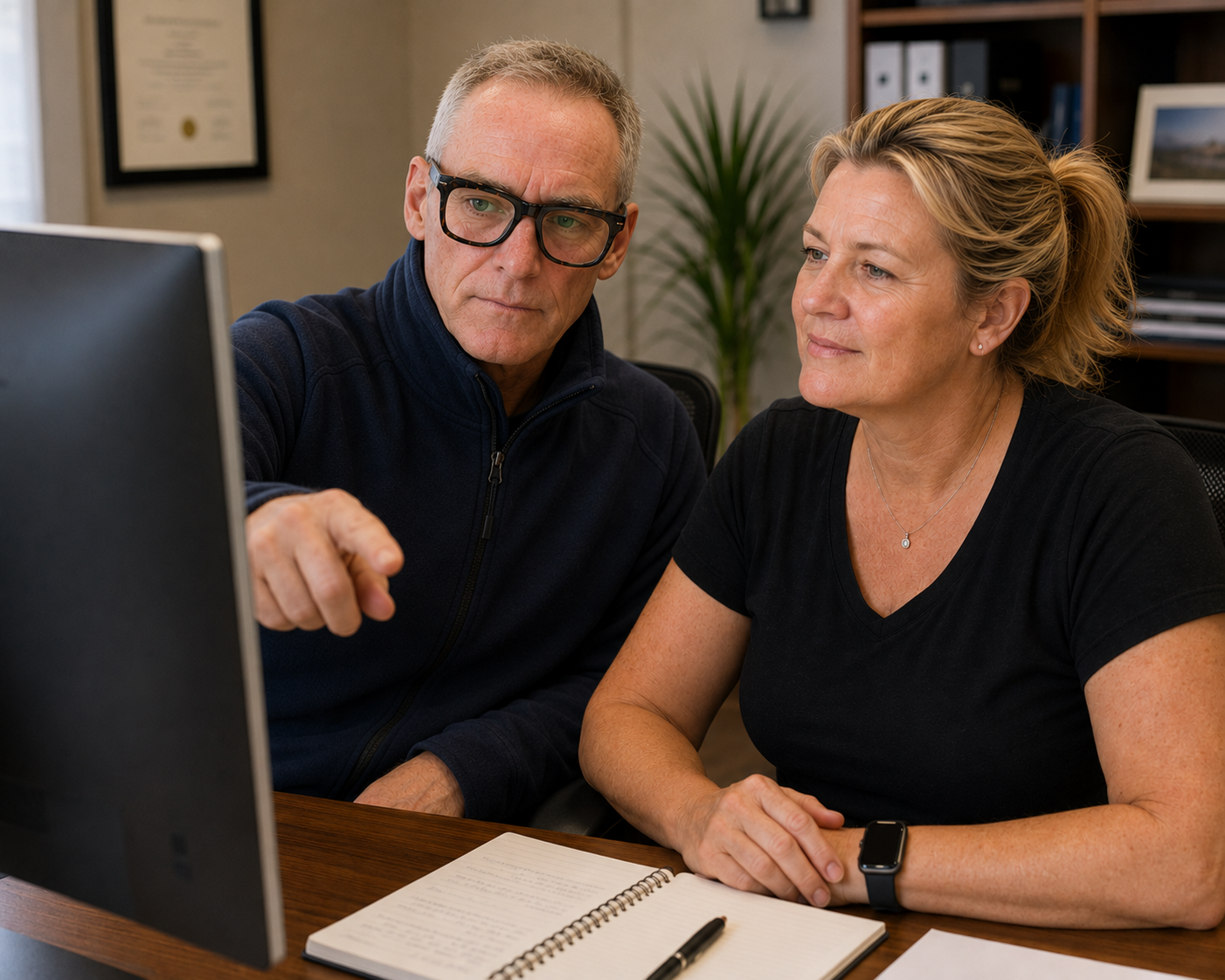
Elane’s Basic Non-Invasive Health Metrics
Important note: Elane’s physician was privy to her personal and comprehensive full assessments throughout this period.
The measurements featured here were not intended to replace medical testing or clinical care.
They were easy-to-assess, non-invasive and repeatable health checks that gave us a practical snapshot of body composition, cardiovascular health, metabolic health and functional strength.
Eight Measurements That Mattered Most
Rather than burying Elane beneath dozens of numbers, we focused on the measurements most likely to tell a meaningful and understandable story.
Waist Circumference
Probably our number-one simple measurement. Waist circumference provides a useful indication of abdominal and visceral fat, insulin resistance and future metabolic risk. Women often notice this area changing first.
Body Fat
This helps show whether an increase in body weight reflects genuine fat gain, rather than relying on scale weight alone.
Muscle Mass
One of the major concerns through menopause is the gradual loss of lean muscle. Protecting muscle means protecting strength, metabolism, glucose disposal and healthy ageing.
Muscle : Weight Percentage
One of my favourite measurements. It helps women understand how much functional muscle they are carrying relative to their total body weight.
HbA1c
HbA1c gives us an indication of longer-term blood glucose control. Rising insulin resistance can become increasingly relevant during and after the menopausal transition.
Triglycerides
Triglycerides often rise alongside increasing abdominal fat, excess alcohol intake and reduced carbohydrate tolerance. They can also respond quite quickly to positive lifestyle change.
Blood Pressure
Cardiovascular risk becomes increasingly important during and after menopause. Blood pressure is simple to assess, easy to understand and valuable to track over time.
Grip Strength
Grip strength is hugely underappreciated. It reflects functional muscle quality and healthy ageing, and it is also a motivating measurement because women can see it improve.
Lifestyle Wins
Health data matters, but so does how Elane actually felt. At each assessment she simply scored four important lifestyle responses out of ten.
Three Assessment Dates
The Numbers and the Lived Response
The following report brings the objective health measurements and Elane’s perceived lifestyle responses together in one place.
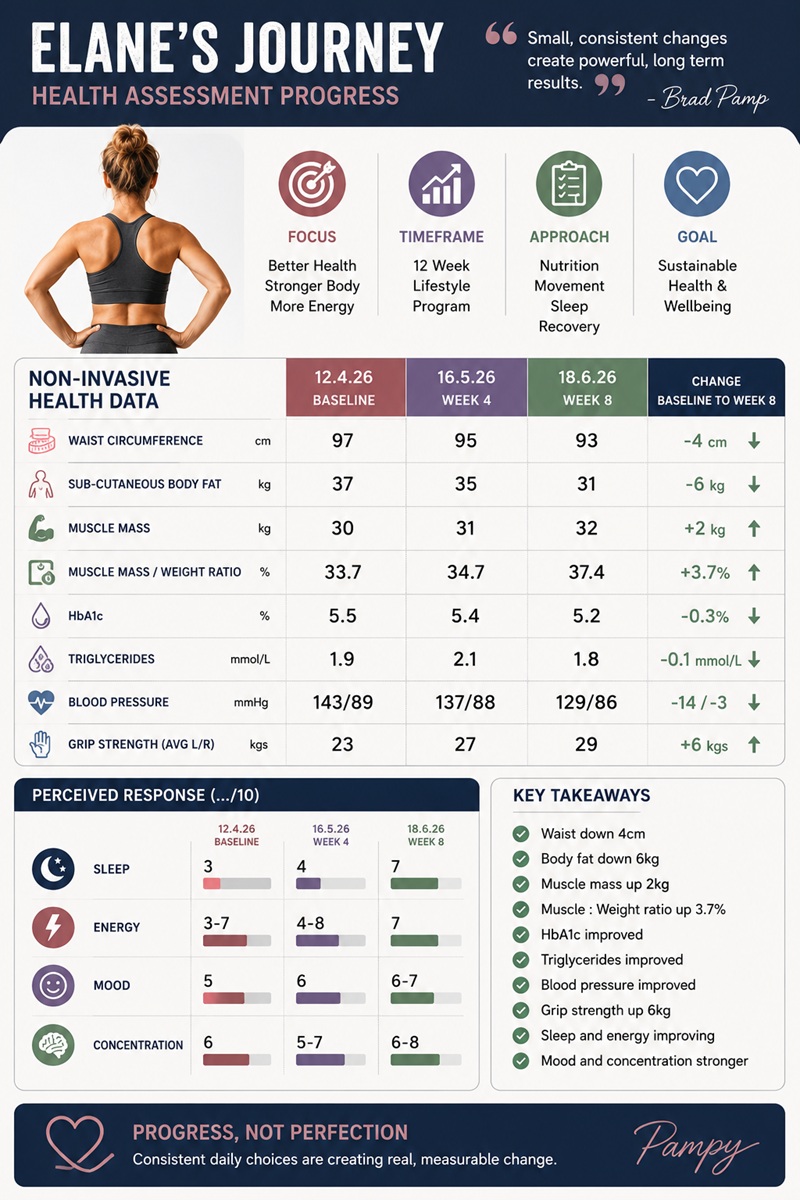
The Goal Was Never Just a Better Number
The purpose of this assessment protocol was to show whether Elane’s daily strategies were improving the things that mattered: abdominal health, muscle, strength, blood pressure, glucose control, sleep, energy, mood and concentration.