
The Menopause
Rebuild Protocol
Elane’s plan was never designed as another strict diet. It was a realistic lifestyle framework that could fit around work, family, changing energy levels and the physical demands of perimenopause.
Not Simply to Lose Weight
The Physiology
Menopause is not Elane’s body working against her. It is her body adapting to a different hormonal environment.
Based on feedback from her physician, her own research and my supporting input, Elane came to understand that this stage was not a personal failure.
It was a genuine physiological transition.
Less oestrogen can influence almost every tissue in the body.
A Day in the Life
This is an overview of the approach Elane practised across the project. It was flexible, appetite-led and designed to be repeatable rather than perfect.
Start Gently
- Wake.
- Approximately 500–700mL of water.
- Warm water with a dash of fresh lemon.
- Coffee.
- If she isn’t hungry, she does not force breakfast.
Elane’s appetite often isn’t strong early in the morning, so skipping breakfast naturally extends her overnight fast.
Extending the overnight fasting period allows insulin levels to remain lower for a little longer, encouraging greater fat utilisation while giving the digestive system a rest. It also suits women who naturally experience reduced appetite first thing in the morning.
Morning Walk
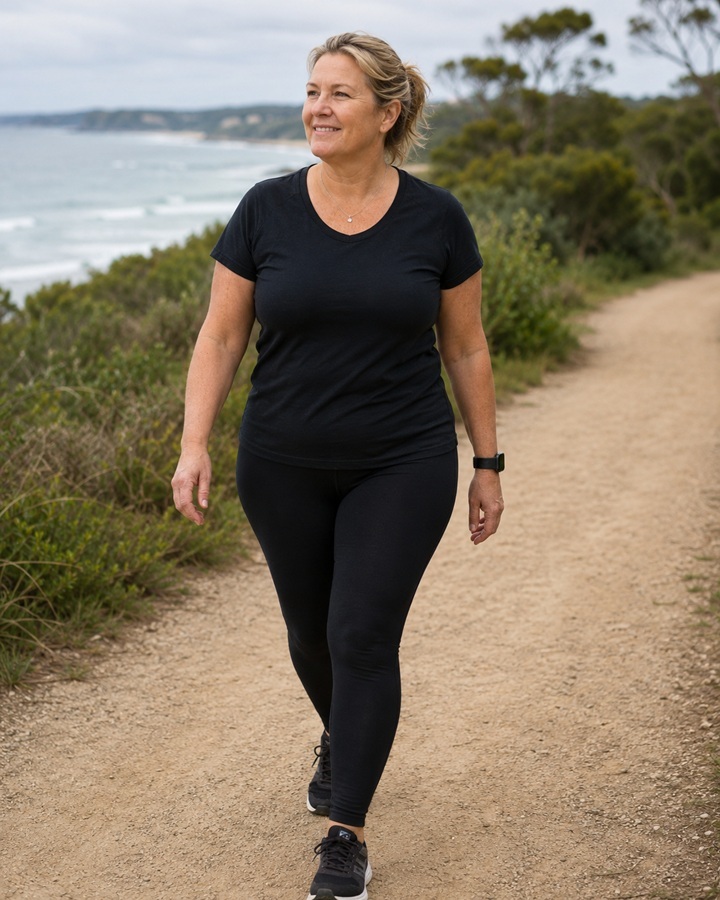
- 15–30 minutes.
- Ideally outside.
- A treadmill is the practical indoor option.
- Easy, comfortable and repeatable intensity.
Morning movement gently raises metabolism, supports insulin sensitivity, promotes circulation and provides an important daylight signal to the brain. This helps regulate the body’s internal clock and may improve sleep later that night.
Her Two Breakfast Options
Breakfast volume was guided by hunger. For the most part, her meals were modest. On mornings when she wasn’t hungry, she simply had coffee and continued fasting.
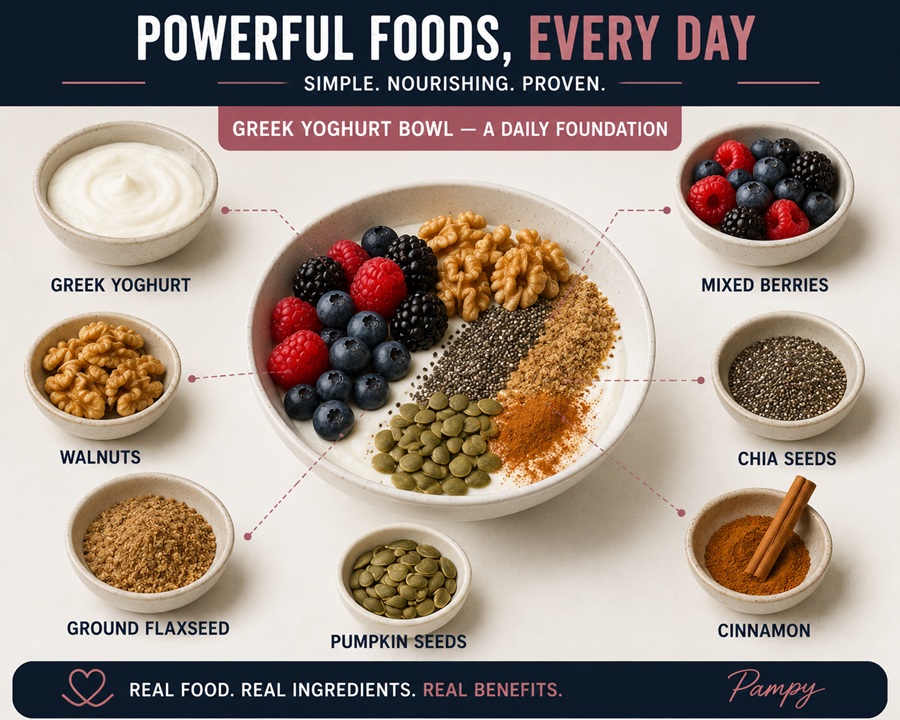
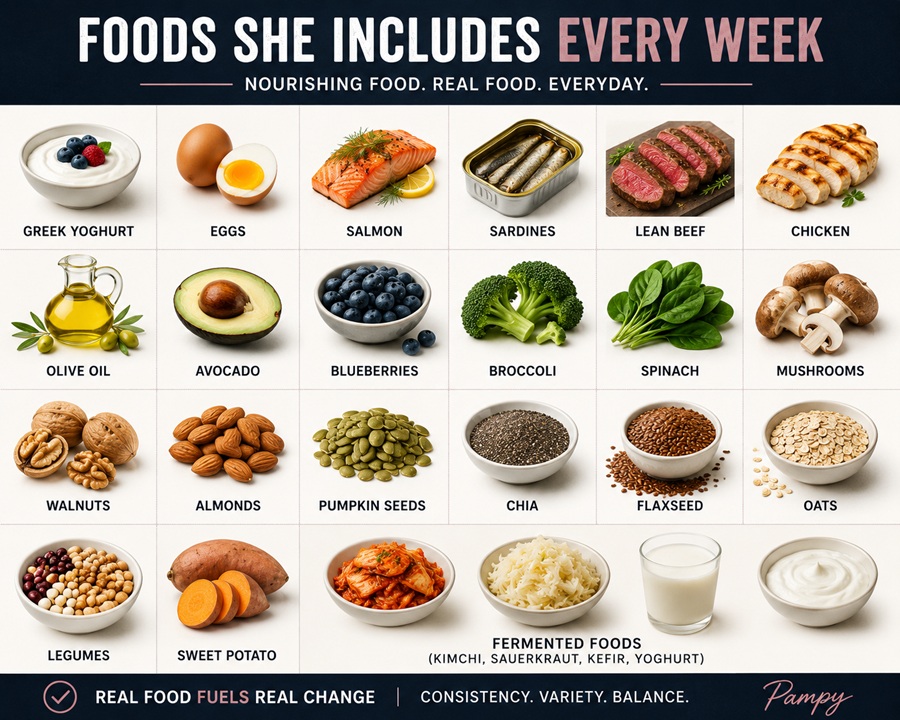
Greek Yoghurt, Berries, Nuts & Seeds
A protein-rich, fibre-rich breakfast with healthy fats, colourful plant compounds and strong satiety.
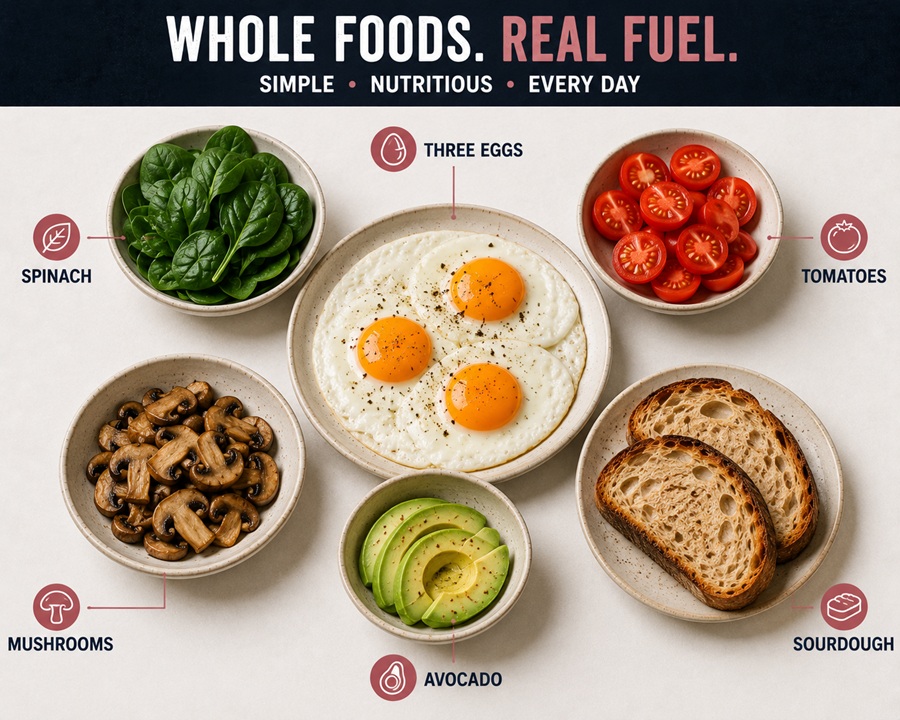
Eggs, Vegetables, Avocado & Sourdough
A whole-food savoury option supplying protein, fibre, healthy fats and sustained energy.
Lunch
Colour diversity helps feed a diverse gut microbiome. Lean protein protects muscle, while olive oil, avocado and seeds provide healthy fats that assist satiety and cardiovascular health.
Afternoon
Energy falls.
Sugar cravings appear.
The coffee machine calls.
Instead, Elane went to protein first.
Then...
- A cup of tea.
- A short walk outside.
- A few trips up and down the office stairs.
- Five minutes of movement.
Protein, hydration and a short movement break often helped settle the afternoon energy drop and reduced the urge to reach immediately for sugar or another coffee.
Dinner
Protein first. Plenty of vegetables. Quality carbohydrate where activity and appetite supported it.
Cooked lean protein as the central part of the meal.
Protein First
Salmon, chicken, lean lamb, lean beef or white fish.
Half the Plate Vegetables
Broccoli, beans, pumpkin, cauliflower, asparagus, Brussels sprouts and zucchini.
Quality Carbohydrate if Active
Sweet potato, brown rice or quinoa in a portion suited to activity, appetite and recovery needs.
Protein supports overnight muscle repair, while vegetables provide fibre, vitamins, minerals and valuable plant compounds. Including carbohydrate in appropriate portions can assist glycogen replenishment and may help some women sleep more comfortably by supporting satiety and serotonin pathways.
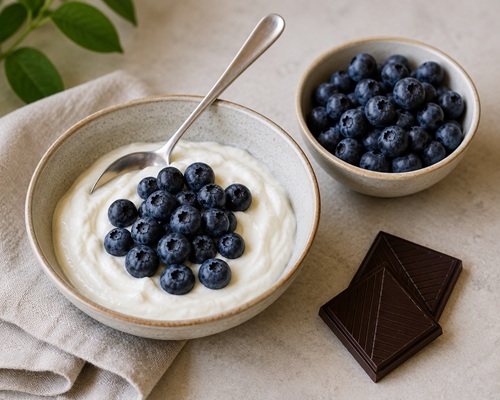
Dessert
Dessert wasn’t automatic.
If Elane genuinely felt she needed something after dinner, she kept it simple and nourishing — such as Greek yoghurt, blueberries and two squares of dark chocolate.

Hydration
Elane found warm water with fresh lemon and a tiny dash of bicarbonate soda the easiest way to increase her fluid intake.
She also found larger fluid volumes difficult and sometimes disruptive, particularly because urinary urgency was already one of her symptoms.
The practical goal was therefore not hydration perfection. It was gradually increasing intake in a way she could comfortably maintain.
Supplement
Strategy
Supplements were never intended to become the foundation of the plan.
Food, movement, sleep and appropriate medical care remained the priorities. These additions were simply trialled as practical support.
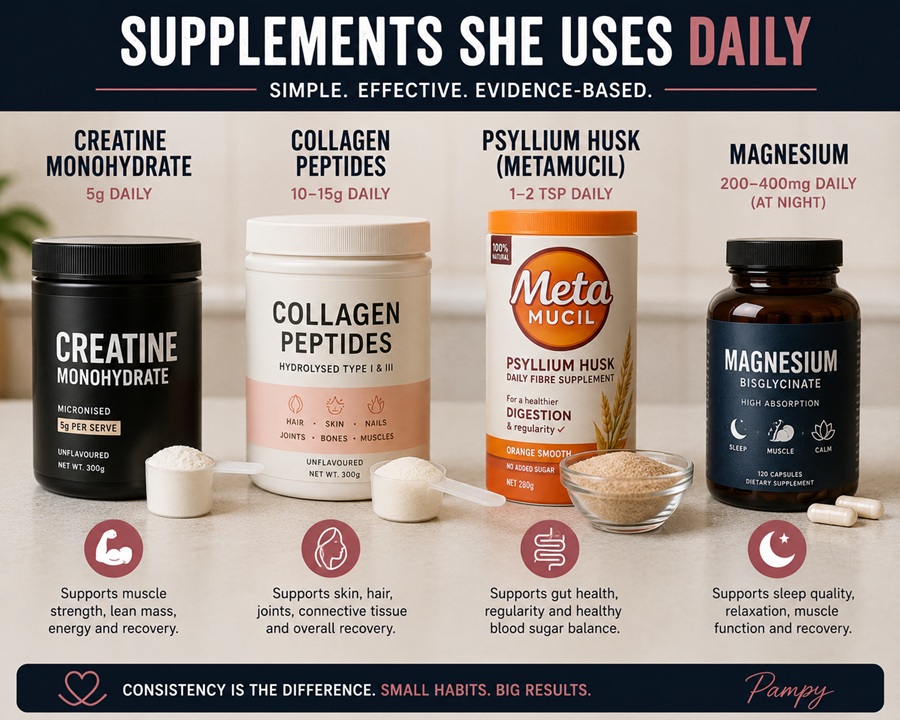
Supplements Don’t Replace Food
They simply support it.
Elane’s Trialled Stack
Each supplement was introduced for a clear reason, monitored for tolerance and only considered worthwhile if it produced a useful response.
Creatine Monohydrate
Creatine is probably one of the best-researched supplements available.
- May help maintain lean muscle.
- May support improved strength.
- May enhance recovery.
- May support brain function.
- May improve training quality.
There is growing interest in creatine’s potential role for women during the menopausal transition, because both muscle and cognitive resilience become increasingly important.
Super easy to take, inexpensive, and I think it definitely helped my recovery from exercise.
“I will keep going.”Collagen Peptides
Collagen provides amino acids involved in supporting collagen production within tendons, ligaments, skin and connective tissues.
Collagen is not a complete muscle-building protein, but it can complement adequate dietary protein, particularly for women experiencing joint stiffness or wanting to support their skin and connective tissue health.
I found it made my gut unsettled, even when I reduced the volume. This one simply didn’t agree with me.
“However, I have friends who feel it helped — particularly with dry skin.”Psyllium Husk
Simple.
- More fibre.
- A healthier gut.
- Support for lower cholesterol.
- Better blood glucose control.
- Greater fullness and appetite control.
Many adults fall well short of recommended fibre intake, making psyllium a practical addition where extra fibre is genuinely needed.
Yep, easy to take and helped keep things regular.
Magnesium
Some women find magnesium helpful for muscle relaxation or sleep quality, although responses vary and the evidence is mixed.
Magnesium is most useful where dietary intake is low or a deficiency is present. In Elane’s case, it was trialled specifically because she was experiencing repeated lower-leg cramps in bed.
I definitely found it eased my night cramps over the first two weeks, which helped me achieve more settled sleep.
The cramps slowly returned, and increasing the dose left me with a little looseness.
“A small dose appeared to be best.”Foods She Includes Every Week
Foods She Reduces
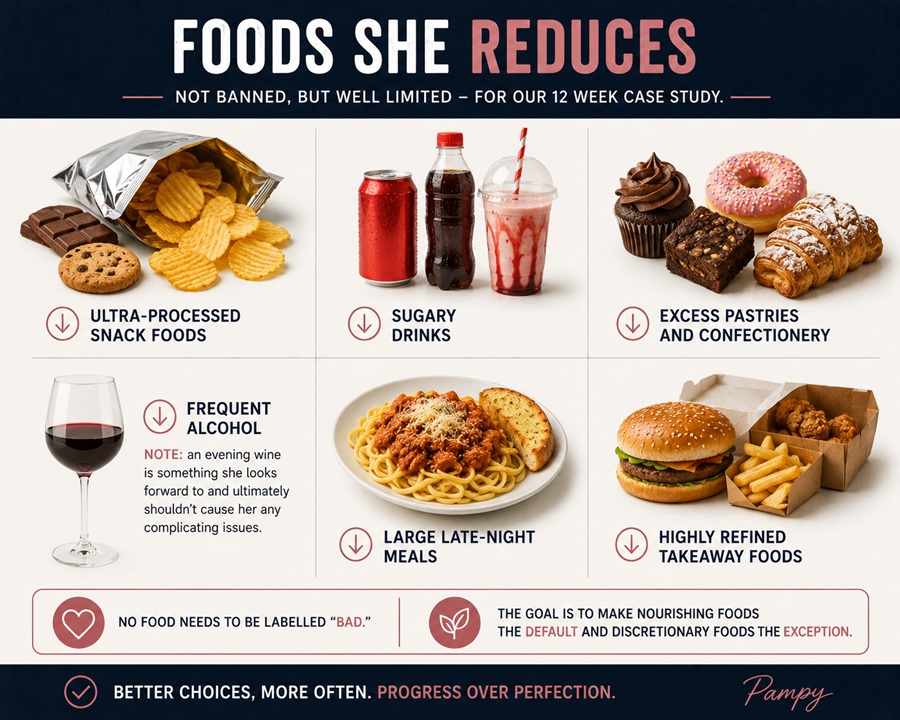
No food needs to be labelled “bad.” The goal is to make nourishing foods the default and discretionary foods the exception.
The Goal Was Never Simply to Make Elane Lighter
It was to make her stronger.
Stronger muscles.
Stronger bones.
Better sleep.
Better energy.
Better metabolism.
Better confidence.
Better health markers.
The weight loss became a by-product of rebuilding her physiology, not the primary objective.
Menopause is not about fighting your body. It is about learning what your body now needs to thrive in its next chapter.
The Movement
Reset
One of the biggest myths surrounding menopause is that women simply need to exercise harder.
In reality, many women may benefit from doing the opposite: choosing a sensible amount of movement they can recover from, enjoy and consistently repeat.
The Goal Wasn’t Exhaustion
Consistency Before Intensity
Rather than trying to “burn calories,” we wanted to build a healthier, stronger and more resilient body.
The goal was to send Elane’s body the right messages often enough for it to adapt — without making every session another source of stress.
We weren’t only preparing her body for the next 12 weeks. We were building something that could serve her for the next 30–40 years.
Elane’s Weekly Plan
Nothing extreme. Nothing heroic. Just enough quality movement to create a meaningful physiological response.
Why Walking?
Walking may well be one of the most underrated forms of medicine available.
Regular walking can help:
- Improve insulin sensitivity.
- Improve blood glucose control.
- Reduce visceral abdominal fat.
- Improve mood.
- Reduce anxiety.
- Improve sleep quality.
- Improve circulation.
- Maintain aerobic fitness.
- Reduce blood pressure.
- Support heart health.
- Support bone health.
- Increase daily energy expenditure without excessive fatigue.
Your Metabolism Insurance Policy
One of the significant physiological challenges during and after menopause is the gradual loss of muscle.
Muscle is not simply about looking toned.
Muscle is your:
Protecting muscle becomes one of the smartest investments a woman can make.
Elane’s Three Home Workouts
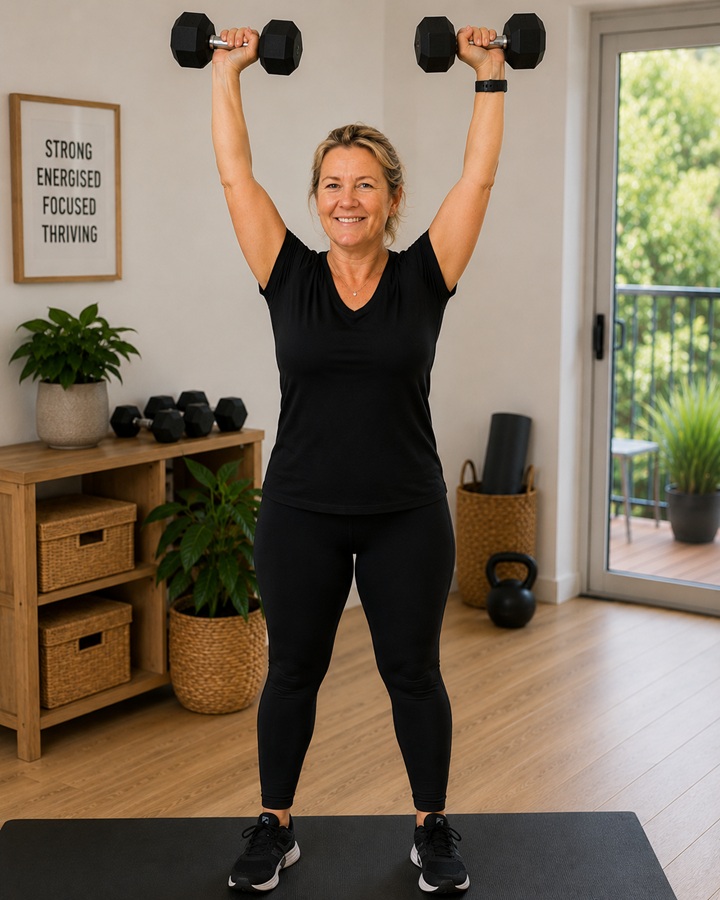
Just dumbbells, her own bodyweight and a short list of basic movements she could perform safely at home.
Workout A
- Goblet squat
- Standing row
- Chest press
- Shoulder press
- Standing calf raise
Workout B
- Sit-to-stand
- Bent-over row
- Wall push-up or bench push-up
- Step-up
Workout C
- Assisted split squat
- Single-arm row
- Glute bridge
- Dumbbell curl
- Overhead triceps extension
- Side plank
Elane’s Formula
From Soreness to a Game Changer
I was certainly a little sore the day after the first few sessions.
I kept the weights light when starting and built up nice and slowly.
Undoubtedly, I actually started to really enjoy my weights sessions — even more than the walking.
“Once I got into it, it really was a game changer.”
Why Resistance Training Matters During Menopause
Many women also report improved mood, a better body image and greater confidence as they become stronger and more capable.
Elane’s Long-Term Goal
This was never meant to finish after 12 weeks.
It was about creating a body that could confidently carry Elane into her 60s, 70s and beyond.
The Body Adapts to What It Experiences Most Often
It does not need punishment.
It needs regular, achievable signals.
A brisk walk most days, two or three short strength sessions each week, nourishing food and good sleep can create thousands of positive adaptations across a year.
They are not glamorous.
But they are powerful.
For many women navigating menopause, this kind of sustainable routine can be far more effective than short bursts of extreme motivation followed by soreness, fatigue and exhaustion.
That is exactly why Elane’s program was designed to be simple enough to repeat — because repeated healthy choices are what ultimately rebuild health.