
PAMPY'S TOP 5 FOOD SHOCKERS
I've studied nutrition for more than 35 years — looking at what people eat, measuring what happens to their bodies and watching what happens when habits change.
So every now and then I'm allowed an opinion.
These aren't necessarily the five most dangerous substances ever discovered by mankind. Nor am I suggesting one doughnut will cause your pancreas to pack its bags and leave.
They're simply five very common food and drink choices I reckon the human body could happily live without.
WHAT GETS YOU ON THE LIST?
Pretty simple. They're readily available. People consume them regularly. They're nutritionally ordinary. And in most cases, they're incredibly easy to replace.
Their special talent? Delivering a heap of energy while providing bugger-all nutrition.
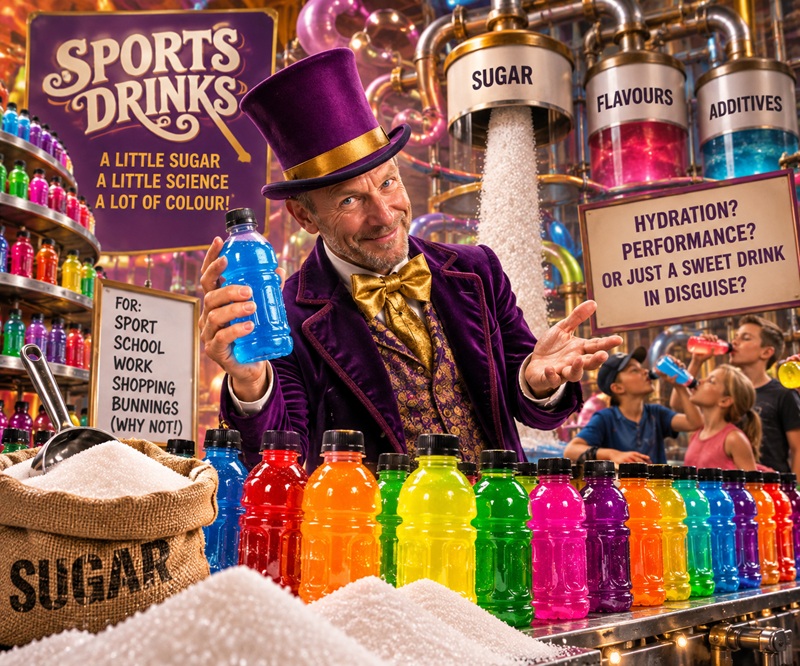
Sports Drinks — When You're Not Doing Sport
I need to tread carefully here because I spent about 15 years drinking litres of this stuff.
Long-course endurance racing. Training. Racing in the heat.
There are absolutely circumstances where rapidly available carbohydrate, fluid and sodium during prolonged endurance exercise make physiological sense.
But somewhere along the journey, the sports drink escaped from sport.
Now you'll see someone sipping one while driving to work. Kids drinking them at lunchtime. Someone wandering around the shops clutching a fluorescent bottle as though they've just finished Stage 17 of the Tour de France.
Mate.
You've been to Bunnings.
For the sedentary person, it's often sweetened, acidic water with some electrolytes and a very impressive sporting halo.
My personal kicker? After years of endurance racing and litres of the stuff, my teeth eventually started showing the wear.
Sugar plus acidity plus repeated exposure is hardly a love letter to dental enamel.
Sports nutrition has a place. Sports drinks as recreational soft drink? Naaa.
Water. Oh der...
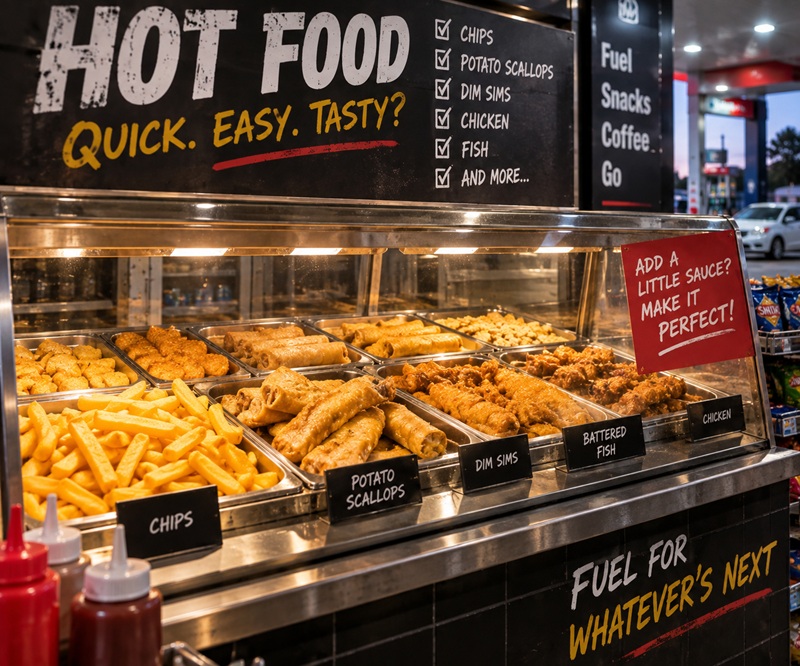
The Yellow Food In The Bain-Marie
You know exactly what I'm talking about.
You walk into the servo, club, takeaway or food court and there it is.
The Great Wall of Beige.
Chips. Potato scallops. Dim sims. Chicken-whatever-it-is. Something crumbed. Something battered.
Something that may once have been a vegetable but has since entered the witness protection program.
It's generally refined carbohydrate and/or processed meat, wrapped in batter or crumbs, deep-fried in oil and kept hot until somebody points at it.
The issue isn't that one particular vegetable oil instantly turns food toxic.
It's the whole package.
Deep frying drives energy density through the roof. Repeated heating degrades frying oils over time. Batter and crumbs provide a wonderfully efficient sponge for extra fat. Fibre and micronutrient density are generally ordinary.
Then comes the finishing touch — a generous squirt of sweet, salty tomato sauce because apparently the yellow food wasn't exciting enough by itself.
Fatty + salty + refined + incredibly easy to eat + surprisingly difficult to stop eating.
Quite an achievement. Just not necessarily one your metabolism requested.
If lunch is all roughly the same shade of yellow, we've probably taken a wrong turn.
Grilled meat, chicken or fish + vegetables + potato, rice or another minimally processed carb.
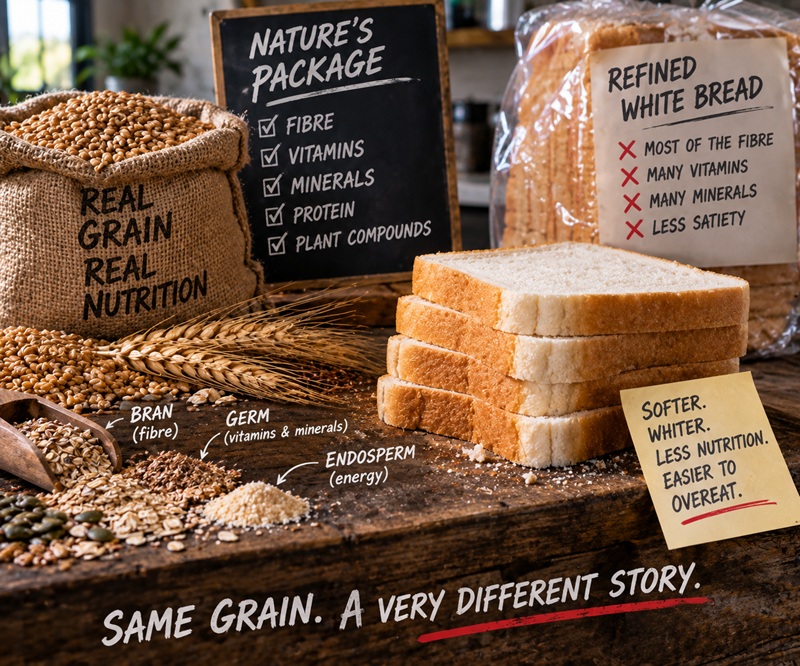
Commercial White Bread
Yeah yeah, I know. Pampy grew up on this.
Ahhh, white bread.
Soft. Fluffy. Lasts suspiciously well.
Can be compressed into approximately the size of a golf ball.
Let's be fair: bread isn't poison, carbohydrate isn't poison and eating a sandwich isn't a metabolic emergency.
But if I'm choosing foods to build someone's everyday diet around, mass-produced white bread isn't exactly fighting its way onto my podium.
The grain has been refined, removing much of the original bran and germ and leaving predominantly starch.
That generally means less fibre, less chewing and less satiety than a genuinely wholegrain alternative.
Then look at what commonly goes on it — jam, honey, processed meats, cheese, sweet spreads.
White bread's greatest talent may be acting as a soft edible delivery platform for whatever else we fancy eating.
And because it requires approximately four chews before disappearing, two slices can become four remarkably quickly.
Not poisonous. Just nutritionally underwhelming and ridiculously easy to overeat.
Dense wholegrain, rye or sourdough — love sourdough — with enough actual grain that your jaw realises lunch has commenced.
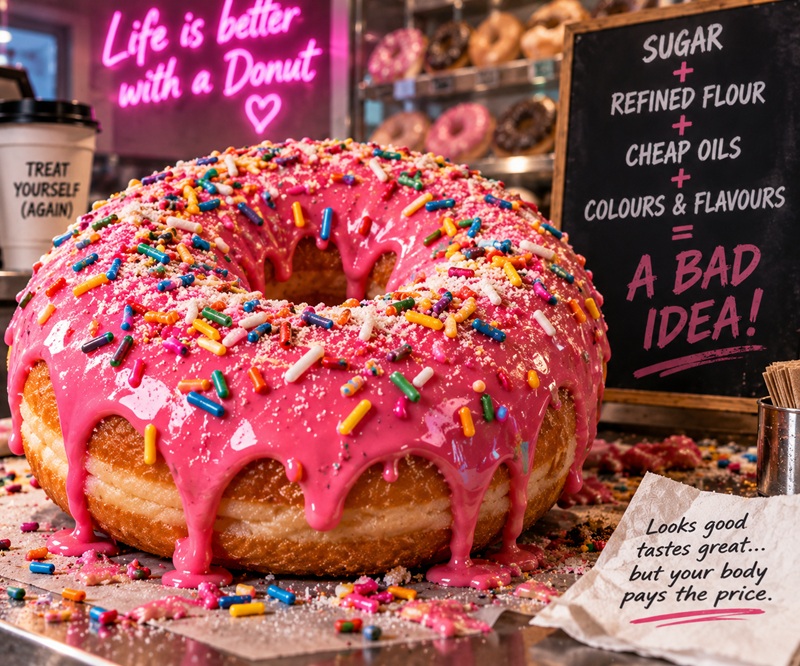
Mass-Produced Baked Confectionery
Now we're getting serious.
Doughnuts — oh those pink ones!!!!!!!
Iced buns. Cheap muffins. Packaged cakes. Pastries. Biscuits wearing enough icing to be visible from space.
Especially those spectacularly pink things sitting in supermarket bakery cabinets.
What exactly are we buying here?
Refined flour + added sugar + fat + salt + colours + flavours + emulsifiers + icing/filling.
Our brains rather enjoy sweetness, fat, softness and energy density.
Manufacturers haven't accidentally stumbled upon that combination. These foods are designed to be delicious.
And they are.
That's the problem.
They're incredibly easy to eat quickly, generally poor at producing lasting satiety relative to their energy content, and very easy to add to an otherwise adequate day's food.
A 400-calorie bowl of whole food looks like food.
A 400-calorie piece of confectionery can disappear while you're standing next to the kettle.
Dessert pretending to be a snack. Or worse — dessert pretending to be breakfast.
Fruit. Greek yoghurt. Nuts. Eggs. Real food.
And if you genuinely want a doughnut occasionally?
Have the bloody doughnut. Enjoy it. Just don't promote it to a food group.
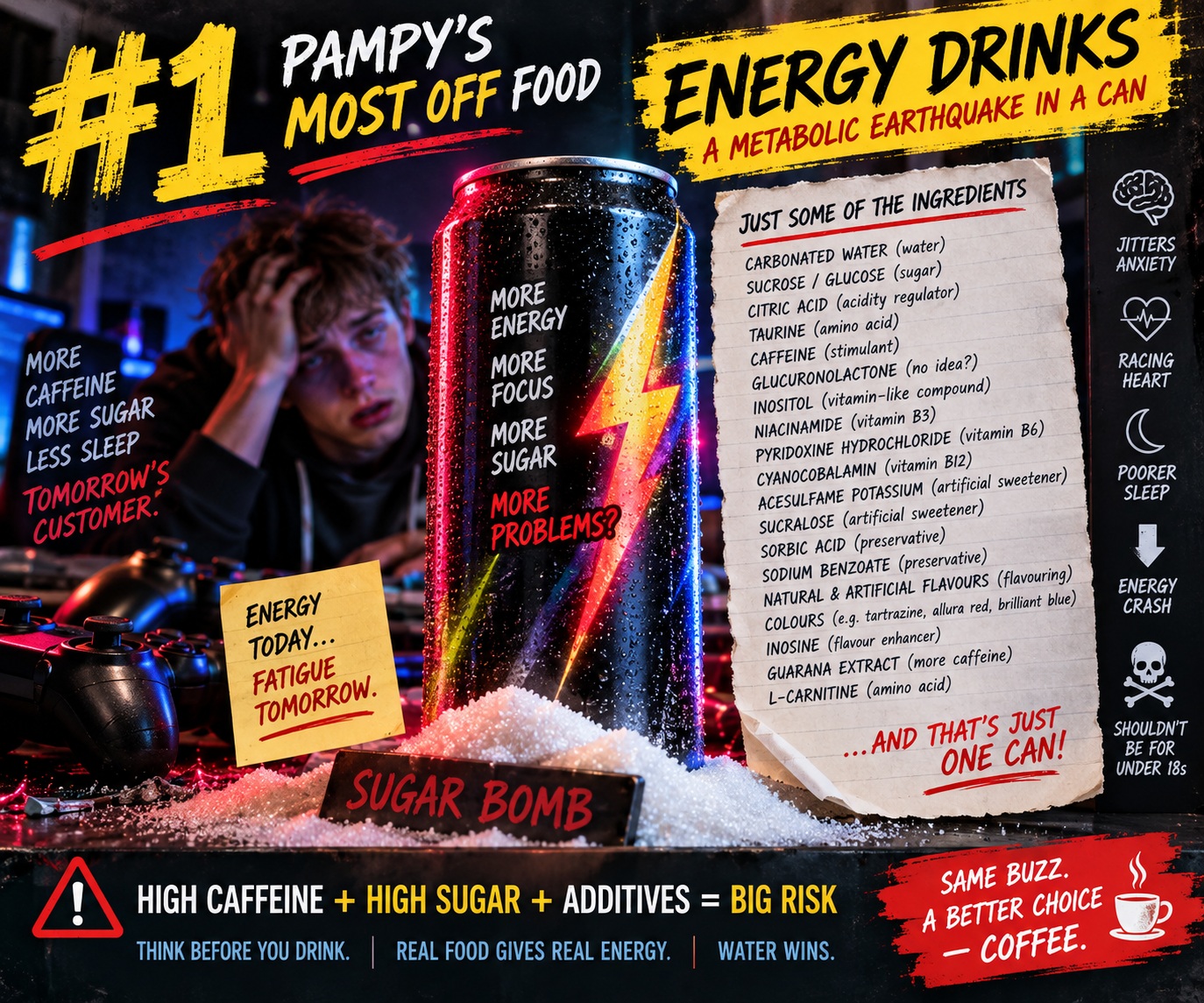
Energy Drinks
And the gold medal goes to...
THE ENERGY DRINK — A METABOLIC EARTHQUAKE IN A CAN.
For me, this one isn't even close.
Take a sweet drink.
Add a decent whack of caffeine.
Potentially add a collection of acids, flavours, colours and other ingredients.
Package it in something that looks like it should contain aviation fuel.
Then market the experience around energy, performance, gaming, nightlife and staying awake.
What could possibly go wrong?
Now let's separate things. Caffeine isn't inherently evil. I'm a devoted coffee drinker.
Used appropriately, caffeine can improve alertness and exercise performance.
But putting substantial caffeine into an intensely sweet, highly palatable drink creates a very different proposition — particularly when we're talking about kids and teenagers.
Sugar-sweetened versions can deliver a rapid carbohydrate load while caffeine stimulates the nervous system. Large or repeated caffeine doses can contribute to jitters, anxiety, palpitations and disturbed sleep in susceptible people.
And here's the particularly ridiculous loop:
DRINK CAFFEINE LATE → SLEEP POORLY → WAKE UP TIRED → NEED ENERGY → DRINK ANOTHER ENERGY DRINK.
Congratulations.
We've invented a beverage that can help create tomorrow's customer.
And the sugar-free versions? Removing the sugar load matters — but it doesn't magically turn a heavily caffeinated drink into water, nor remove the issues of caffeine dose, sleep timing or habitual dependence.
Personally, I don't think these products belong anywhere near children.
I'd happily see much tougher restrictions around their sale and marketing to under-18s.
And yes — I'd support treating highly caffeinated energy drinks much more like other products whose public-health consequences justify regulation and taxation.
That's my view.
Looking for more energy? Start somewhere revolutionary: Sleep. Food. Water. Movement.
Water. And if you're an adult who enjoys caffeine? Have a coffee.
SO, ARE THESE FOODS BANNED?
No.
That's not how I teach nutrition.
If you're at your daughter's birthday and somebody hands you a slice of cake, I'm not expecting you to dive behind the couch screaming:
Context matters. Dose matters. Frequency matters.
What you eat across the other 95% of your life matters enormously.
But next time you're standing at the servo fridge, bakery cabinet or bain-marie and you've got five seconds to make a decision, perhaps you'll remember one of these.
You don't need a nutrition degree.
Usually there is.
And that's probably where I'd start.
WARM OR COLD WATER — WHAT'S BEST?
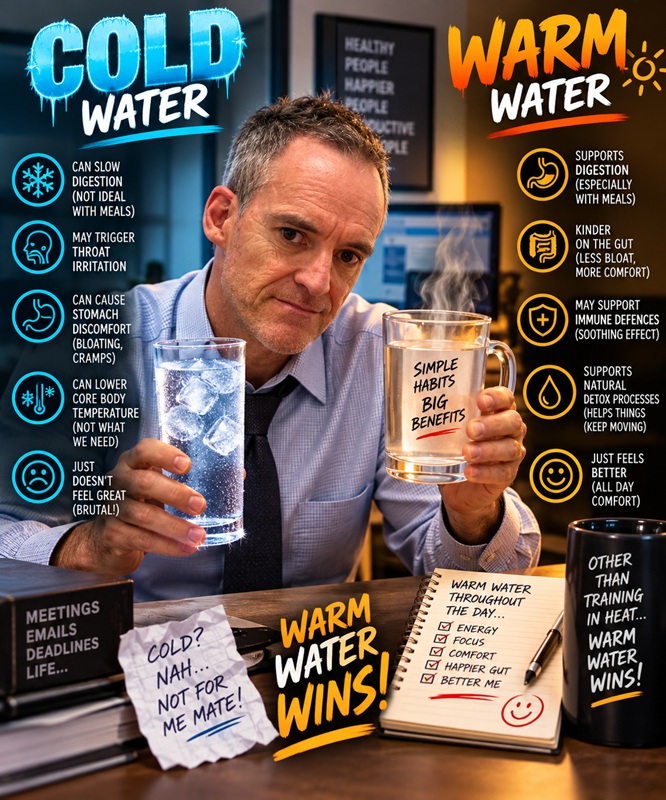
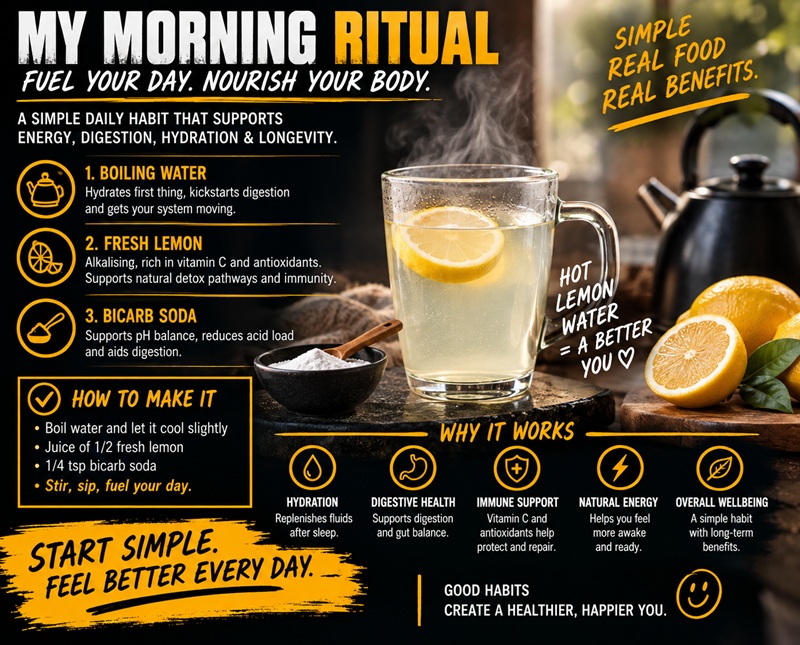
Other than when training in heat — where cold water makes sense — I favour warm water.
— BPCopper Bracelets
Every now and then I like to trial something that’s been floating around the health world for decades.
Not because I necessarily believe it — but because I’m curious enough to ask: could there actually be something in this?
Proper Old School
This month, my experiment involved the humble copper bracelet.
My grandfather wore one. Farmers wore them. Builders, footballers, miners and truck drivers.
During the 60s and 70s they seemed to be everywhere.
Then, somehow, they quietly disappeared.
Why Wear One?
The old claims centred around aching joints, arthritis, inflammation and general joint comfort.
Plenty of people absolutely swore by them.
Enough for me to eventually think: righto — I’ll give one a crack.
Copper unquestionably matters to human health.
But does wearing it matter?
The Theory
Put copper against warm, sweaty skin and it reacts with moisture and salts — hence that familiar green mark.
The long-standing theory is that tiny amounts of copper may pass through the skin and somehow influence inflammation or joint pain.
Sounds plausible enough to earn a trial.
But The Science?
This is where the bracelet starts losing a little shine.
Controlled research on copper bracelets for arthritis has generally failed to demonstrate meaningful benefit beyond placebo.
People certainly report feeling better — researchers just haven’t been able to show that the copper itself is responsible.
Six Weeks On My Wrist
So here was my highly sophisticated research methodology.
I bought a copper bracelet and wore the bloody thing consistently for six weeks — exercising, sweating and going about normal life.
And no — jewellery most certainly ain’t my thing.
I was particularly interested in my troublesome elbow, morning stiffness, recovery and grip.
But really, the test was dead simple:
Did my joints actually feel any better?
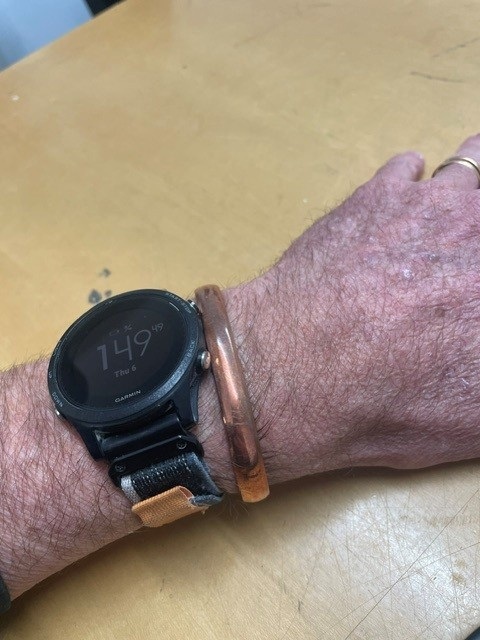
And The Result?
Naaaa.
No obvious improvement in my elbow.
No clear difference in morning stiffness, recovery, grip strength or general joint comfort.
Could something microscopic have been happening that I couldn’t detect? Perhaps.
But the question that matters most to me is much simpler:
Could I actually feel a worthwhile difference?
Nope.
Health hack verdict?
Interesting history.
Interesting theory.
Very little downside.
But for this bloke...
NO CIGAR.
Although...
There was one slightly ridiculous observation.
During the same six weeks I was hitting the golf ball noticeably better. My left arm and wrist seemed to be getting through the ball beautifully.
Was that the copper bracelet?
There is absolutely no sensible scientific reason for me to claim it was.
But I’m playing golf again next week.
And the bracelet is going back on.
SCIENCE: UNCONVINCED. GOLFER: TAKING NO CHANCES.