

After 35 years working with human metabolism, nutrition, exercise and body composition, I've learned that lasting improvements rarely come from one clever trick.
They come from understanding your body, recognising what's getting in the way, and finding practical changes you can live with.
This feature shares five conversations I regularly have during private health assessments. No judgement. No miracle promises. Just a little education that might help you make sense of your own metabolic health.
YOUR BODY'S TWO FUEL TANKS
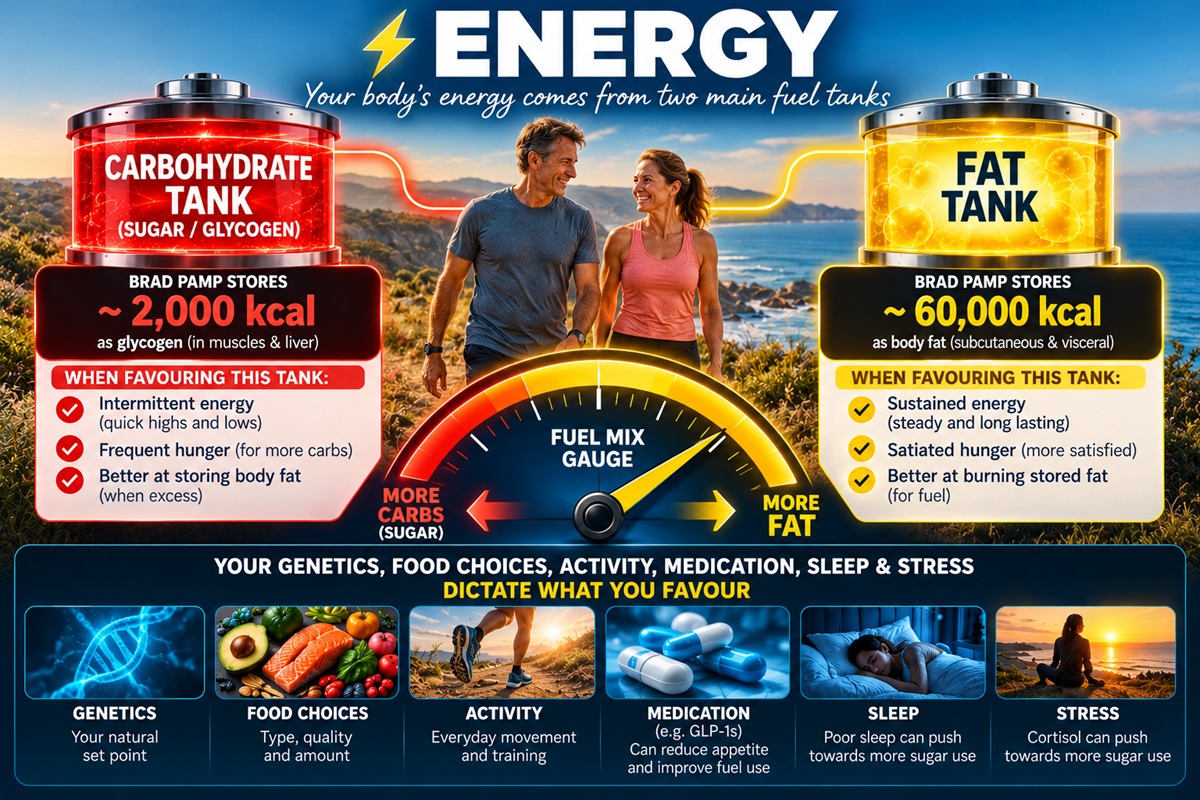
Let's start with energy. Your body has two major fuel reserves: carbohydrate and fat. Both are valuable, and both have important jobs.
Tap or click the image to enlarge.
Even a very lean endurance athlete can carry vastly more energy in body fat than in stored glycogen. The fascinating part is understanding what influences the mixture of fuels we're using throughout the day.
WHAT CAN WE MEASURE?
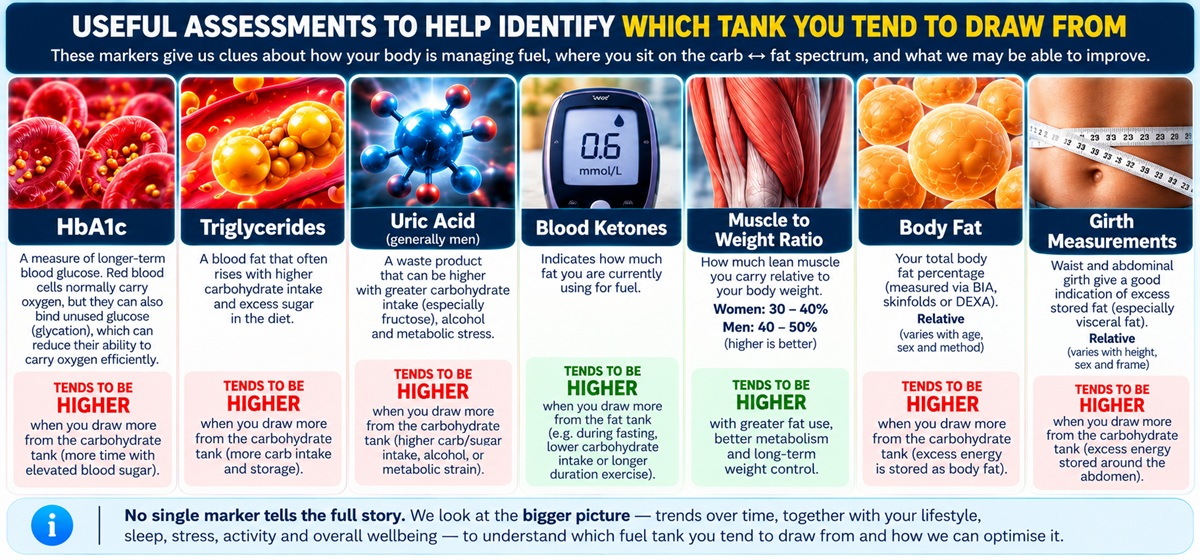
Rather than guessing, we can sometimes use a few simple, carefully selected assessments to better understand metabolic health and body composition.
Tap or click the image to enlarge.
I'm not interested in collecting numbers for the sake of it. I'm interested in what those numbers might tell us about your health and whether we're making meaningful progress. We only assess what is appropriate and useful for you.
These markers provide different pieces of the metabolic-health picture. They do not directly establish which fuel your body predominantly burns. HbA1c reflects longer-term glucose exposure, while ketones indicate ketone availability rather than the rate of body-fat loss.
HOW CAN WE CHANGE THE NUMBERS?
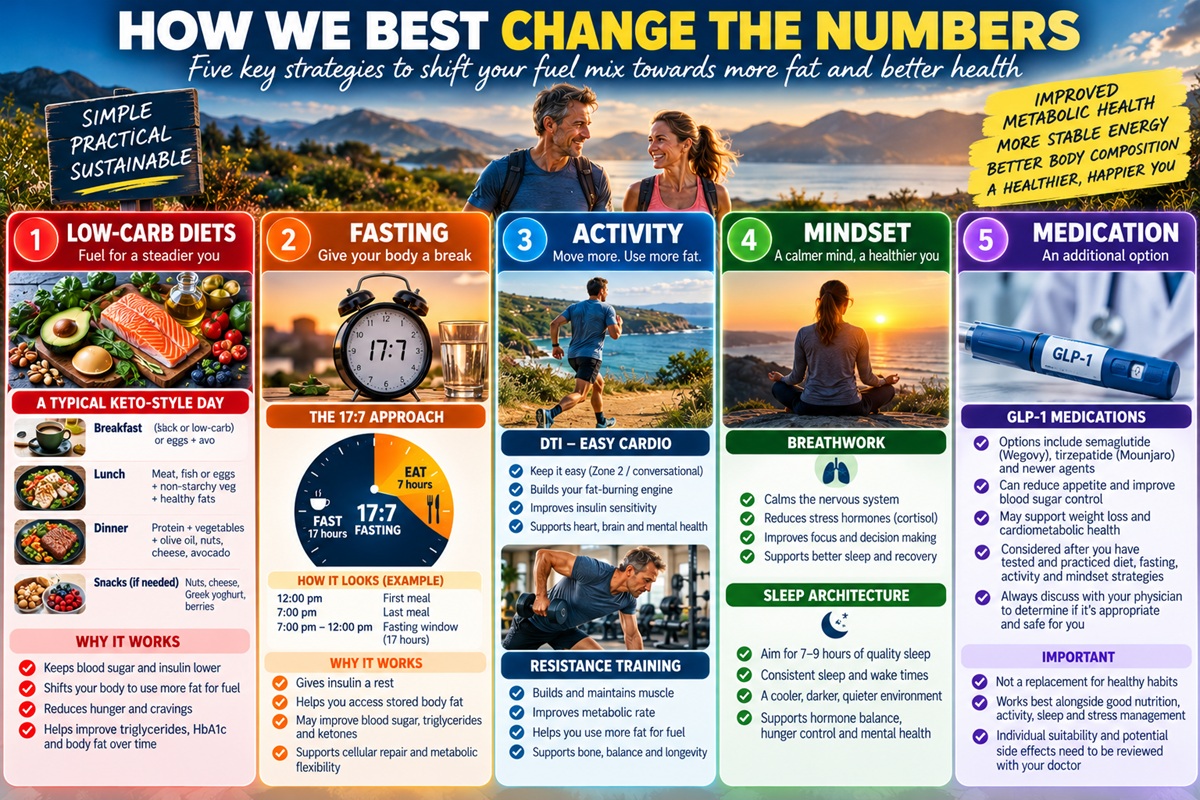
Here's where my practical experience really comes into play. There are several useful strategies, but the best combination depends on the individual.
Tap or click the image to enlarge.
For many people, reducing excess refined carbohydrates and highly processed foods can be a useful starting point. Add fitting activity, muscle-preserving resistance training, appropriate meal timing and better sleep, and we have a practical foundation to build upon.
THE SUGAR–INSULIN–FAT CYCLE
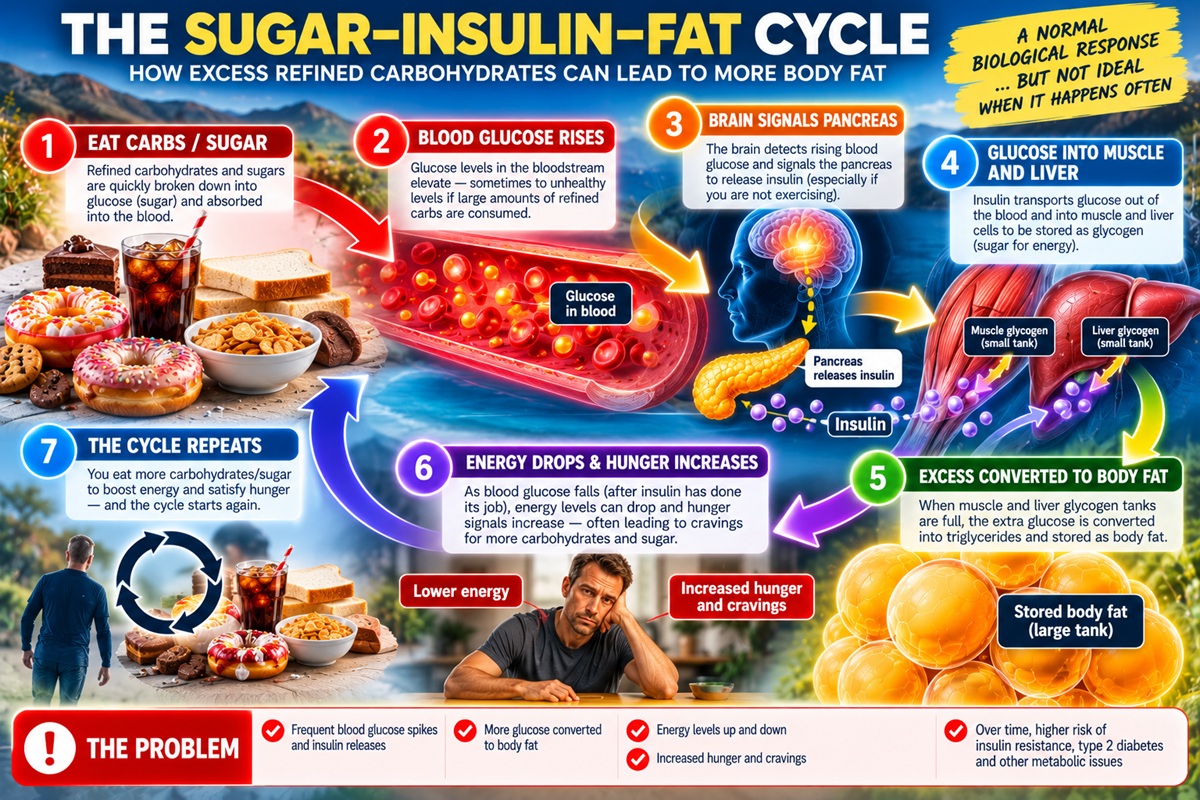
One of the first things I often discuss is how our bodies respond to repeated, energy-dense, refined-carbohydrate eating.
Tap or click the image to enlarge.
Highly refined, energy-dense foods can make it easier to consume more energy than we need, particularly when they're not very satisfying. Improving food quality, protein, fibre and portion awareness can make appetite and energy intake easier to manage.
Insulin is a normal, essential hormone. Its release is primarily regulated by blood glucose and other signals, including gut hormones. Carbohydrate does not automatically become body fat when glycogen stores are full. Long-term fat gain depends on energy balance, and glucose responses vary between people and circumstances. The diagram is a simplified teaching model, not an inevitable biological cycle.
CHASING BETTER NUMBERS
Sounds a little competitive, doesn't it? But regular assessment can be a terrific way of recognising improvements that aren't always obvious on the bathroom scales.
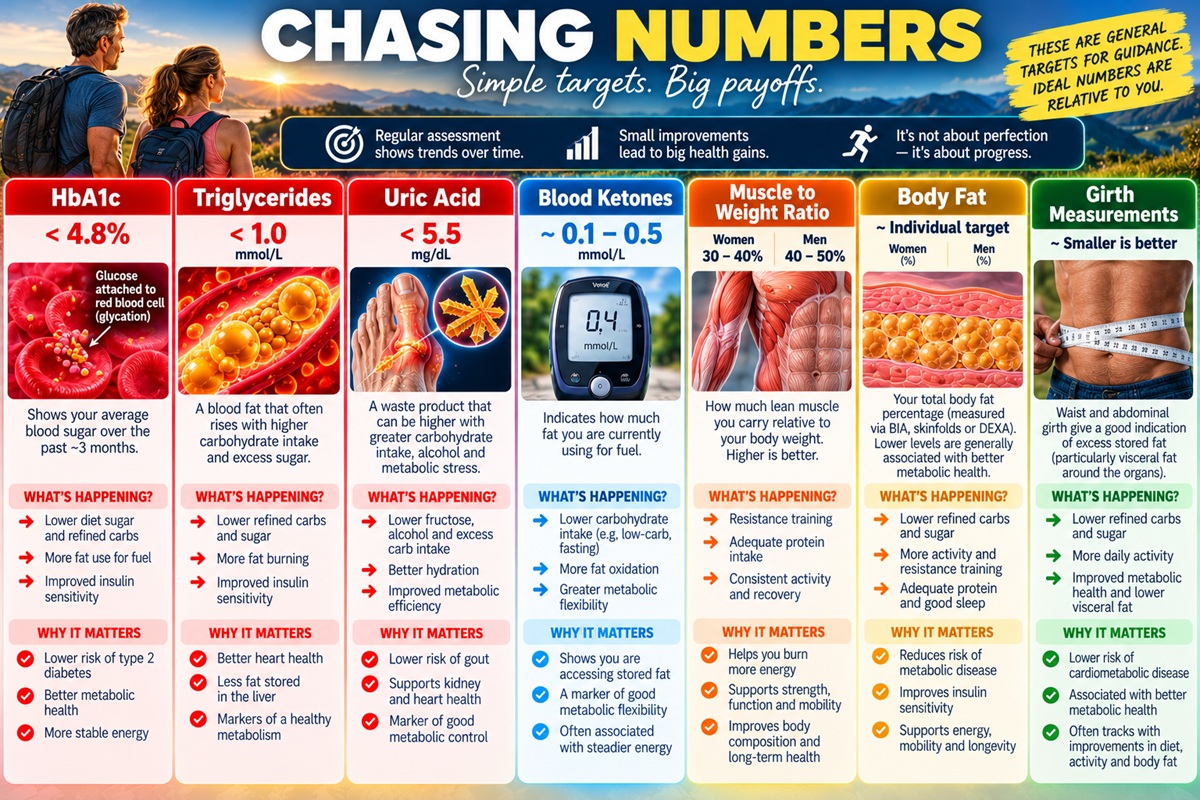
Tap or click the image to enlarge.
Your starting point is your starting point. We're not comparing you with somebody else. We're looking for meaningful improvements in your metabolic health, muscle, body composition, strength and everyday wellbeing.
Targets must be individualised. The values in this illustration are not universal clinical goals. In particular, HbA1c below 4.8% is not required for good health, higher ketones do not necessarily indicate better metabolic health, and body-composition measurements depend on the method used.
WHAT CAN PROGRESS LOOK LIKE?
The theory is useful. But seeing someone put practical changes into action over time can be even more encouraging.
This photographic sequence illustrates one person's body-composition journey. Different starting points, different circumstances, and different rates of progress are all perfectly normal. The important thing is finding a sustainable approach that works for the individual.
THE JOURNEY, IN SIX PHOTOGRAPHS
A visual record of progress over time — not an overnight transformation.
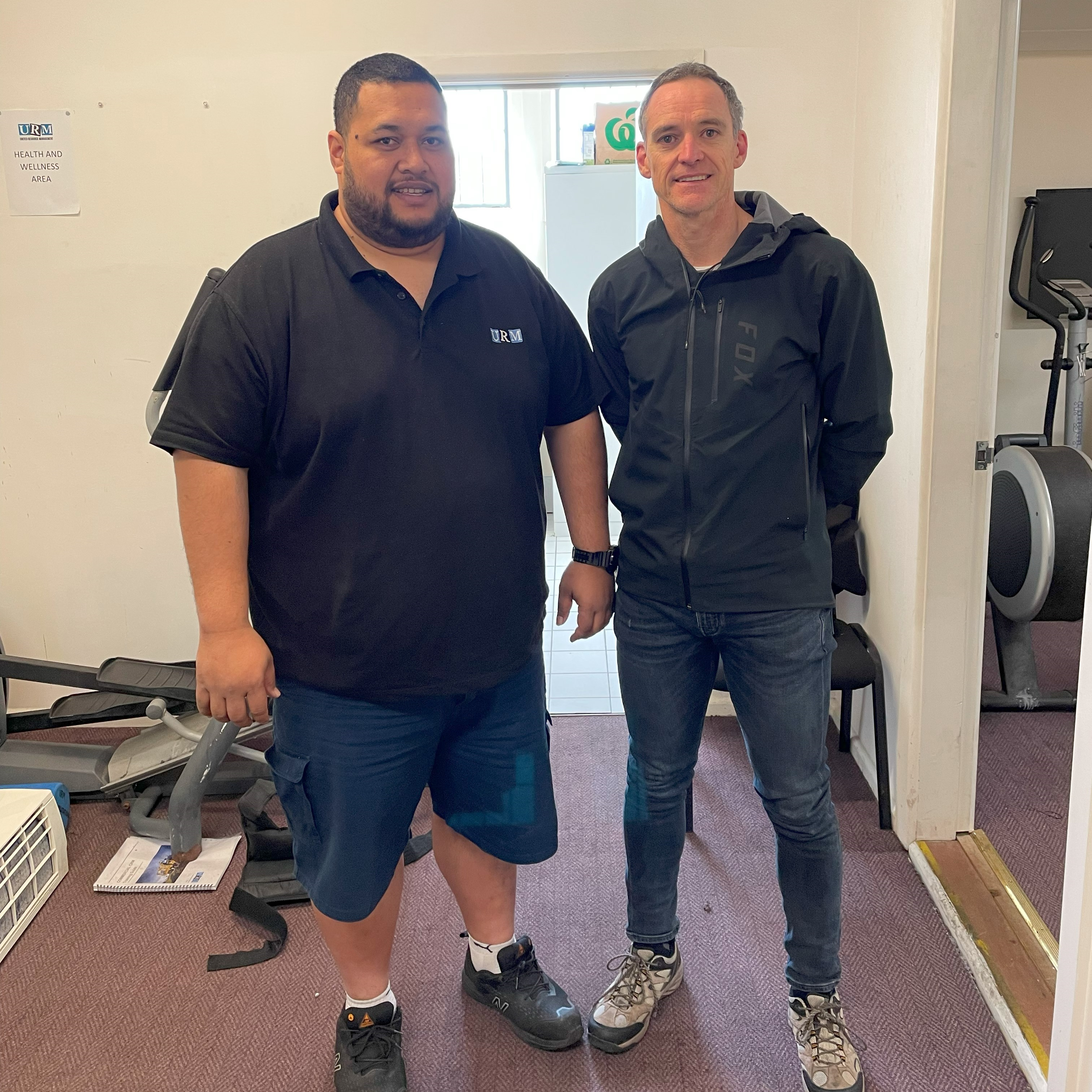 01 — START
 02 — PROGRESS
 03 — PROGRESS
 04 — PROGRESS
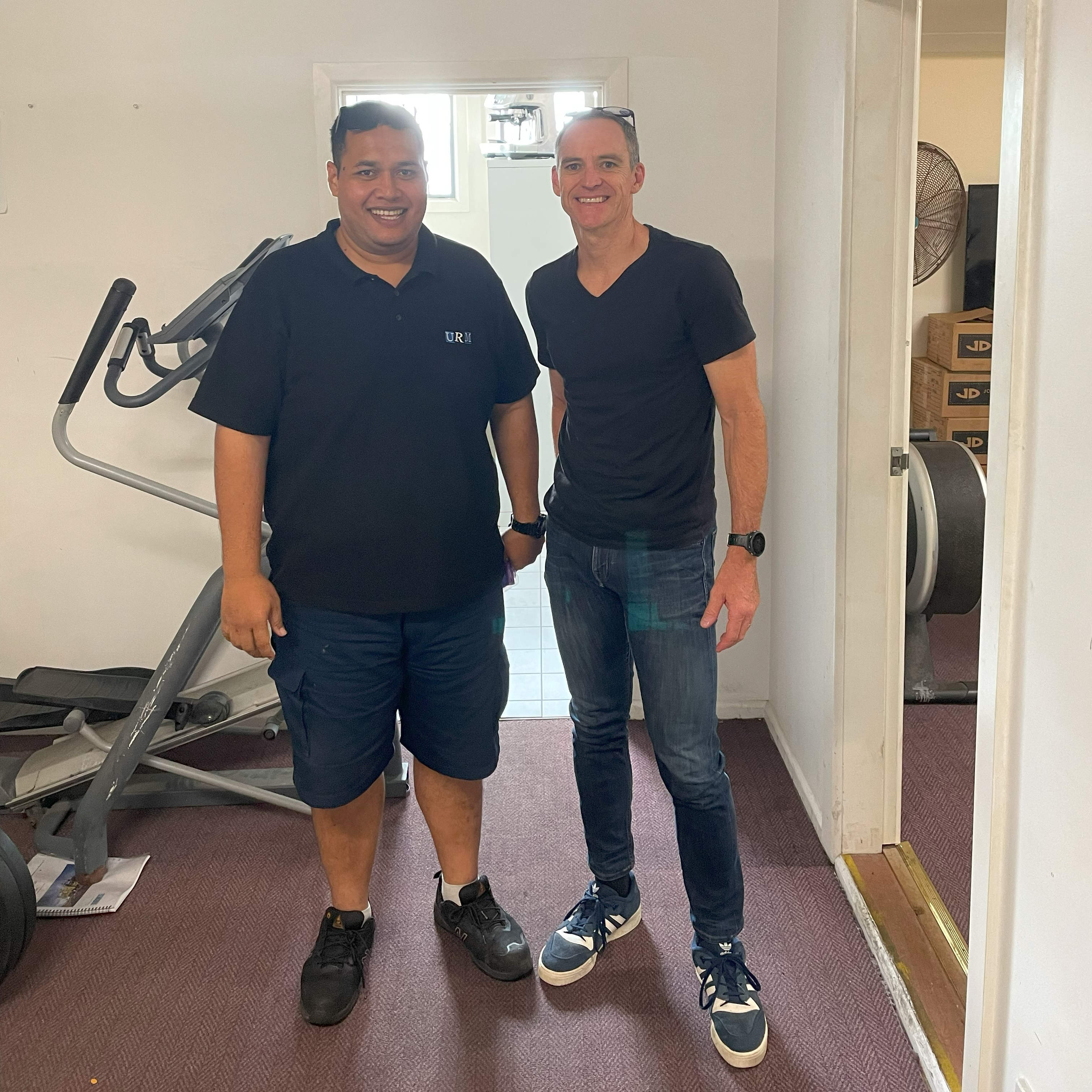 05 — PROGRESS
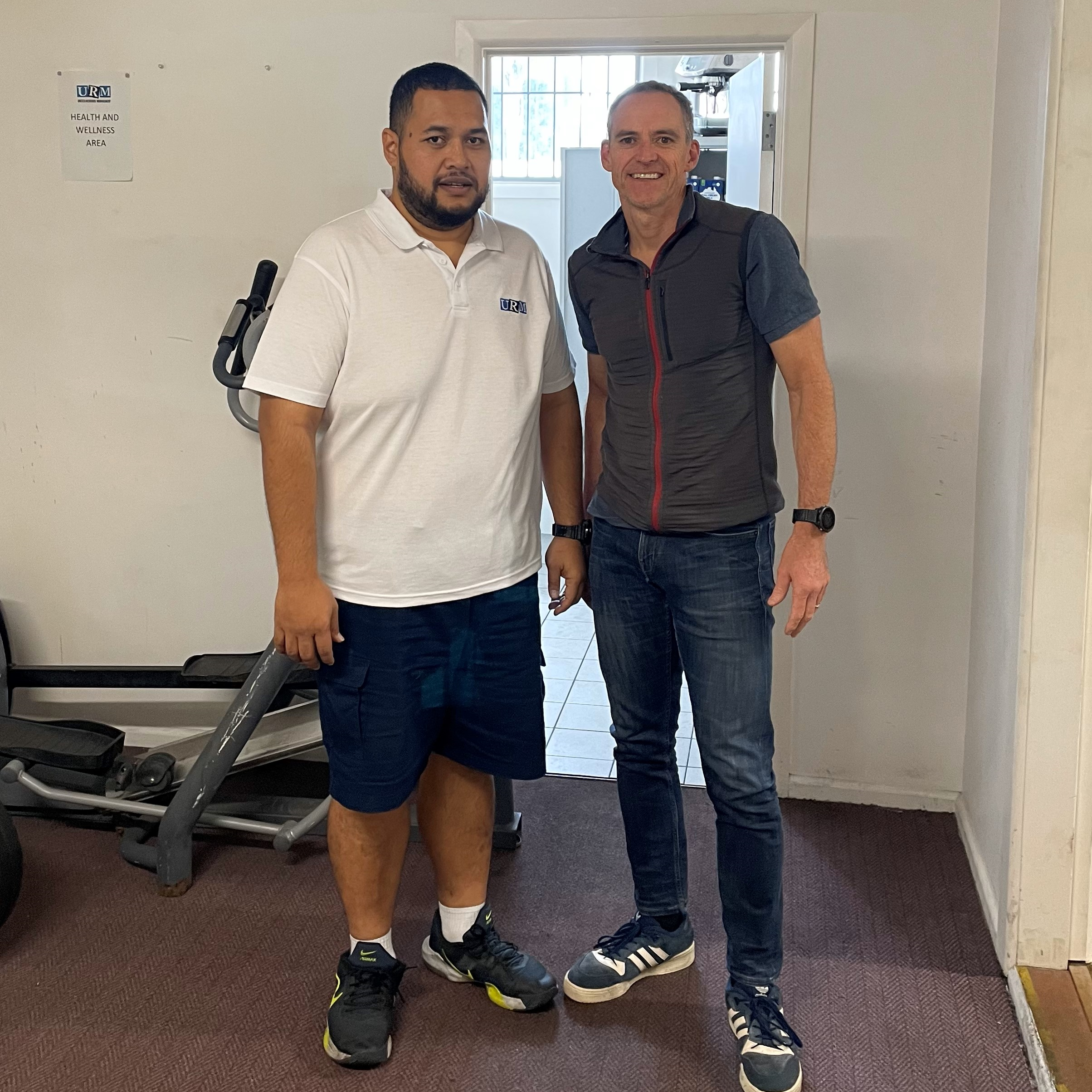 06 — LATEST
On a phone, swipe sideways to follow the journey. Tap a photograph to enlarge.
AND WHAT ABOUT THE HEALTH NUMBERS?
Photographs tell one part of the story. Assessment trends can help us understand other important changes.
VIEW THE HEALTH ASSESSMENT RESULTS
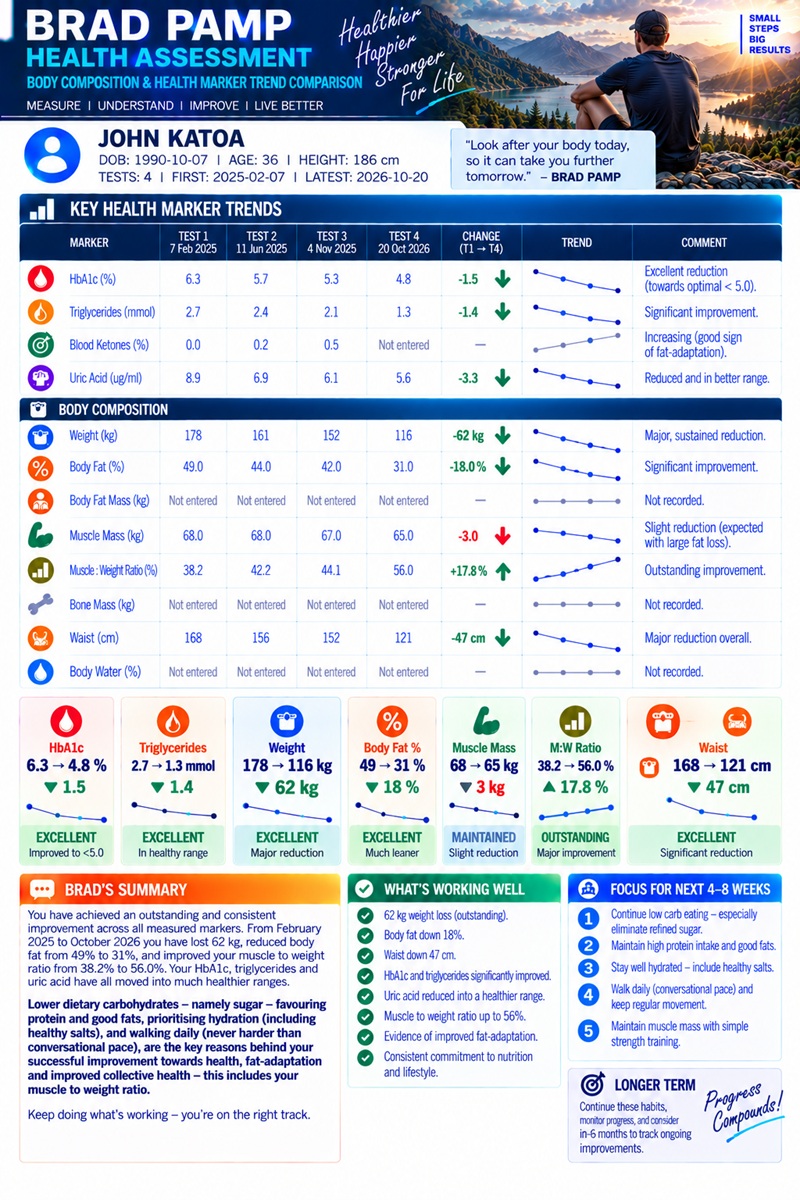
Meaningful change doesn't require perfection. It requires an appropriate starting point, a workable strategy, and enough consistency to give that strategy a fair chance. Individual results will vary.
YOU DON'T NEED TO HAVE IT ALL FIGURED OUT.
Perhaps you've been thinking about improving your body composition, understanding your metabolism, or simply feeling a little better in yourself.
You don't need to be fit. You don't need to be following a diet. And you certainly don't need to arrive with all the answers.
My private health assessments are designed to be educational, respectful and judgement-free.
We can discuss where you are today, what matters to you, and whether a few sensible changes might help you move forward.
After 35 years, I still enjoy these conversations enormously.
LET'S HAVE A CONVERSATIONBRAD PAMP | BP40PLUS