
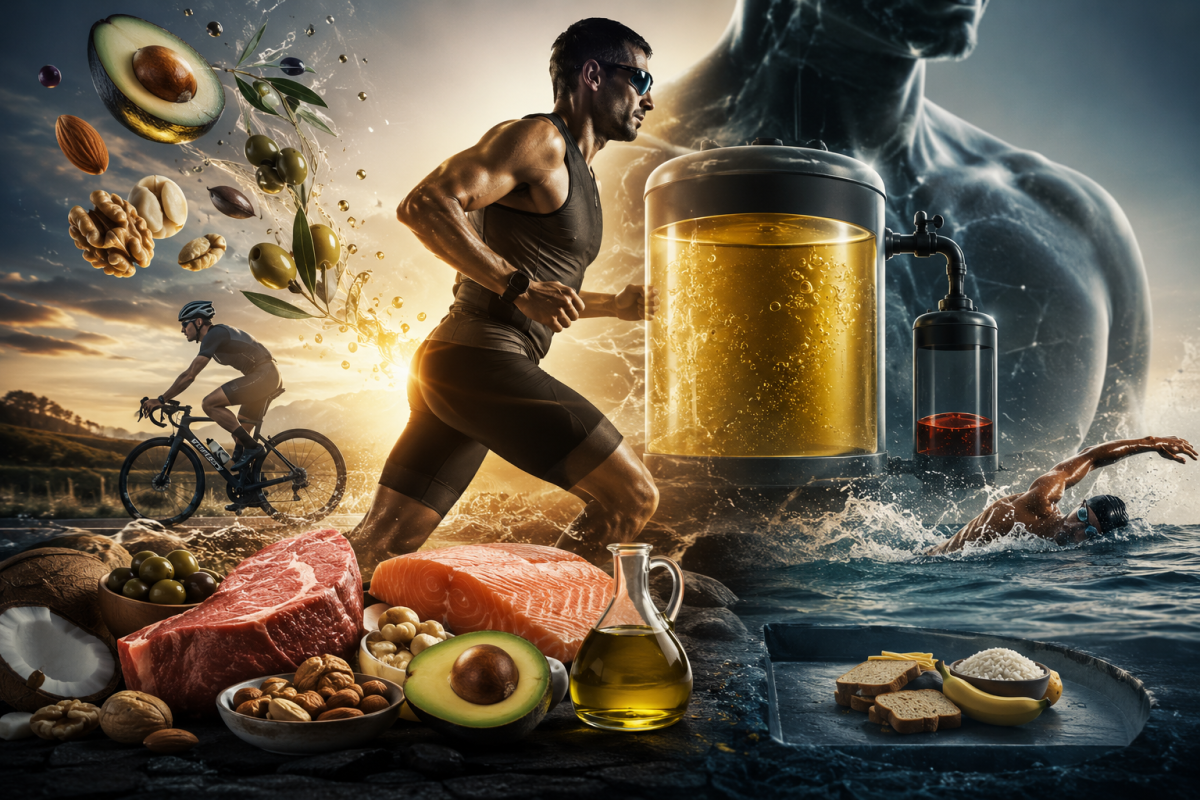
Fat-Adaptation for the Endurance Athlete:
Stop Living Like a Sugar Burner
Opening Narrative
For decades, the endurance athlete has been sold a fairly simple story:
Train hard.
Eat more carbs.
Top up glycogen.
Keep sugar nearby.
Repeat.
And to be fair, that model works — to a point.
Carbohydrate is a brilliant fuel. It burns quickly, supports high intensity, and when the race is long, ugly, hot, hilly or late in the day, carbs can absolutely keep the lights on.
Are you living every day like it’s race day?
Because that’s where I think many endurance athletes have gone wrong.
They are not just using carbs strategically. They are relying on them constantly. Toast, cereal, pasta, rice, bananas, bars, gels, sports drink, sweet coffee hits, muffins, “healthy” snacks, recovery drinks — all day, every day.
Then they wonder why they’re hungry all the time, inflamed, bloated, carrying a bit more body fat than expected, needing constant fuel, and feeling like their energy system is plugged into a dodgy power board.
That is the sweet spot.
Not zero carbs.
Not keto religion.
Not “never touch rice again”.
Not pretending a 5-hour ride or Ironman marathon should be done on mineral water and positive thoughts.
But a daily nutrition model where protein and good fats dominate, carbs are earned and placed with purpose, and the athlete builds the metabolic machinery to access stored fat more efficiently.
That’s where Professor Tim Noakes has been such a disruptive voice.
🧠 The Tim Noakes / Banting Philosophy — The Big Idea
Professor Tim Noakes was once one of the great voices behind high-carbohydrate sports nutrition. His earlier work, including Lore of Running, sat comfortably inside the traditional endurance world.
But later, after his own health experience and a deeper review of metabolic disease, insulin resistance and carbohydrate tolerance, he publicly changed his position and became a strong advocate for low-carbohydrate, high-fat eating — often referred to in South Africa as “Banting”.
1. Not all athletes tolerate carbohydrates equally
Some athletes can smash carbs all day and stay lean, energetic and metabolically healthy. Others can train 12–15 hours per week and still drift towards weight gain, blood sugar issues, appetite dysregulation and inflammation.
2. The body carries enormous fat energy
Glycogen storage is limited. Body fat storage is massive. The Noakes argument is that endurance athletes should not be so dependent on a small fuel tank when they have access to a much larger one.
3. Constant carbohydrate exposure may lock the athlete into sugar dependency
The more often you feed sugar and starch, the more often you ask the body to manage glucose and insulin.
4. Fat-adaptation may improve fat oxidation
Low-carb, high-fat diets can substantially increase rates of fat oxidation during endurance exercise.
5. Carbohydrate still matters when intensity rises
This is where I slightly separate the practical Pampy model from the hardline version.
But carbs are still the premium fuel when the pace lifts, hills bite, or the final hour gets ugly.
🏃 My Pampy POV
I don’t see fat-adaptation as a diet.
For the athlete training 12+ hours per week, your daily nutrition should support:
- stable energy
- strong recovery
- lower inflammation
- better body composition
- less gut chaos
- fewer blood sugar swings
- less need for manufactured fuel
- better appetite control
- stronger metabolic flexibility
That doesn’t mean carbs are evil.
It means carbs are a tool — not the boss.
🍳 Most Living Meals
Protein first, good fats, colourful veg, olive oil, avocado, eggs, fish, meat, nuts, Greek yoghurt, cheese, salads, soups and broths.
🏁 Strategic Carb Use
Longer training and race day may absolutely require carbs — particularly after 90–120 minutes or during higher intensity racing.
⚙️ Why This May Help the Endurance Athlete
1. Enduring Energy
A well fat-adapted athlete often reports a calmer, steadier energy profile.
- No massive breakfast spike
- No 10:30am snack panic
- No lunch coma
- No 3pm sweet hunt
- No need to carry a bakery in the jersey pocket
You become less fragile.
2. Better Appetite Control
Protein and fat are naturally more satiating than sweet, processed, highly flavoured carbohydrate foods.
The body says:
3. Better Body Composition
Plenty of endurance athletes are fit and capable — yet still carrying unnecessary body fat because they eat like their training gives them unlimited metabolic credit.
4. Gut Benefits
The endurance gut cops a hiding.
Gels, sports drinks, bars, caffeine, fructose, nerves, heat and dehydration can absolutely create GIT chaos.
A real-food, lower-processed approach may improve bloating, reflux, gas and urgency.
5. Recovery & Inflammation
The magic may not simply be “fat”.
The magic may be:
- more protein
- more omega-3 rich foods
- more vegetables
- fewer ultra-processed foods
- better blood glucose stability
- better body composition
Build a real-food athlete diet.
📚 Where the Evidence Pushes Back
This article should be honest.
LCHF diets reliably increase fat oxidation. That’s not the main debate. The debate is whether that improves performance.
Research led by Louise Burke and colleagues found that short-term ketogenic adaptation increased fat oxidation substantially, but impaired exercise economy at higher race-relevant intensities.
That matters.
So the fairest position is:
Fat-adaptation may be excellent for health, appetite, body composition and long steady endurance — but carbs still matter when performance intensity rises.
🔄 The Adaptation Phase — What to Expect
The first few weeks can feel ordinary.
That doesn’t mean it’s failing. It means the body is changing fuel systems.
Typical Early Signs
- flat legs
- lower top-end speed
- headache
- salt cravings
- poor sleep
- irritability
- heavy legs on hills
- feeling hollow during sessions
- needing more electrolytes
Give it 6 months before claiming you understand it.
🥑 Practical Rules for the 12+ Hour Athlete
🍗 Best Protein Choices
- eggs
- beef
- lamb
- salmon
- sardines
- Greek yoghurt
- kangaroo mince
- chicken thighs
- whey protein if needed
🥑 Best Fat Choices
- extra virgin olive oil
- avocado
- macadamias
- walnuts
- eggs
- salmon
- cheese
- Greek yoghurt
- butter in sensible amounts
🍠 Carb Choices — When Used
- potato / sweet potato
- rice
- oats
- fruit
- sourdough occasionally
- honey around long sessions
- banana / dates during long rides
- sports drink & gels for race-specific sessions
📅 Example Week — Aussie Fat-Adapted Endurance Athlete
Monday — Recovery / Easy Swim
Breakfast: 3-egg omelette with spinach, mushroom, feta & avocado.
Lunch: Chicken salad bowl with olive oil & pumpkin seeds.
Dinner: Salmon, broccolini, zucchini & cauliflower mash.
Tuesday — Bike Intervals + Strength
Pre-training: Coffee + water + pinch of salt.
Dinner: Lamb chops, Greek salad & optional sweet potato.
Wednesday — Aerobic Run + Swim
Breakfast: Greek yoghurt, chia, berries & macadamias.
Dinner: Chicken curry with coconut cream & cauliflower rice.
Thursday — Longer Bike / Brick
During session: Water/electrolytes early, then 30–60g carbs/hr if needed.
Friday — Easy Day / Strength
Lunch: Burger bowl — no bun.
Saturday — Long Ride / Long Brick
During session options:
- banana
- dates
- rice cakes
- honey sandwich
- sports drink
- gels late in session
Sunday — Long Run
Use carbs strategically if duration/intensity demands it.
This is carb placement with purpose.