

The 2-Minute Spinal Reset
Let’s be honest...
Most of us spend far too much of our day sitting.
Whether it’s behind a computer, in meetings, driving between sites or buried in paperwork, our bodies simply weren’t designed to stay in one position for hours on end.

The Result?
Brain fog.
A stiff neck.
Rounded shoulders.
A tight lower back.
Locked-up hips.
Heavy, lifeless legs.
Sound familiar?
The Good News
You don’t need an hour in the gym to undo much of that “rusting effect.”
Instead, simply interrupt the sitting.
Every hour, take just two minutes to wake your body back up.
Below are four simple movements that help restore movement, improve posture and get blood flowing again.
Four movements.
Two minutes. That’s all.
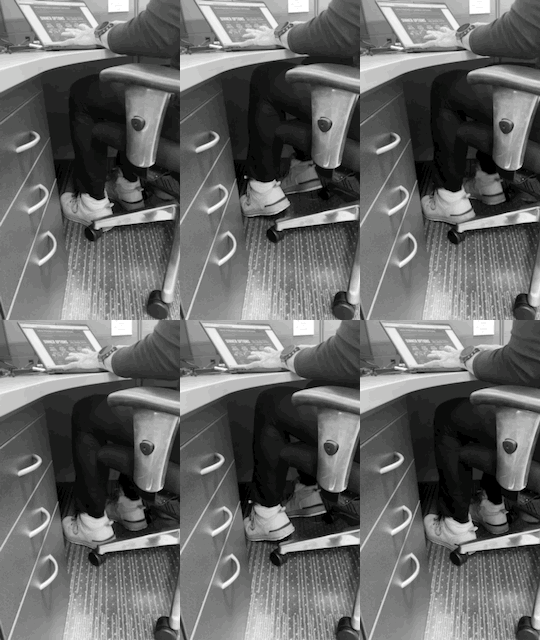
1. Calf Raises
What?Stand beside your desk and slowly rise onto your toes before lowering your heels back to the floor. Repeat 20–30 times.
Why?Your calf muscles are often called your “second heart.” Every contraction helps pump blood back towards your heart, improving circulation and reducing leg fatigue.
How?Move smoothly through a full range of motion. Pause briefly at the top before lowering under control.
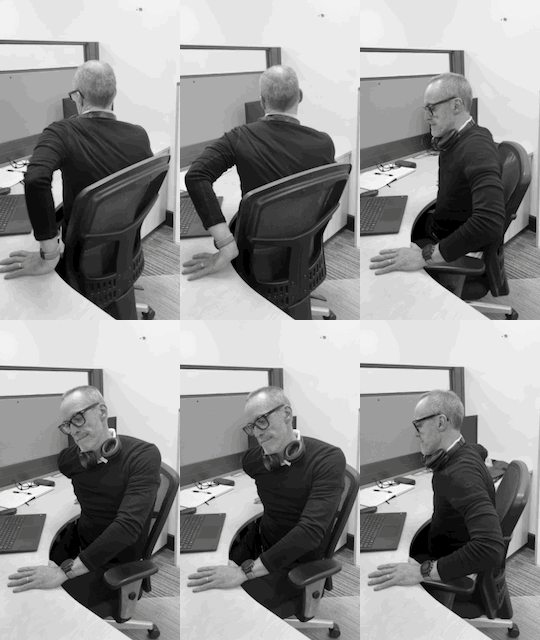
2. Seated Rotation Stretch
What?Remain seated, hold the edge of your desk or chair and gently rotate your upper body as far as comfortable. Hold for around 10 seconds each side.
Why?Hours of sitting encourage your spine to become rigid. Gentle rotation restores movement between the vertebrae and reduces stiffness.
How?Rotate until you feel a comfortable stretch — never force the movement or bounce.
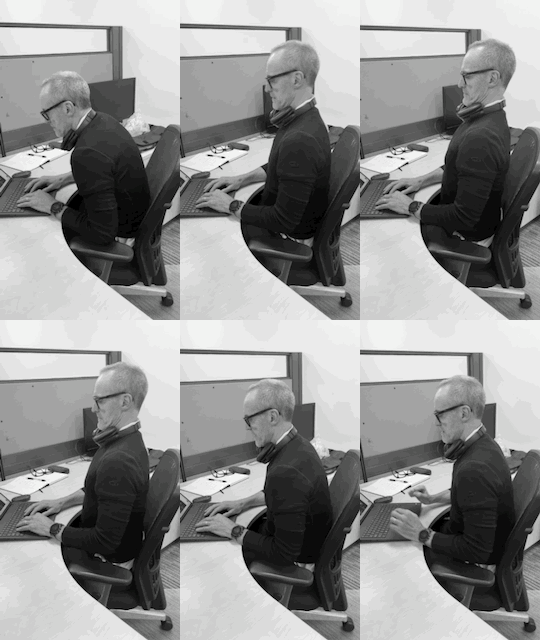
3. Spinal Lengthening
What?Sit as tall as you possibly can. Imagine balancing a book on your head while gently tucking your chin in.
Why?Poor sitting posture compresses the spinal discs and overloads the neck and back. Sitting tall improves alignment and switches postural muscles back on.
How?Grow upwards rather than leaning backwards. Keep your shoulders relaxed and breathe slowly for 15–20 seconds.
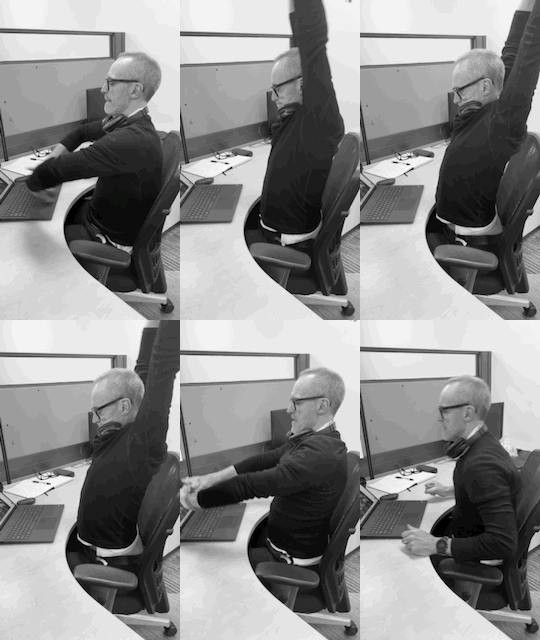
4. Overhead Shoulder & Forearm Stretch
What?Interlock your fingers, turn your palms away from your body and slowly straighten your arms overhead.
Why?Typing and mouse work tighten the shoulders, forearms and upper back. This movement restores shoulder mobility and posture.
How?Reach tall, keep breathing and hold for 15–20 seconds without shrugging your shoulders.
Your Hourly Investment
Four movements. Two minutes. That’s all.
You’ll be amazed how much better your neck, shoulders, hips and lower back feel by the end of the day.
Better still, you’ll notice improved circulation, a sharper mind and fewer aches and pains.
Set a reminder on your phone. Use an hourly alarm. Stick a Post-it note on your monitor. Whatever works.
Every hour, give your body a quick two-minute reset.
Your spine — and your brain — will thank you for it.
Strong Bones Don’t Come From the Fridge.
Growing up in the 1970s, I reckon I drank enough full-cream milk to keep a small dairy farm in business.
And that was probably exactly what my growing skeleton needed.
But adulthood changes the rules.
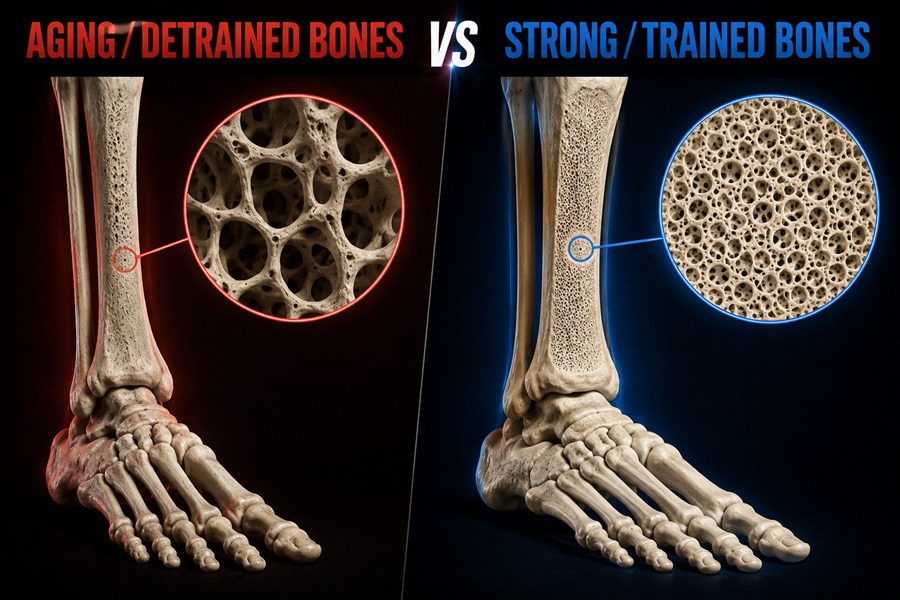
Calcium Builds The Framework
As children and teenagers we are building bone at an incredible rate.
Calcium is one of the raw materials required to construct that framework.
Milk, yoghurt, cheese and other calcium-rich foods can certainly help support that process.
But here’s the important bit...
Adult Bones Play By Different Rules
Once you are consuming enough calcium — along with adequate vitamin D and protein — drinking another litre of milk each day is not going to magically make your bones stronger.
Why?
Because your skeleton does not become stronger simply because more calcium is available.
It becomes stronger because your brain tells it to.
We’re no longer building a skeleton.
We’re trying to maintain one.
The Fridge Helps.
Food provides the raw materials.
Calcium, vitamin D, protein and quality nutrition all matter.
But once the raw materials are adequate, more is not always better.
The Gym Signals.
Resistance exercise provides the message.
Lift, push, pull, squat, carry and climb.
That mechanical load tells the skeleton it still has a job to do.
Your Bones Are Listening
Every time you safely lift a weight, push, pull, squat, carry or climb, your muscles tug on the bones they are attached to.
Your skeleton senses those tiny mechanical loads and says:
“Looks like we’re still being used... we’d better stay strong.”
That stimulus activates specialised bone-building cells, helping maintain — and in many people even improve — bone density and structural integrity.
No resistance.
No reason to adapt.
Use It Or Lose It
It is the classic principle.
Your body adapts to what you repeatedly ask it to do.
If you spend years sitting, avoiding load and outsourcing every physical job, your bones get the message.
“Apparently, we are not needed much anymore.”
But if you consistently and safely load your body, the message changes.
“Stay strong. Stay ready. Stay useful.”
Especially Important For Lighter Women
This is particularly important for lighter women.
A smaller frame generally means less everyday loading through the skeleton.
Add menopause and the natural decline in oestrogen, and bone loss can accelerate quickly.
That is why sensible resistance training becomes one of the most powerful health investments a woman can make.
Not to build massive muscles.
But to give her bones a reason to remain strong for decades to come.
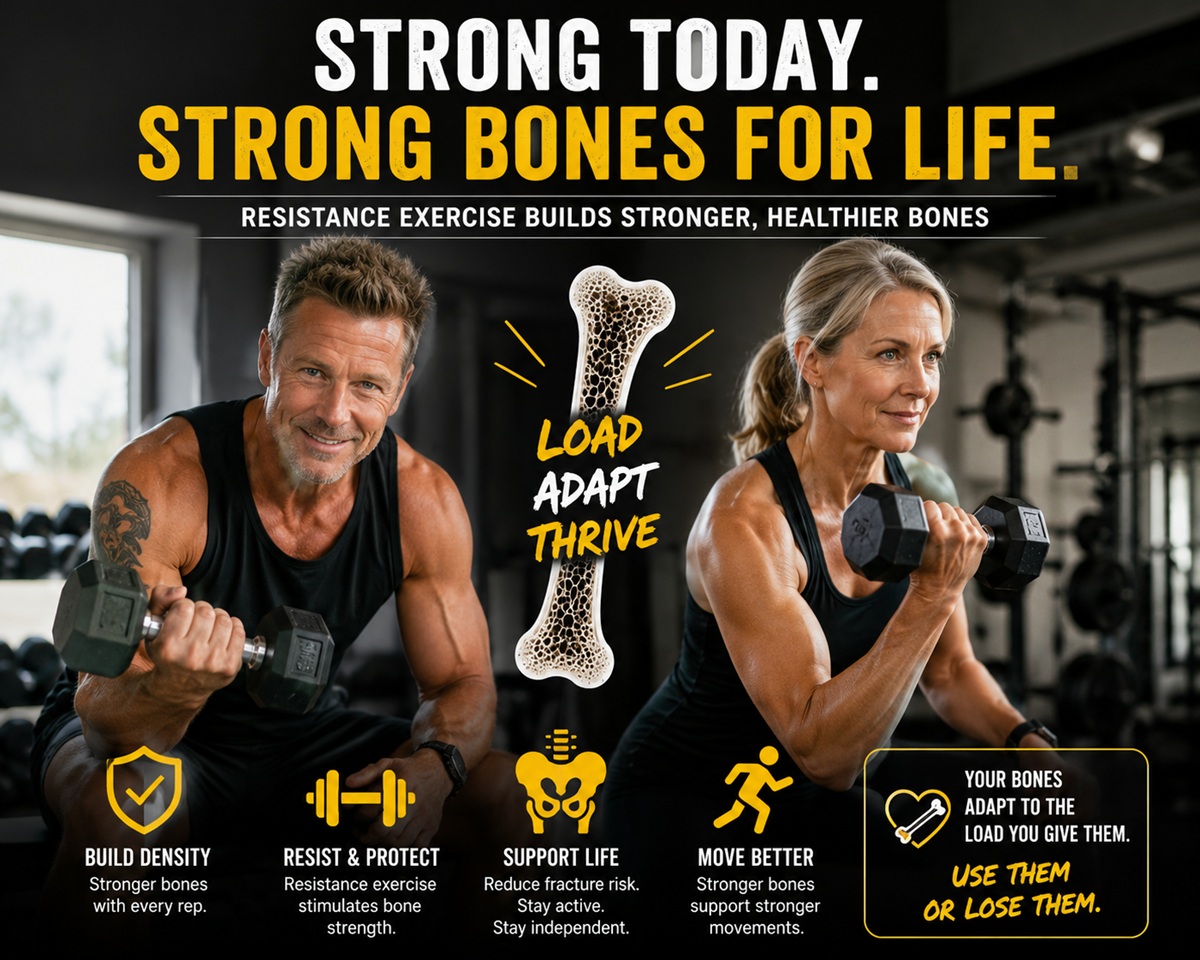
So Yes...
Eat well.
Get adequate calcium.
Prioritise protein.
Enjoy your yoghurt and perhaps even a glass of full-cream milk.
But...
Do not expect the fridge to build your skeleton.
Your bones are listening far more carefully to what your muscles are doing than what is sitting in your cereal bowl.
Load Them. Challenge Them. Protect Them.
Safe and appropriate resistance activity remains one of the key strategies for protecting bone health, bone density and long-term structural strength.
That is how strong bones are built for life.