
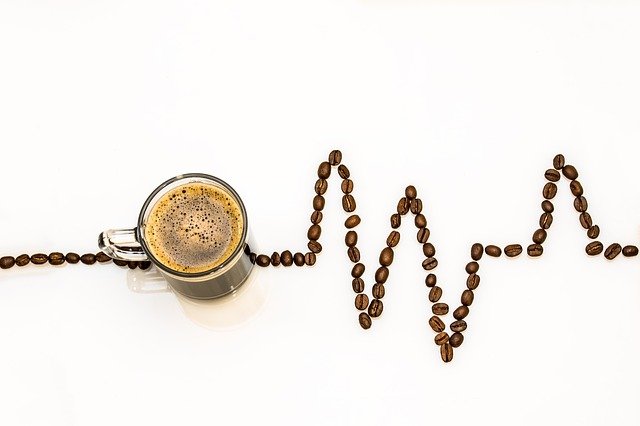
He Looks Healthy.
So Why Doesn’t He Feel Healthy?
His blood work is generally respectable. His cardiovascular fitness remains better than average. He still rides regularly and carries himself well.
But beneath the surface, Hamish knows something has changed.
Meet Hamish
Hamish is 55, married and the father of three children aged 23, 20 and 15. He has been a close mate of mine for over 4 decades.
He owns a successful business that has him travelling regularly throughout Australia and overseas. He enjoys a beer with mates, loves a laugh and, if there’s a local committee, sporting club or community project, there’s every chance Hamish is either the President or sitting on the board.
Like many Australian blokes, he has lived life at full pace.
His First Four Tests
Exercise has always been part of who Hamish is.
From the age of five, he has rarely stopped playing sport. Over the past 15 years, cycling has become his passion—often alongside a bunch of equally competitive middle-aged blokes in Lycra.
And this is where his story becomes interesting.
If we looked only at many of his routine health numbers, we might simply tell him to keep doing what he is doing.
From the outside, Hamish appears healthy.
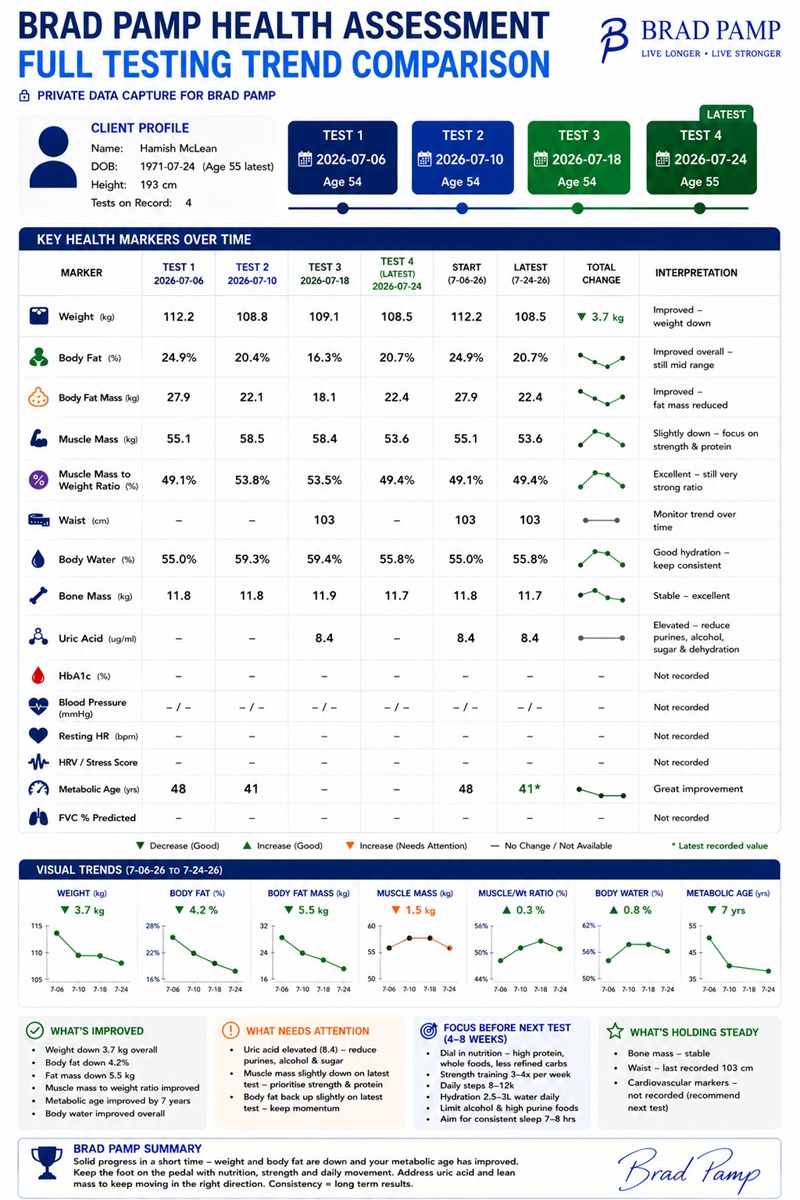
But He Doesn’t Feel Healthy
Hamish feels flatter than he used to. His sleep has become lighter and more interrupted. His weight is increasingly difficult to control, recovery takes longer and his motivation comes and goes.
He now has to work considerably harder to produce cycling numbers he comfortably held five or ten years ago.
Nothing dramatic. Nothing sending him to hospital.
Just a gradual loss of energy, sharpness and resilience.
Sound Familiar?
At home, Hamish eats exceptionally well, thanks largely to his wife preparing fresh, wholesome meals.
But he also travels. He eats convenience food when work demands it. He enjoys alcohol socially. Sleep is occasionally sacrificed and life gets busy.
Over the past decade, his body weight has gradually crept upwards by around 10–15 kilograms.
Because Hamish has a naturally large, athletic frame, he carries that extra weight better than most.
Or at least that’s what everyone thinks.
The Bit Most Blokes Miss
Many men arrive convinced they simply need to lose a few kilograms or train harder.
Very few arrive saying:
“Pampy, I think I may have underlying inflammation.”
Yet that is often exactly what I begin to suspect—not because one test proves it, but because a collection of small clues begins pointing in the same direction.
Low-grade inflammation rarely screams.
It whispers.
Not A Swollen Ankle
I’m not talking about the inflammation of a hot shoulder, swollen ankle or sore knee after football.
I’m talking about low-grade, chronic inflammation—the type that quietly develops over years rather than days.
It may begin in the gut. It may be influenced by poor sleep, excess body fat, ultra-processed food, alcohol, chronic stress, insulin resistance, declining muscle or simply decades of accumulating metabolic load.
The result is rarely catastrophic.
It is often just enough to slowly rob a bloke of the edge he remembers having.
What Might Point Towards It?
No single symptom or blood test diagnoses underlying inflammation. I look for patterns.
Increasing waist circumference, rising glucose or HbA1c, elevated triglycerides, high-normal blood pressure, poorer sleep, reduced muscle, increasing fatigue, slower recovery, brain fog, digestive changes and repeated tendon soreness can all add to the picture.
Where appropriate, further medical investigation might include hs-CRP, fasting insulin, liver function, iron studies, vitamin D and other pathology determined by the individual’s doctor.
These tests do not provide every answer. They help us build the picture.
My Position
At 55 myself, I understand exactly how this feels.
After more than 35 years working with Australians, I’ve become less interested in simply chasing disease—and far more interested in the subtle changes occurring years before disease develops.
This is where the opportunity sits.
The bloke who still looks “pretty healthy” but quietly knows he’s operating at only 70–80% of the bloke he used to be.
“I honestly didn’t realise how average I’d been feeling
until I started feeling good again.”
Where We Started
Rather than trying to fix everything at once, Hamish and I focused on the three pillars we have the greatest control over.
Sleep
Using my sleep questionnaire and Hamish’s own sleep metrics, we designed a personalised sleep architecture he could realistically practise both at home and while travelling.
Perfect every night? Of course not.
The win is that he now understands what quality sleep looks like, what commonly disrupts it and how to stack the odds back in his favour.
Exercise
Hamish is physically capable of training much harder than I currently want him to.
For this phase, the priority isn’t improving his cycling numbers. It is rebuilding his health, energy and recovery.
I calculated an aerobic training ceiling that allows him to gain the benefits of regular exercise without constantly adding unnecessary training stress.
Sometimes the smartest training is learning to do a little less.
Daily Nourishment
For me, this is where the greatest opportunity often sits.
Not through fad diets or complicated meal plans, but by repeatedly exposing the body to foods that support gut health, recovery, muscle and a healthier inflammatory balance.
I designed Hamish a simple eight-week nutritional approach with everyday meals, clear visual guides and no calorie counting.
See The Nutritional Approach Hamish Is Following
This is not a detox, starvation diet or eight weeks of lettuce leaves.
It is a practical food system built around protein, plant diversity, gut-supportive foods, reduced inflammatory load and meals that a busy bloke can realistically repeat.
No calorie counting. No gourmet cooking competition. No complicated nutritional theatre.
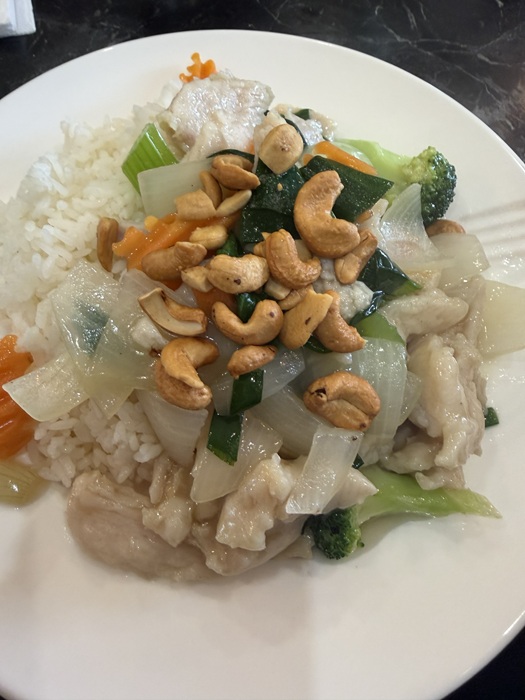
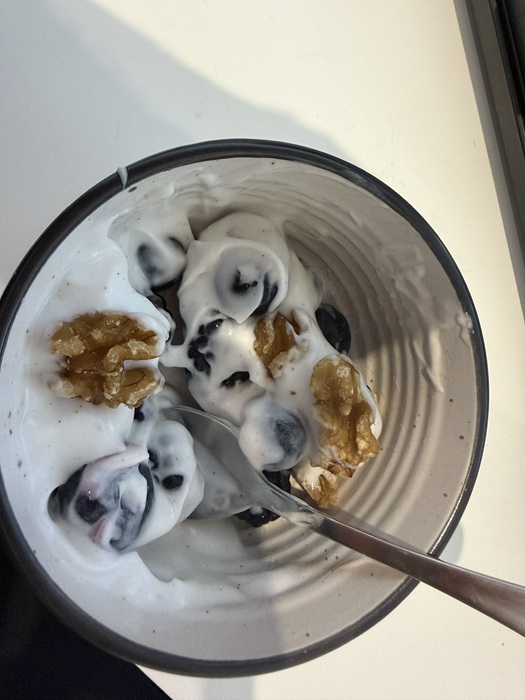
Explore The Inflammation Reset Food PlanPhotos Tell The Truth
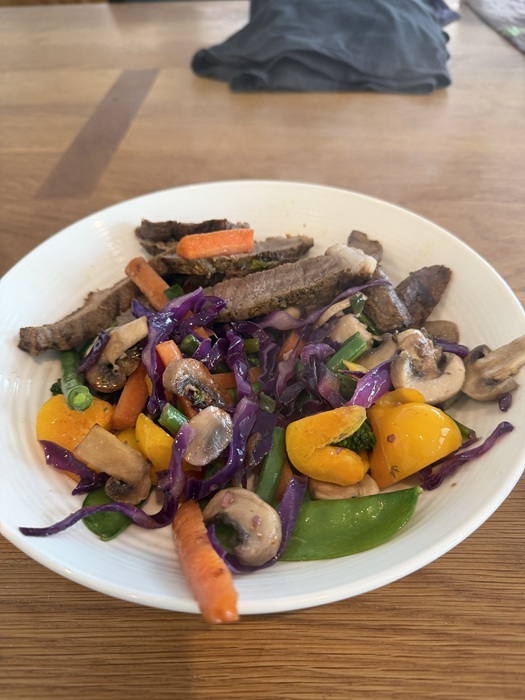
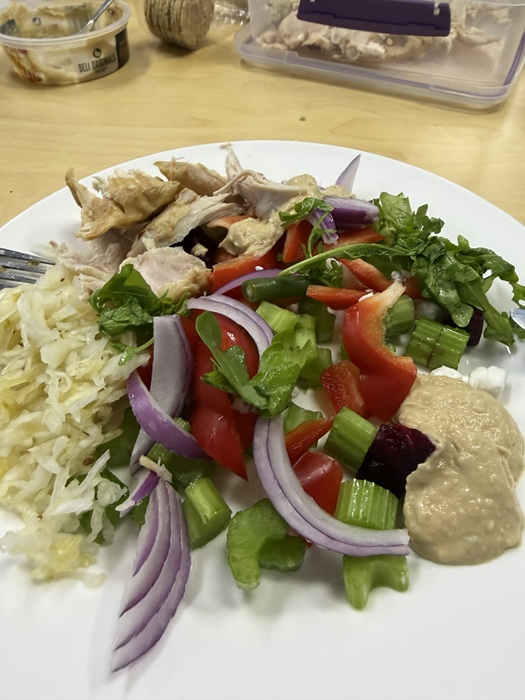
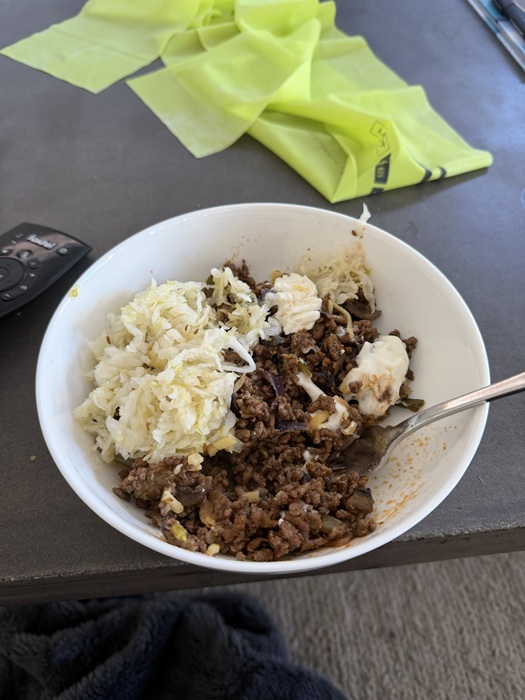
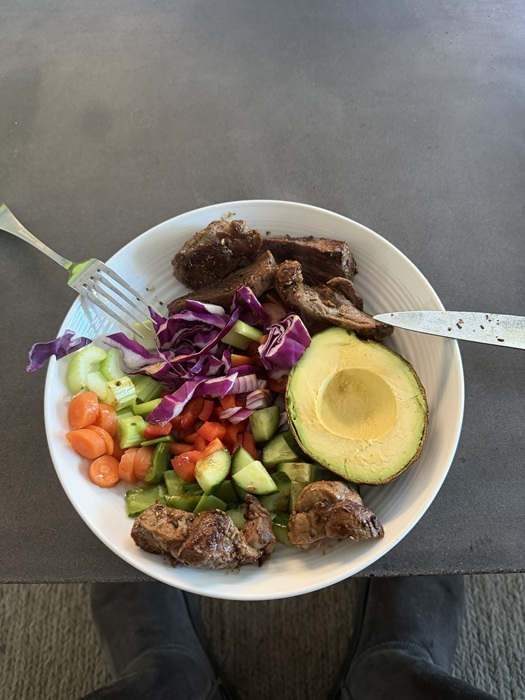
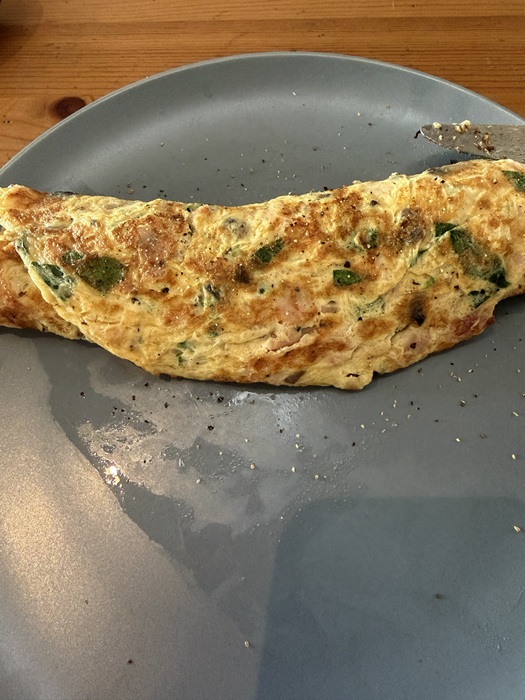
To support Hamish’s compliance, I ask him to photograph his meals and send them through to me.
It creates accountability, allows practical feedback and quickly reveals what is actually happening—not simply what we remember eating.
Click any card below for a closer look.

Do Your Numbers Look Reasonably Good—But You Simply Don’t Feel Like Yourself?
You still work. You still exercise. You still get through the day.
But your energy, sleep, recovery, waistline, motivation or performance no longer feel quite right.
That does not automatically mean something serious is wrong. It also doesn’t mean you should ignore what your body has been quietly telling you.
Begin with a proper physician check-up. Assess the important health markers. Then consider whether sleep, exercise load, gut health and repeated nourishment may be part of the missing picture.
Perhaps it’s time we had a conversation.
No dramatic promises. No judgement. Just an honest look at where you are, how you feel and where the best opportunities may sit.
Brad Pamp
Exercise Physiologist & Nutritionist
Do You Snore For Australia?
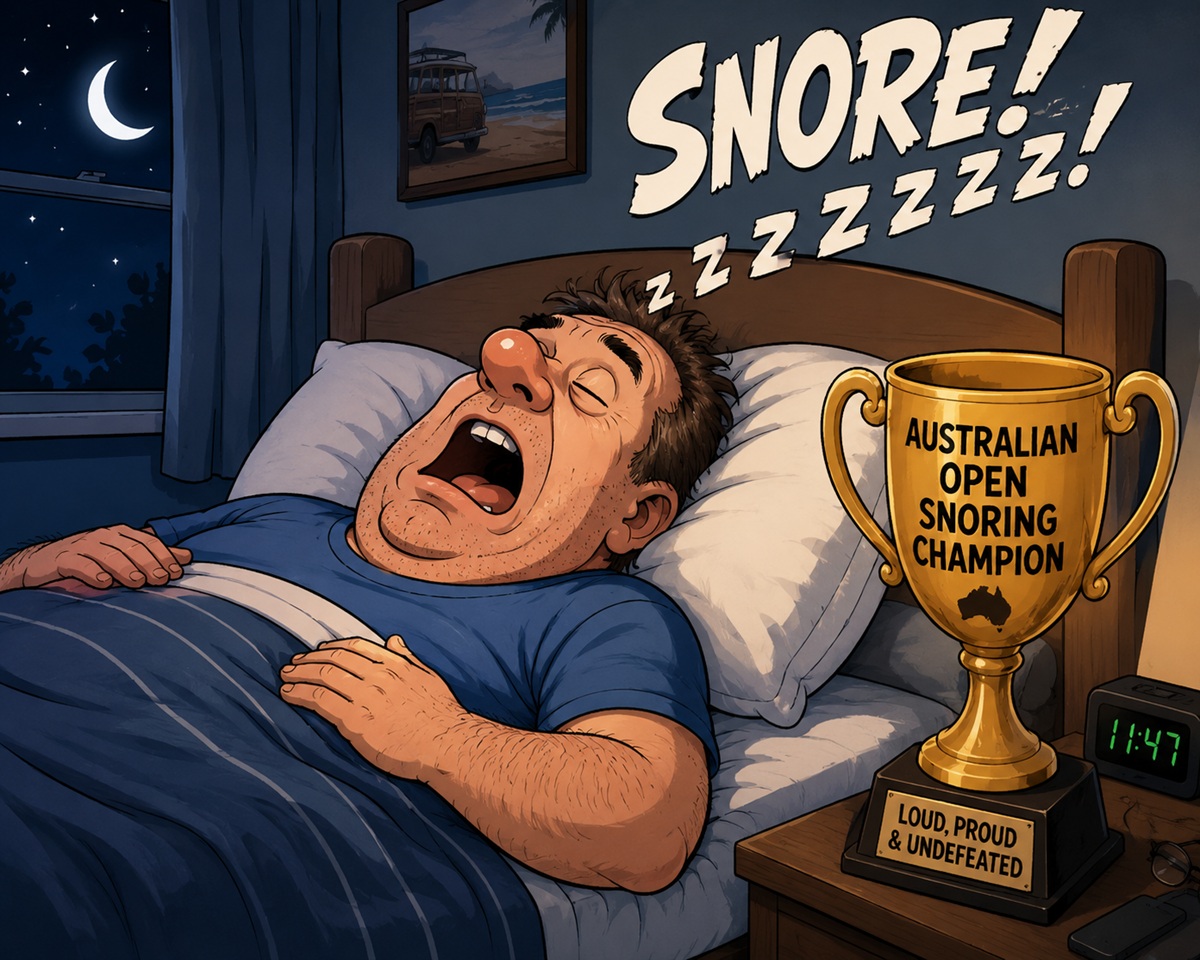
If you know you could snore for Australia—or your partner believes you would start at unbackable odds—this article may sound rather familiar.
Snoring can be funny on the occasional golf weekend.
Night after night, however, it can become a proper problem for the person snoring and the increasingly irritated human sleeping beside them.
Funny—Until It Isn’t
Snoring occurs when airflow causes relaxed tissues in the nose or throat to vibrate during sleep.
It might be occasional, positional or related to congestion.
But loud, persistent snoring—particularly when accompanied by pauses in breathing, choking or gasping—may point towards obstructive sleep apnoea.
That deserves more than a pillow over the offender’s head.
What May Be Happening?
During obstructive sleep apnoea, the upper airway partly or completely closes while the person sleeps.
Breathing may reduce or briefly stop, oxygen levels can fall and the brain repeatedly nudges the body awake to restart breathing.
The person may remain completely unaware this is occurring.
Snoring is the noise.
Airflow is the real conversation.
Why Sleep Apnoea Matters
Repeated airway obstruction can fragment sleep and produce recurring drops in blood oxygen.
Over time, untreated obstructive sleep apnoea is associated with increased risks including high blood pressure, cardiovascular disease and stroke.
It can also affect mood, concentration, daytime alertness, exercise recovery and general quality of life.
So while snoring makes good material around the breakfast table, genuine breathing pauses should never be dismissed as simply “what Dad does.”
There Are Plenty Of Snoring Solutions
Treatment depends on why the person is snoring and whether obstructive sleep apnoea is present.
Position & Lifestyle
Side sleeping, reducing excess weight where appropriate, treating nasal congestion and limiting alcohol near bedtime may help some people.
Oral Appliance
A professionally fitted mandibular-advancement device gently moves the lower jaw forward to create more room through the airway.
CPAP
CPAP delivers pressurised air through a mask to help prevent the airway from collapsing during sleep.
My Own Little Trial
I’m not a sleep physician, and I would never attempt to diagnose or treat sleep apnoea with a kitchen recipe.
However, when I noticed that my own nighttime airflow occasionally felt less comfortable, I began looking at the things I could safely influence before bed.
Hydration. Nasal comfort. Alcohol. Sleep position. Room temperature. Meal timing.
And, being me, I also experimented with a warm homemade drink.
What This Drink Is—and Isn’t
This is a warm, soothing pre-sleep ritual made from real foods.
The ingredients may feel comforting to the throat and nose, while the ritual itself may help replace less useful evening habits.
It is not proven to prevent airway collapse, cure snoring or treat obstructive sleep apnoea.
Think supportive ritual—not homemade CPAP.
The Recipe
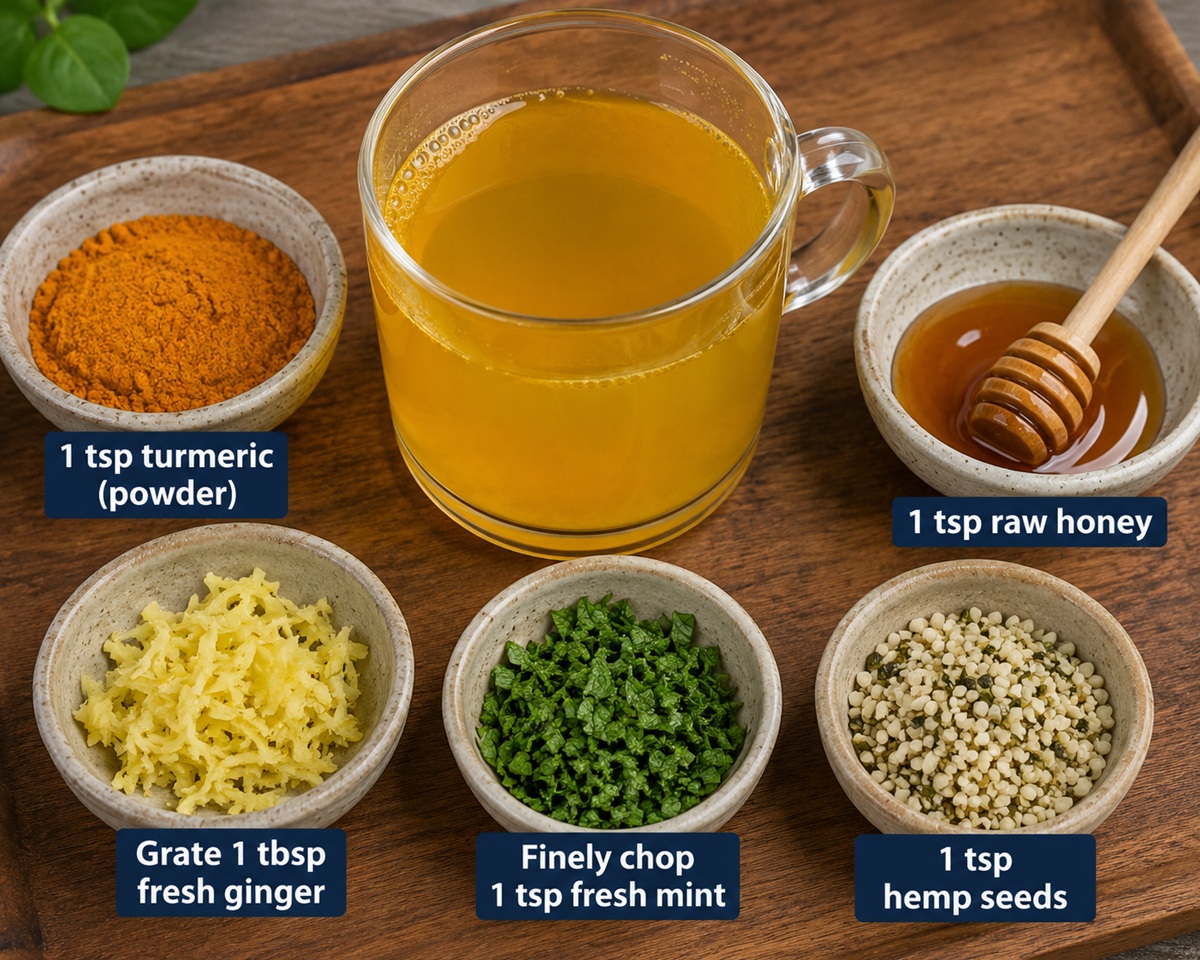
Add the ingredients to a cup, pour over boiling water and allow the drink to cool to a comfortable temperature.
- 1 teaspoon turmeric powder
- 1 teaspoon raw honey
- 1 tablespoon freshly grated ginger
- 1 teaspoon finely chopped fresh mint
- 1 teaspoon hemp seeds
Stir before and during drinking, as the turmeric and hemp seeds will naturally settle.
Why These Ingredients?
I selected them as familiar whole-food ingredients that create a warming, aromatic drink—not because each one has been proven to open a sleeping airway.
Turmeric
Adds colour, warmth and a broad range of plant compounds.
Ginger
Creates heat and aroma and may feel soothing through the throat.
Fresh Mint
Produces a cooling sensation that can make breathing feel fresher.
Raw Honey
Softens the taste and may provide a soothing coating sensation.
Hemp Seeds
Add texture, healthy fats and another whole-food ingredient to the ritual.
Do Not Let The Drink Delay The Check-Up
A warm drink may be pleasant. It cannot tell you whether your airway is repeatedly closing overnight.
Speak with your GP or a qualified sleep professional if you—or the person sharing your bed—notice any of the following:
Also check that the ingredients suit you personally—particularly if you use anticoagulant medication, manage blood glucose, experience reflux or have allergies.
Still Keen To Give It A Crack?
Make the drink. Keep the serving sensible. Have it early enough that it doesn’t send you to the bathroom all night.
Then pay attention.
Did your throat feel more comfortable? Did nasal breathing feel easier? Did the ritual replace alcohol, dessert or late-night grazing? Did your partner notice any change?
Test it honestly—but don’t promote yourself from Australian Snoring Champion to sleep physician after one quiet night.
The drink may support the ritual.
But if breathing repeatedly stops, the smartest bedtime hack is a proper assessment.
Your partner—and potentially your heart, brain and daytime energy—will thank you.
Beating The Winter Blues
Most of us already know the formula.
Move your body regularly.
Eat real food that actually nourishes you rather than highly processed, additive-riddled convenience food.
Keep the alcohol sensible.
Protect your sleep.
And perhaps most importantly of all...
Look after your mind.
Because when our thoughts and emotions are in a good place, almost everything else becomes easier.

But gee...winter has a way of making all of that much harder.
The alarm goes off.
It's cold.
Proper cold.
It's dark.
It's wet.
You still feel just a little tired.
And then the negotiations begin.
Sound familiar?
Because that's pretty much my internal dialogue most winter mornings.
The Good News
The good news is the science is very much on our side.
A relatively small amount of movement can change the chemistry of your day.
Activity increases dopamine, serotonin and endorphins. Your mood lifts. Your outlook improves. Problems don't magically disappear, but they often become far more manageable.
Cold, stiff body parts begin to loosen as warm, oxygen-rich blood reaches muscles, tendons and joints. Synovial fluid starts lubricating the joints again. The body simply feels more capable.
Your metabolism wakes up.
Calories are handled more efficiently.
Energy levels generally improve rather than decline.
Confidence lifts because you're sending yourself a powerful message:
That single decision often carries into the rest of the day.
You eat a little better.
You drink a little less.
You stand a little taller.
You make better decisions.
One good choice breeds another.

How Do We Actually Defeat The Not Today Beast?
So...
How do we actually defeat the Not Today Beast?
Decide The Night Before
Don't negotiate with yourself at 5:45 am.
Know exactly what tomorrow's session is.
- A walk.
- Ten minutes of mobility.
- A resistance session.
- A bike ride.
- Breathing exercises.
Whatever it is...have the decision already made.
Follow A Program
Programs remove thinking.
Better still, have someone else write it.
When motivation is low, don't rely on inspiration.
Simply become the body that follows the script.
Use Music
Have your favourite "pick me up" song ready before you even get out of bed.
Then train with the playlist that makes you want to move.
Music changes mood remarkably quickly.
Find A Training Buddy
"Meet me at 6:00."
Simple.
No texting unless someone is genuinely sick.
Turn up because someone else is turning up.
Move With Your Kids
Even better...
Move with your kids.
Go for a walk.
Kick a footy.
Ride bikes.
Some of the best health memories you'll ever create won't happen inside a gym.
Have Something Exciting On The Horizon
- A Parkrun.
- A 5 km event.
- A trail walk.
- City2Surf.
- A skiing holiday.
- Playing footy again.
- Lowering your blood pressure.
- Reducing your medication.
- Walking comfortably with your grandchildren.
Purpose gives today's session meaning.
What about a well-deserved holiday to a warmer destination.
Buy Yourself Something That Gets You Excited
New shoes.
Training gear.
A smartwatch.
Resistance bands.
A rowing machine.
A mountain bike.
Skis.
A wall calendar where you physically tick off every completed session.
Most of us like new toys.

Create Your Own Summer
Train indoors if you have to.
Put a YouTube clip of Hawaii or the beach on the television.
Warm the room.
Use a sauna afterwards if you're lucky enough to have access to one.
If you're into it, red light therapy can also become part of your recovery routine.
Winter naturally gives us less sunlight and Vitamin D.
That simply means we need to be a little more deliberate in looking after ourselves.
Finally...
Don't underestimate momentum.
Some mornings your session might only be ten minutes.
That's OK.
The biggest win wasn't the workout.
It was defeating the Not Today Beast.
Every time you beat it, it becomes a little weaker.
Every time it wins, it gets a little stronger.
Winter is harder.
There's no point pretending otherwise.
It asks more questions.
It tests your discipline.
It exposes your routines.
But if you can continue to move through winter, spring always feels easier.
Keep ticking boxes.
Your future self will thank you for it.